How a Data Security Platform Powers Your Governance Program
0 分鐘閱讀

Lionel Menchaca
Most organizations have a data governance strategy on paper. The challenge is making it hold up in practice, across thousands of users, dozens of cloud applications and data that rarely stays where you put it.
A governance framework sets the rules. A unified data security platform is what enforces them. Without that enforcement layer, governance is largely a documentation exercise.
This post walks through what a modern data security platform actually contributes to governance, why fragmented tools fall short and how organizations are using unified platforms to close the gap between policy and practice.
Governance Is Only as Good as Your Visibility
You cannot govern data you cannot find. That sounds obvious, but most organizations are working with a partial picture. Data sprawls across cloud storage, SaaS applications, on-premises repositories and collaboration tools, and much of it goes unclassified for months or years.
The first contribution a data security platform makes to governance is visibility. Data Security Posture Management (DSPM) continuously discovers and classifies sensitive data across structured and unstructured sources, mapping what exists, where it lives, who has access to it and how it is being used.
That classification work is foundational. Governance policies depend on knowing whether a file contains personally identifiable information, financial records, intellectual property or something else entirely. Without accurate, scalable classification, those policies either apply too broadly or miss the data that matters most.
Forcepoint DSPM uses AI Mesh, a proprietary classification architecture that combines a small language model, deep neural network classifiers and additional AI techniques to deliver high-accuracy classification at enterprise scale. It does not just identify what a file is — it captures how the file is being used, who can access it and where it is exposed, which is the context governance programs need to function.
Policies Mean Nothing Without Enforcement
A governance framework defines what should happen with sensitive data. A data security platform is what makes sure it does.
Data Loss Prevention (DLP) enforces policies as data moves, across endpoints, email, web, cloud applications and network channels. When a user attempts to send a file containing regulated information to an unauthorized destination, DLP can block the transfer, quarantine the file or trigger an alert, depending on how the policy is configured.
The enforcement challenge for most organizations is consistency. Security teams managing separate DLP tools for email, endpoint and cloud rarely get uniform policy behavior across all three. Rules drift. Coverage gaps open up. Incidents happen in the spaces between tools.
A unified data security platform addresses this by running policy from a single engine. According to research sponsored by Forcepoint, 91% of IT professionals said a single set of unified DLP policies across cloud, web and private applications would improve their overall security posture. When policies are authored once and deployed everywhere, governance controls apply consistently regardless of where data moves or how it is accessed.
Access Control Is a Governance Problem, Too
Governance is not only about stopping data from leaving. It is also about controlling who can reach it in the first place.
Over-permissioned data is one of the most common and underappreciated governance risks. Files shared with entire departments, legacy access rights that were never revoked, cloud storage repositories that any authenticated user can browse — these conditions exist in nearly every enterprise environment and represent a direct failure of governance controls.
The Principle of Least Privilege (PoLP) is a foundational governance concept: users, applications and systems should only access data they need for their specific role. In practice, enforcing that principle requires continuous monitoring. Permissions change as roles change. New files get created with inherited access that is too broad. Shadow data accumulates in locations no one is actively watching.
A mature data security platform surfaces these exposure risks by inventorying permissions alongside data classifications, identifying over-permissioned files and flagging high-risk access patterns for remediation. For teams building out a structured data access governance program, this is the mechanism that keeps least-privilege controls operational at scale rather than theoretical.
Real-Time Monitoring Closes the Gap Between Scans
Periodic scanning gives you a snapshot. Governance requires something closer to continuous coverage.
Data Detection and Response (DDR) fills that gap. Where DSPM discovers and classifies data at rest, DDR monitors data behavior in real time, flagging anomalous access patterns, unusual file movements and activity that signals a potential incident. When DDR detects something, it can trigger automated responses or feed context into an investigation workflow, reducing the window between an event and a response.
The combination of DSPM and DDR within a unified data security platform creates a governance feedback loop. Discovery feeds monitoring. Monitoring surfaces new risks that inform discovery priorities. That cycle matters because governance is not a project with a completion date. It is an ongoing operational responsibility.
Integrating both capabilities eliminates the manual handoffs between separate tools, which is where context gets lost and response times stretch out.
Compliance Reporting Gets Easier When Data Is Structured
Regulatory compliance is one of the most visible governance deliverables, and one of the most resource-intensive. Audit preparation often requires pulling data from multiple systems, reconciling inconsistent logs and manually verifying that controls were in place during the audit period.
A unified data security platform centralizes that evidence. Forcepoint Data Security Cloud includes more than 1,700 pre-built policy templates spanning GDPR, HIPAA, CCPA, PCI DSS, NIST, CMMC and other major frameworks across more than 160 regions. Continuous monitoring generates audit trails automatically. Compliance reports reflect the actual state of controls, not a retrospective reconstruction.
That shift from reactive to structured reporting changes how compliance teams operate. Instead of assembling evidence after the fact, teams can pull dashboards that reflect current posture and share them with auditors, regulators or the board on demand.
For organizations building out a data security governance framework, aligning DSPM capabilities to compliance requirements early in the process significantly reduces the effort required at audit time.
Fragmented Tools Cannot Deliver Unified Governance
The governance problem most organizations face is not a lack of tools. It is too many tools that do not talk to each other.
When DSPM, DLP, CASB and DDR products each maintain their own data models, their own classification labels and their own policy engines, the result is coverage gaps, inconsistent enforcement and a compliance record that is difficult to interpret. Each tool sees part of the picture. No tool sees all of it.
A unified data security platform changes that dynamic. Forcepoint Data Security Cloud integrates DSPM, DLP, DDR, CASB and Risk-Adaptive Protection under a single management console, with a shared classification layer that carries data labels from discovery through to enforcement. A sensitive file discovered by DSPM triggers monitoring through DDR. A behavioral anomaly caught by DDR updates the risk scoring that drives adaptive enforcement in DLP. A policy change propagates instantly across endpoints, cloud, email and web.
That integration is what makes governance operational rather than aspirational. For a closer look at how these capabilities stack up across cloud environments and collaboration tools, the breakdown of data access governance software components is a useful reference.
What Good Governance Looks Like in Practice
Organizations with mature data security governance programs share a few common characteristics. They know where their sensitive data lives, and that inventory is current, not six months old. They can demonstrate that access controls align with the Principle of Least Privilege and show when that alignment drifted and how it was corrected. They can answer compliance questions without a fire drill.
Getting there requires both a governance framework and a data security platform capable of enforcing it continuously. The framework provides the structure. The platform provides the operational reality.
Forcepoint Data Security Cloud serves as that operational layer, connecting discovery, classification, behavioral monitoring and policy enforcement into a single governance infrastructure that works across every environment where sensitive data moves.
See Forcepoint Data Security Cloud in Action
Discover how a unified data security platform can strengthen governance across your entire data environment, from discovery and classification to real-time enforcement and compliance reporting.

Lionel Menchaca
閱讀更多文章 Lionel MenchacaLionel Menchaca has covered data security at Forcepoint since 2020, writing about DLP, DSPM, insider risk and AI security for security and IT leaders. He works with Forcepoint X-Labs threat researchers to turn their findings on emerging threats, from AI-targeted supply chain attacks to prompt injection, into practical guidance, and he leads the company's editorial strategy across the blog and the X-Labs newsletter. Before Forcepoint, Lionel founded and ran Dell's corporate blog for seven years and spent two decades helping enterprise tech companies explain security, cloud and AI.
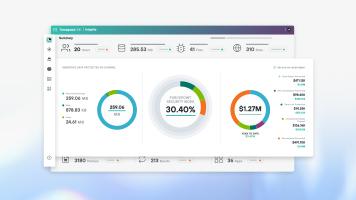 Forcepoint Data Security CloudManage Access Everywhere

X-Labs
直接將洞察力、分析與新聞發送到您的收件箱