
Forcepoint Web Security
Stop Data Loss on the Web
Get visibility and control over data and traffic anywhere on the web with high-speed performance users expect.
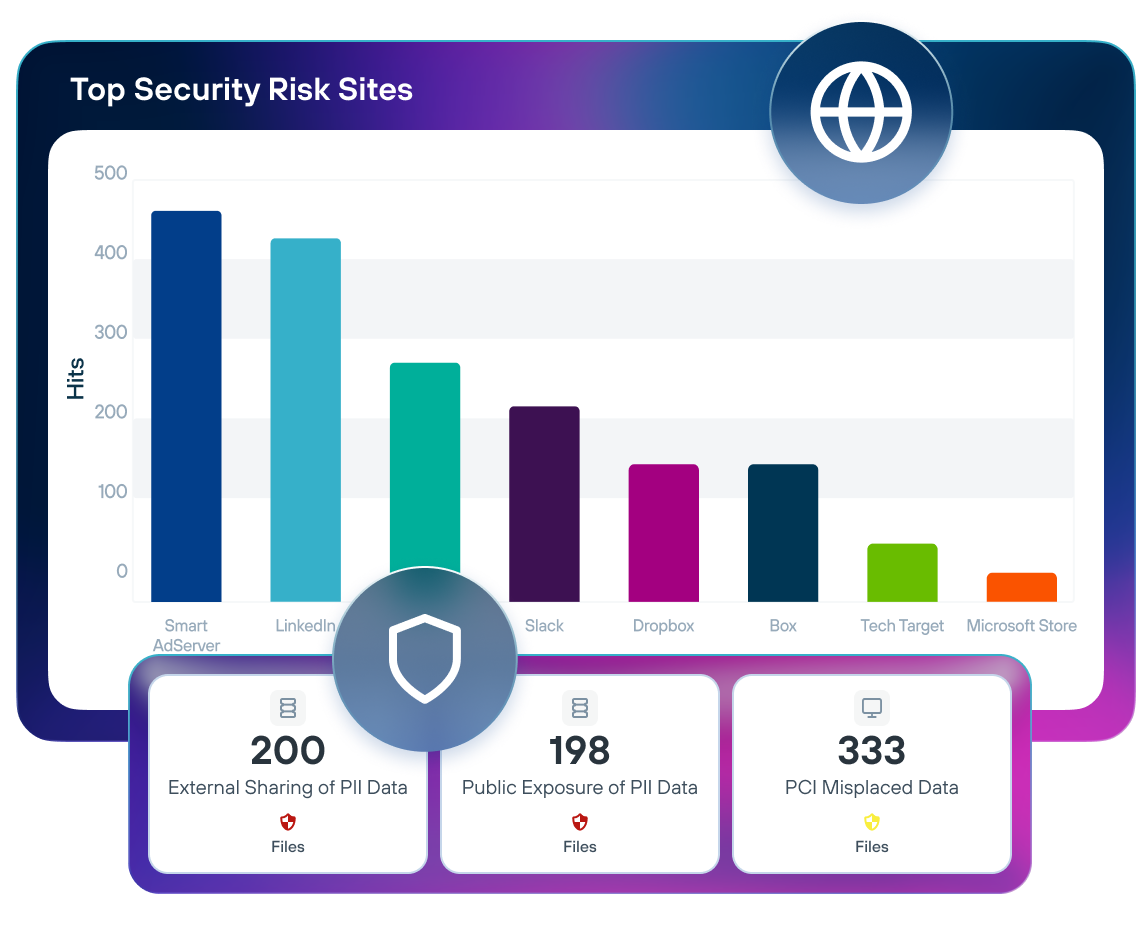












Forcepoint Web Security: At A Glance
Forcepoint Web Security gives security teams complete visibility and control over web traffic, protecting users from ransomware, zero-day threats and data loss — on every device, in every location.
Safeguard Web Browsing and Prevent Data Breaches
Every link your employees click is a potential opening — for threats trying to get in, and for data trying to get out. Forcepoint Web Security gives security teams the visibility, controls and real-time enforcement to let work move freely while keeping sensitive data exactly where it belongs.

Keep Sensitive Data Off the Open Web
Forcepoint Web Security applies inline DLP with no integration required, blocking sensitive data from leaving via uploads, forms or cloud storage.

Block Web-Based Threats in Real Time
The Advanced Classification Engine (ACE) stops ransomware and
zero-day malware through behavioral analysis, heuristics and Collective Threat Intelligence.

Recover Visibility Over Shadow IT and AI Apps
Surface every unsanctioned SaaS tool and GenAI app across your organization, with policies precise enough to allow legitimate AI use.
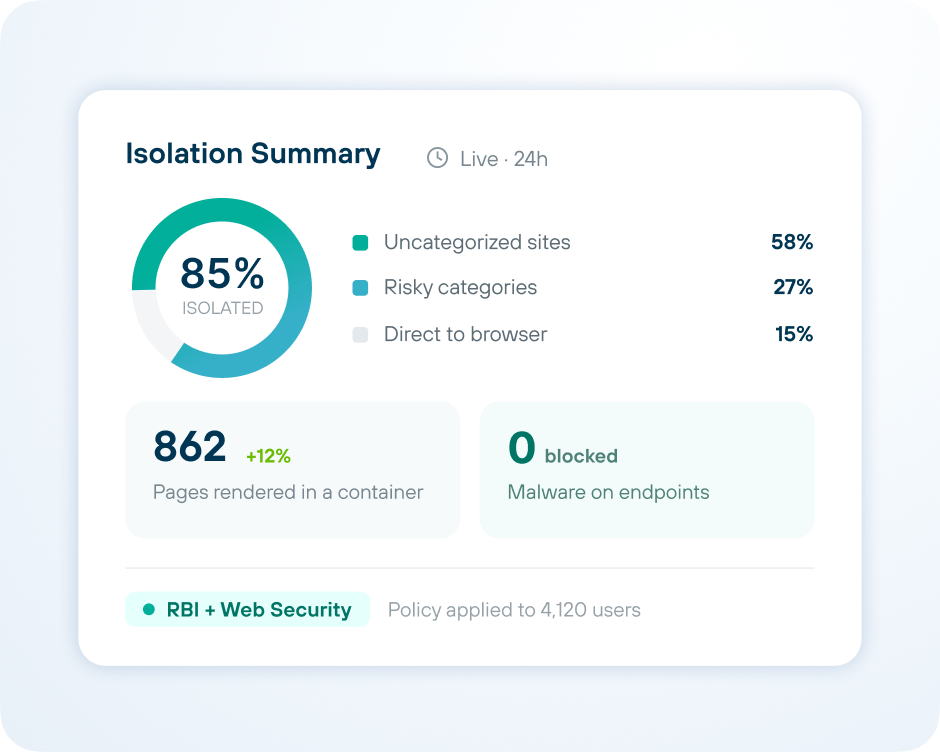
Safely Access Risky Websites
Provide additional threat protection through a Forcepoint Remote Browser Isolation (RBI) integration with Forcepoint Web Security. RBI renders potentially risky websites in a container to prevent malware attacks from launching.
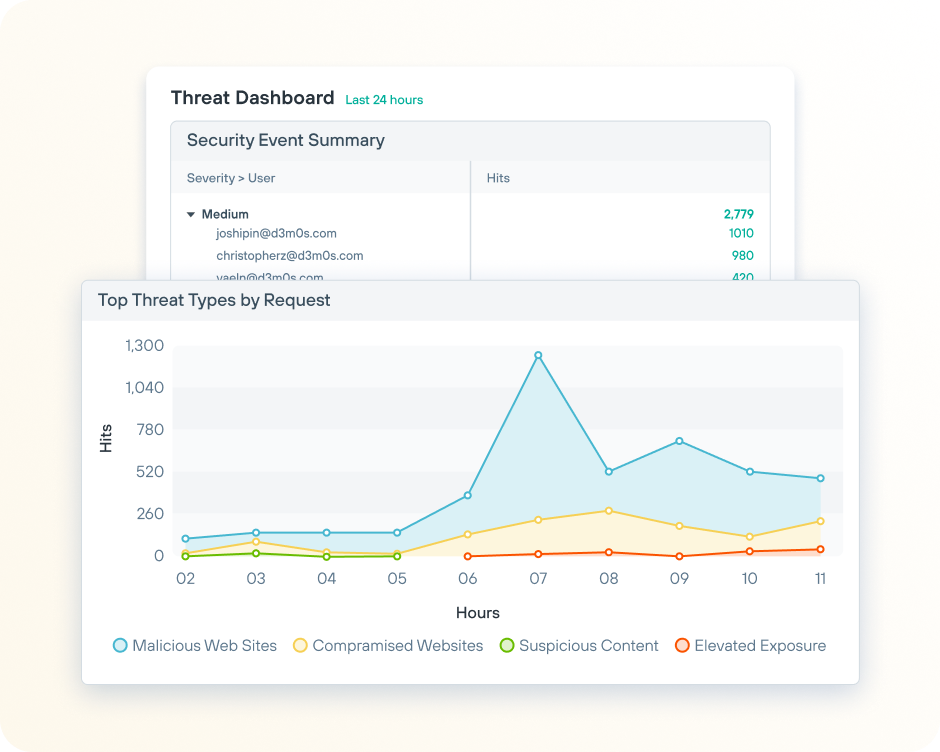
Defend Against Advanced Threats
Expand threat detection capabilities through the Forcepoint Advanced Malware Detection and Protection (AMDP) integration with Forcepoint Web Security. AMDP quickly detects known and unknown malware threats and zero-day exploits to keep
data secure.
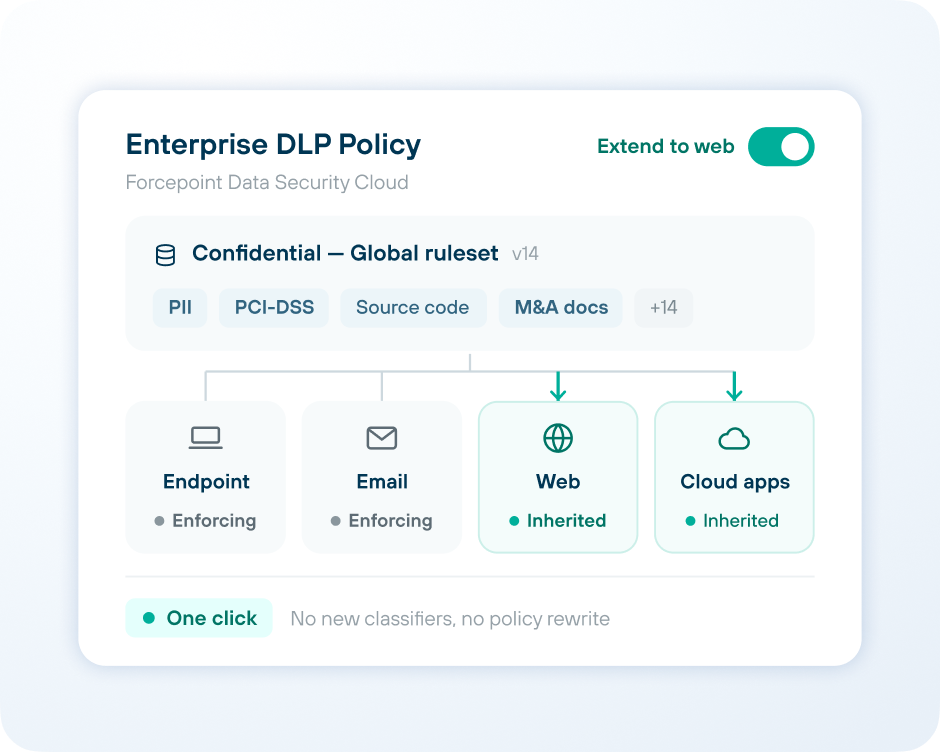
Extend Enterprise DLP to Every Web Session
Inherit the full power of Forcepoint DLP policies across web and cloud app traffic with a single click. Forcepoint Web Security integrates natively with Forcepoint Data Security Cloud, bringing the same classifiers enforcing data policy on endpoints and email to every web session your users open.
Why Forcepoint Web Security
Precise Generative AI and Cloud App Controls
Apply policies down to the URL directory level. Allow code generation tools while blocking file upload functions, or restrict AI platforms entirely, with enough precision to match any policy need.
Real-Time Content Inspection
Multiple content analysis engines simultaneously scan full web page content, active scripts, web links, files and executables, detecting threats and enforcing data policy in a single pass without sacrificing performance.
Zero-Day Threat Detection with ACE
Forcepoint's Advanced Classification Engine uses heuristic analysis, behavioral sandboxing, URL classification and reputation analysis to detect novel malware as accurately as known threats.
Smart Architecture That Goes Where Users Go
Forcepoint's distributed enforcement architecture minimizes latency by routing traffic directly between users and trusted sites. On-device enforcement means protection travels with the user.
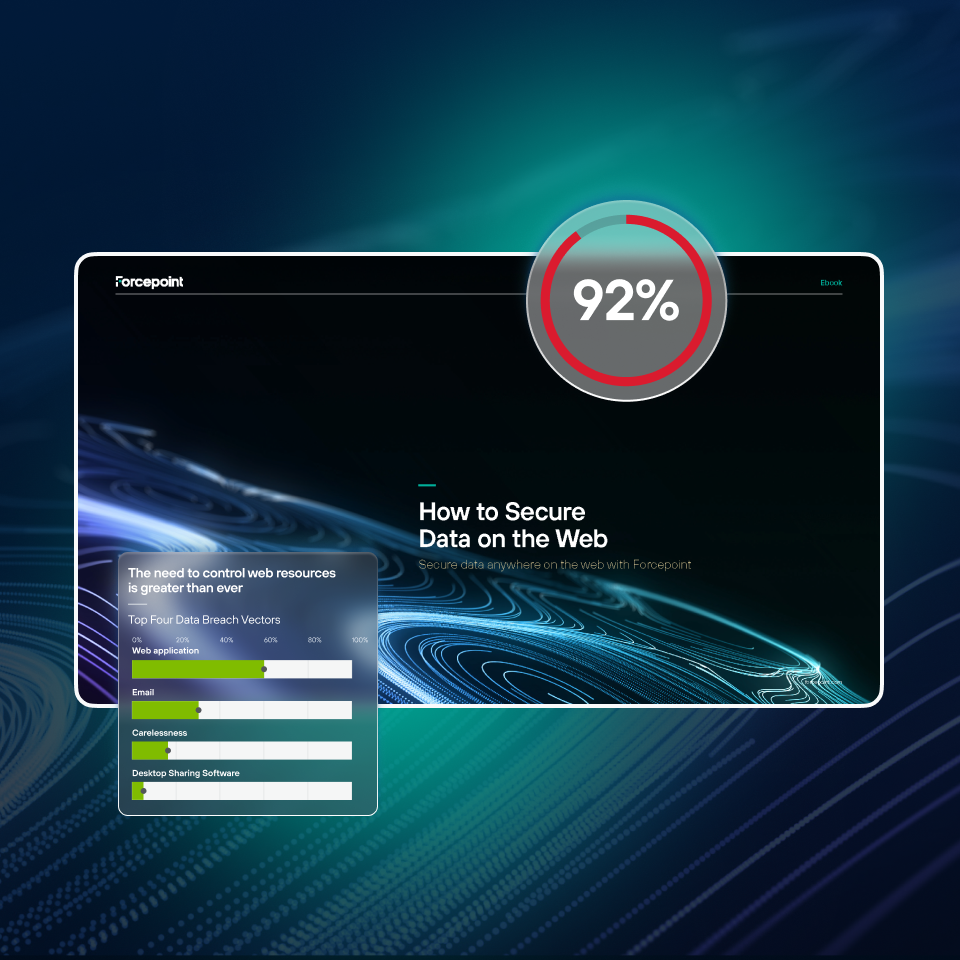
Secure Data on the Web
Discover how to extend data security to the web with your secure web gateway solution. See how Forcepoint Web Security enables organizations to protect data within any web application.
Secure Your Web Environment
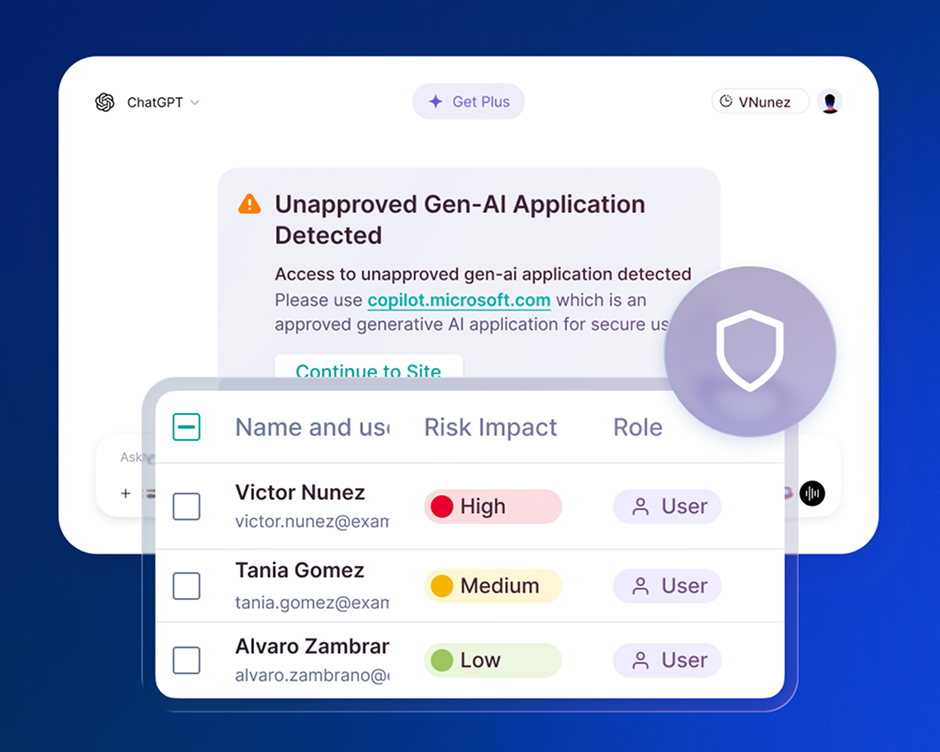
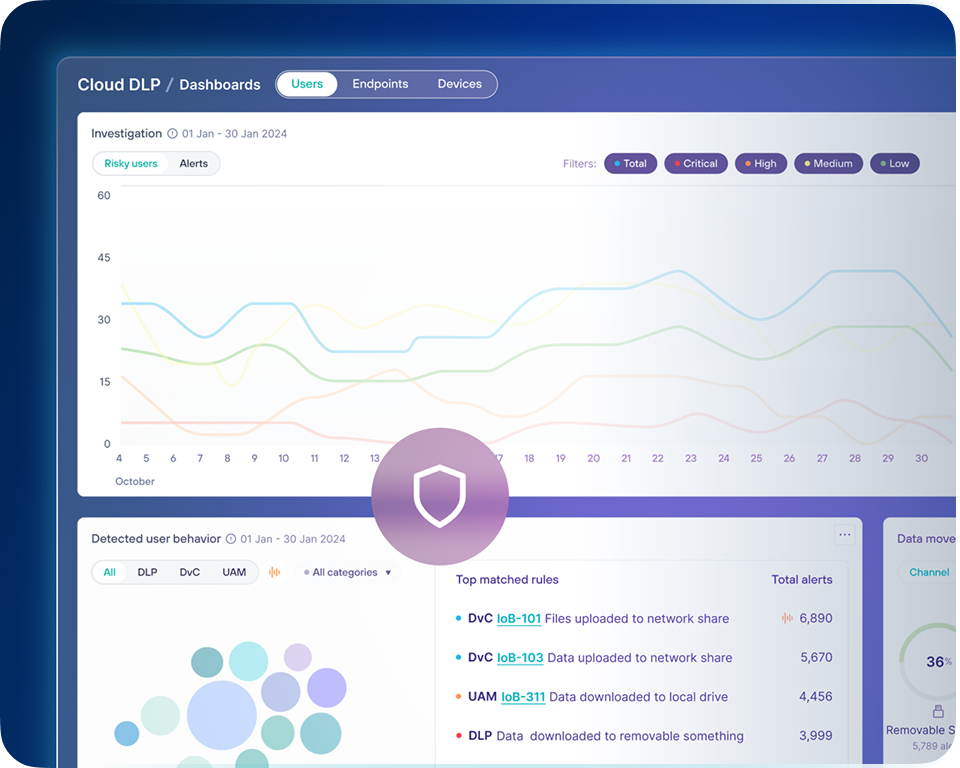
Get visibility into every unsanctioned SaaS application and generative AI tool in use across your organization. Apply granular policies — including subcategory-level controls for AI sites — to monitor, restrict or block access and protect sensitive data from entering platforms you have not approved.
Enforce data loss prevention policies across web traffic to stop sensitive information from leaving the organization through uploads, web forms or cloud storage apps. Forcepoint Web Security applies DLP inspection inline — the same policies protecting email and endpoints, extended to every web session.


Eczacibasi Holding Extends Security to the Cloud to Protect Remote Staff
"We expect people to click malicious links while they're working at home or on the road and so ensuring they receive the same level of protection as if they were on the enterprise network is very valuable to us."


Forcepoint Web Security Works Well With
What is a Secure Web Gateway (SWG)?
A SWG is a security technology designed to protect organizations, networks, users and devices from internet-related threats. SWGs perform two primary functions: they filter out unsafe content from web traffic, and they block risky or unauthorized user behavior.
How does a SWG work?
A SWG may be a software solution, a cloud-based service or a physical appliance. Positioned at the edge of a network, SWGs inspect incoming and outgoing traffic, using company policy to determine whether web traffic should be allowed, blocked or quarantined. Features of an SWG may include:
- URL filtering
- Application control
- Antivirus software
- HTTPS inspection
- Anti-malware detection and blocking
- Access control
What are the benefits of a secure web gateway product?
With SWG technology, organizations can:
- Control sensitive data on the web
- Stop web-based threats
- Uncover and monitor shadow IT
- Deliver consistent performance
What is a web security solution?
A web security solution is designed to protect websites, web apps and other web resources from a wide range of cyber threats. While a variety of solutions have been developed to improve web security, these technologies are most often combined in a SWG.
Why do web security solutions matter?
Web security solutions, like a SWG, have become an indispensable part of the security stack as threats become more sophisticated and IT environments more complex. The traditional network perimeter has virtually disappeared, thanks to major IT transformations like cloud computing, BYOD, hybrid workforces and reliance on SaaS applications. Legacy web security solutions that require all traffic to be routed through a central hub for security inspection can add severe latency to network connections, hindering productivity and limiting competitiveness.
What is a web security gateway?
A web security gateway prevents web-based threats from entering an organization's network and blocks users from accessing web resources that may contain malware, viruses and other threats. A web security gateway serves as a checkpoint, sitting between an organization's internal network and the internet to inspect traffic flowing in from and out to the web. Web security gateway solutions employ a variety of technologies such as URL filtering, malware detection, application control and inspection of encrypted traffic while delivering greater visibility into web traffic and usage.
What is a web security appliance?
A web security appliance helps protect organizations and users from internet-related threats such as malware, viruses, spoofed websites, phishing attacks and more. Web security appliances can also help prevent data leaks, control application usage, improve visibility of web activity and enforce security policies across the organization.
What is a web secure gateway?
A web secure gateway is a cybersecurity product that helps protect organizations from web-related threats by enforcing security policies for inbound and outbound web traffic.
What is a SWG service?
A SWG service is a cloud-based solution that monitors all traffic entering an IT environment from the web, as well as all outbound web requests from an organization's users.
Can Forcepoint Web Security control access to generative AI tools?
Yes. Forcepoint Web Security provides granular controls for generative AI sites, including multiple subcategories that let you distinguish between different types of AI usage. For example, you can permit access to AI writing tools while restricting platforms that could receive sensitive code, intellectual property or regulated data. This precision enables organizations to embrace AI productivity without exposing sensitive information to unsanctioned platforms.
How does Forcepoint Web Security integrate with Forcepoint DLP?
Forcepoint Web Security integrates natively with Forcepoint DLP, allowing organizations to apply the same data classifiers and policies used on endpoints and email to all web and cloud app traffic. This means you do not need to maintain separate data security policies for the web channel. The same incident reporting and management console covers the web channel, giving security teams a unified view of data risk across all egress points.