
Forcepoint Risk-Adaptive Protection
Real-Time Enforcement for
Real-World Problems
Monitor risky activity and adjust policies automatically to keep up with ever-changing threats.
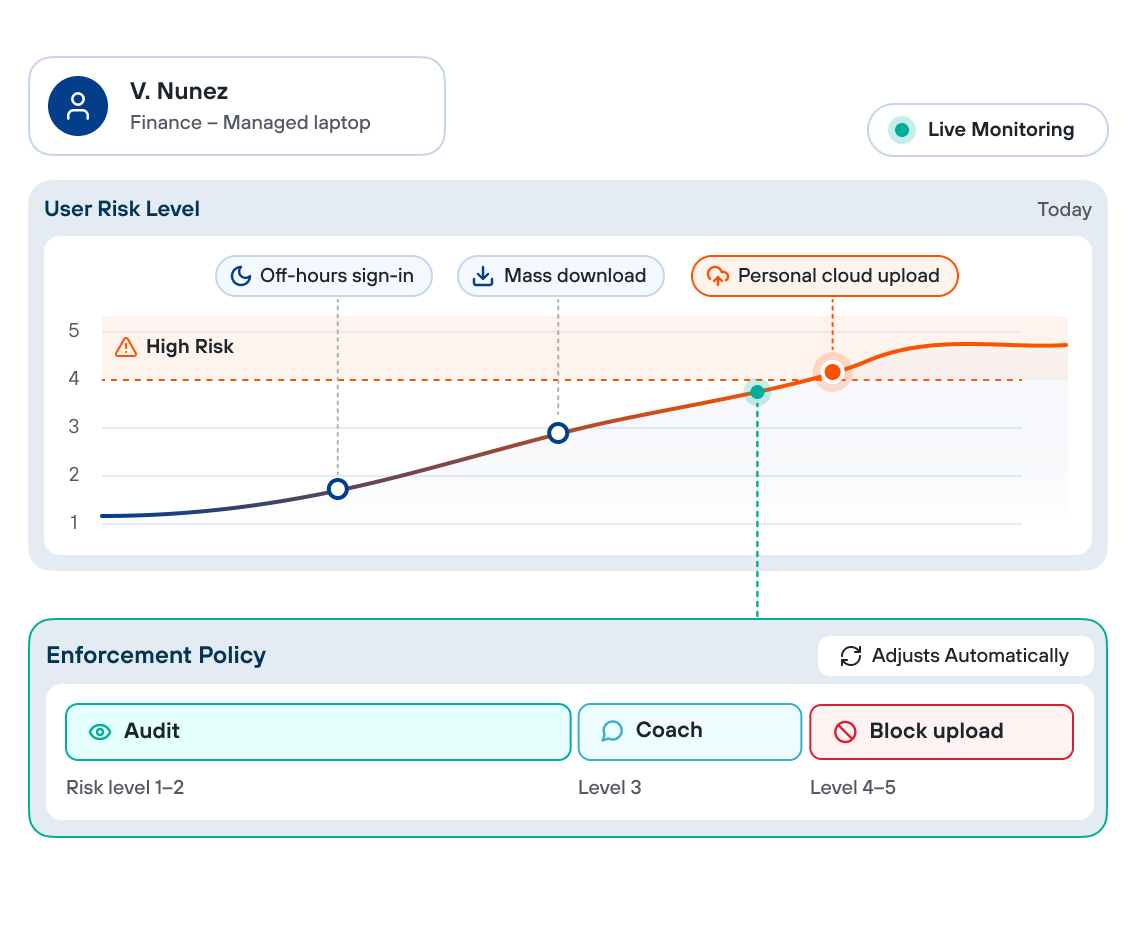












Forcepoint Risk-Adaptive Protection:
At A Glance
Forcepoint Risk-Adaptive Protection builds a real-time risk profile for every user by tracking behavior across endpoints, cloud applications and network activity. As behavior shifts, the risk score updates and DLP enforcement adjusts automatically. Users who show elevated risk encounter tighter controls right away, while those working normally stay productive without restriction. Security teams get a continuous, evidence-based picture of potential threats.
Stop Threats Before They Cause Harm
Data security that adapts to the person, not just the policy. Risk-Adaptive Protection gives organizations a proactive defense against insider threats, keeping people who need access productive while containing those who present a genuine risk.

Act on Risk Before It Becomes a Breach
Security teams get ahead of insider threats instead of responding after the fact. Enforcement adjusts automatically when users exhibit unusual behavior, containing the risk before data leaves the organization.

Let Trusted Users Work Without Friction
People who present no elevated risk work freely, with the access they need to stay productive. Only users who demonstrate risky behavior face tighter controls.

Scale Security Without Growing the Team
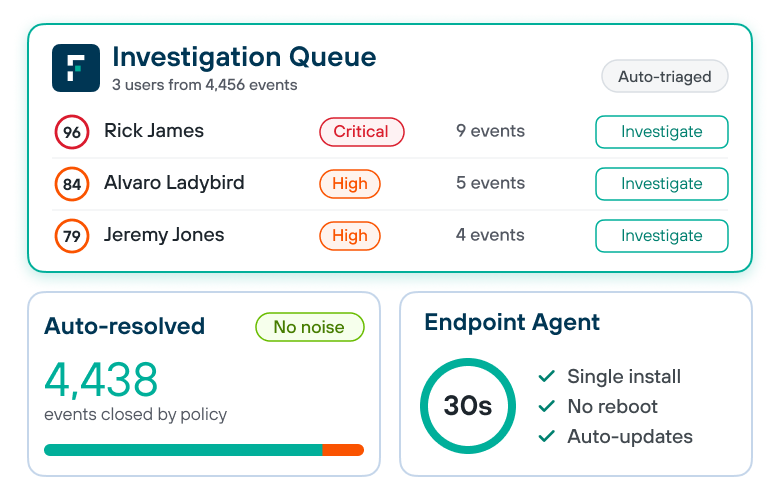
Automated enforcement eliminates the manual work of responding to every alert. Security analysts concentrate on investigating genuine risks rather than checking off a list of false positives.
How Risk-Adaptive Protection Works
Behavioral Intelligence
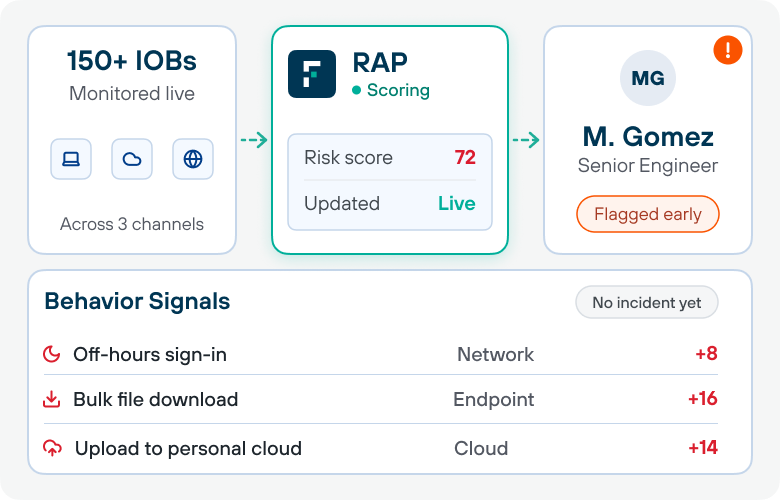
RAP monitors how users interact with sensitive data across endpoints, cloud applications and network activity. Over 150 Indicators of Behavior build a continuously updated risk score for each individual, giving security teams a picture of behavioral intent rather than isolated events.
Early Risk Detection
Individual risk scores update in real time as monitored behavior changes. When a user's score crosses a configured threshold, RAP surfaces the change with the behavioral context behind it. Security teams identify who poses a risk and begin investigation with evidence already in hand, before an incident triggers an alert.
Adaptive Enforcement and Analyst Efficiency
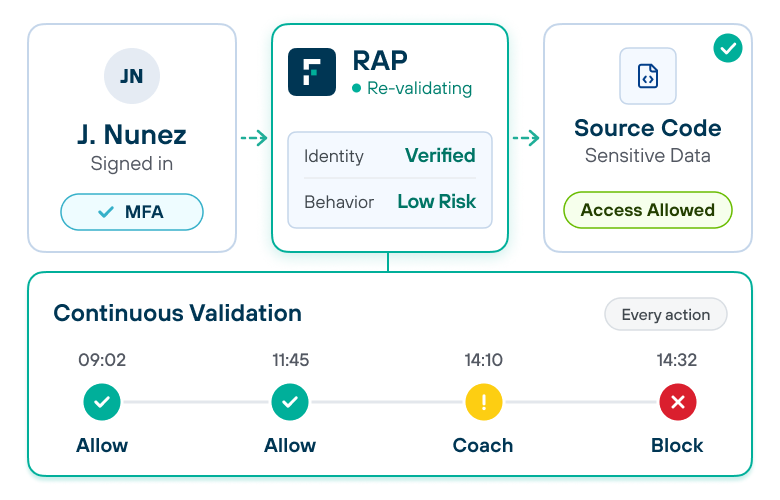
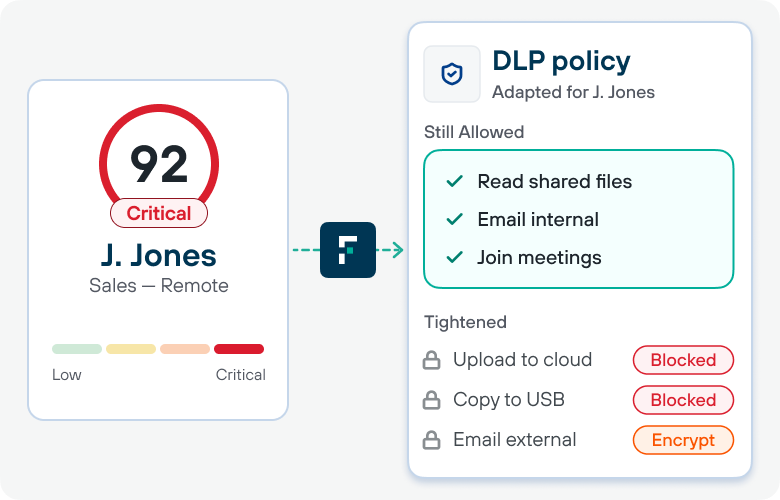
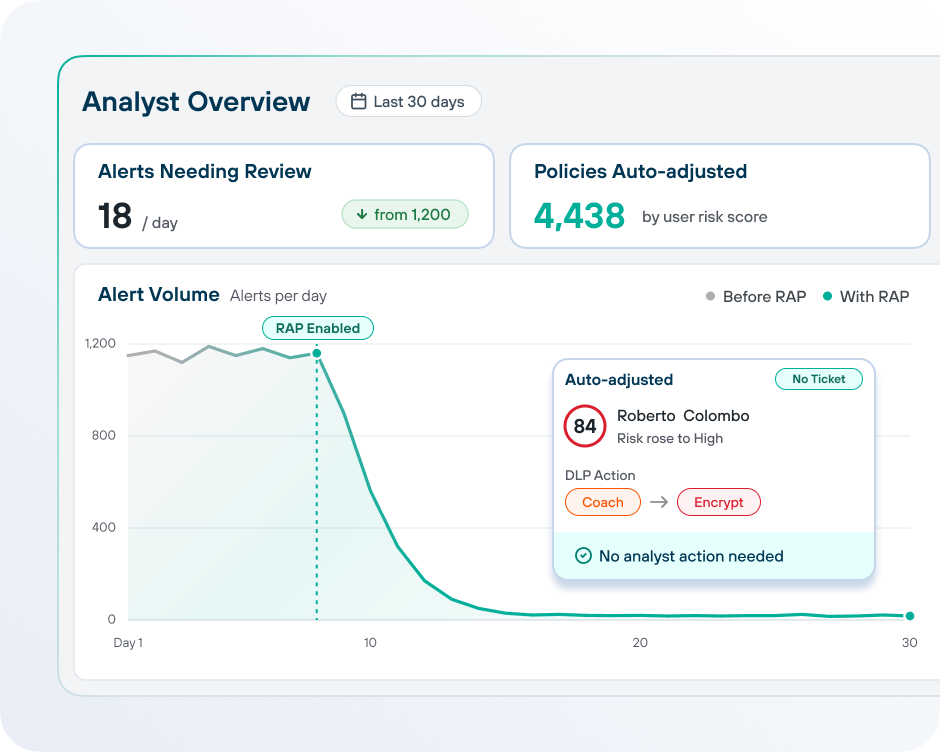
Risk score changes feed directly into the DLP enforcement engine, tightening or loosening policies per user automatically. High-risk users face progressively tighter controls while low-risk users work freely. Alert volume drops because restrictions trigger only where behavior justifies them.
Respond to Emerging Threats in Real Time
Prevent data exfiltration by automatically adapting DLP policies to block risky user behavior. Low-risk users maintain the access they need to stay productive while elevated-risk users face progressively tighter controls.
The Practical Executive's Guide to Data Loss Prevention
Discover the eight tried-and-true steps to implementing Data Loss Prevention (DLP) software for any size enterprise with our hands-on guide.
Stop Insider Threats Before They Escalate
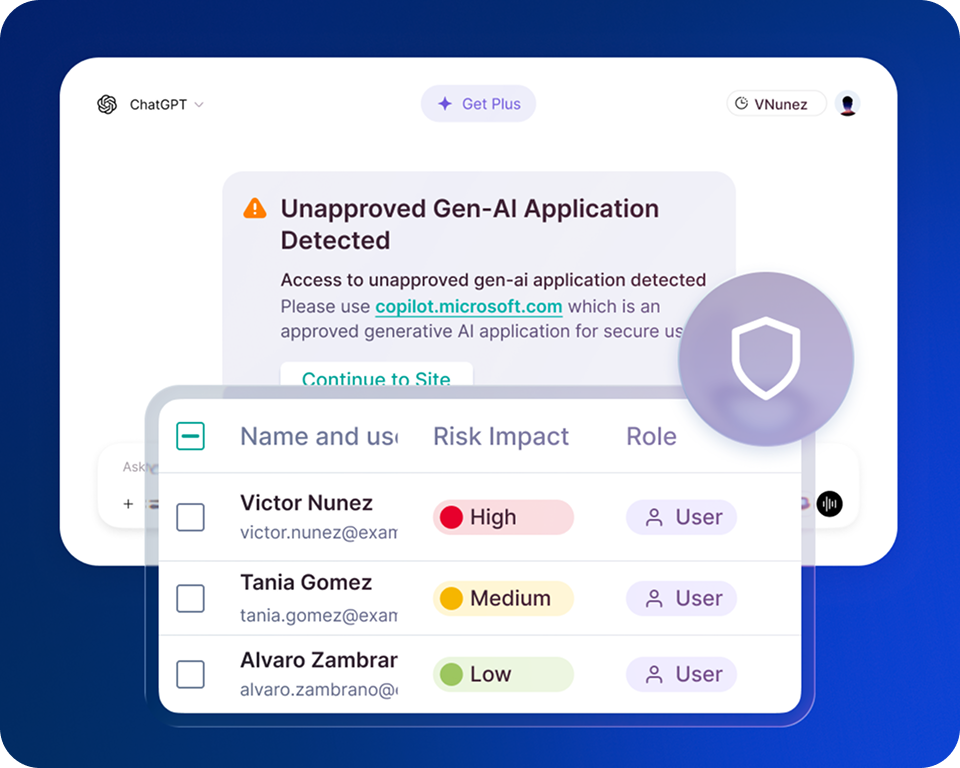
Continuously monitor user behavior and automatically tighten DLP policies when risk scores spike — stopping insider threats before data leaves the organization.
Reduce false positive alert volume and free up analysts to focus on real threats by automating policy adjustments based on individual user risk scores.
Analyst recommended.
User approved.

Forcepoint has been named a Leader in the IDC MarketScape: Worldwide DLP 2025 Vendor Assessment.

Forcepoint recognized as a Strong Performer in The Forrester Wave™: Data Security Platforms, Q1 2025.
Forcepoint Risk-Adaptive Protection Works Well With
Frequently Asked Questions
What is Risk-Adaptive Protection?
Risk-Adaptive Protection is a Forcepoint solution that monitors user behavior in real time and automatically adjusts DLP policies based on individual risk scores. It shifts organizations from event-centric to risk-centric data security, stopping threats before they escalate.
How does Risk-Adaptive Protection work?
Forcepoint Risk-Adaptive Protection continuously monitors user interactions with sensitive data across 150+ Indicators of Behavior (IOBs). When a user's risk score rises, policies automatically tighten to restrict access or block data movement without requiring manual analyst intervention.
How is Risk-Adaptive Protection different from traditional DLP?
Traditional DLP enforces static, rule-based policies the same way for every user. Risk-Adaptive Protection personalizes enforcement dynamically based on each user's real-time risk score, reducing false positives and enabling security teams to focus on the highest-risk individuals.
What are Indicators of Behavior (IOBs)?
Indicators of Behavior (IOBs) are signals that reflect user interactions with data and systems. Forcepoint Risk-Adaptive Protection monitors 150+ IOBs to build a continuous, up-to-date risk profile for each user, identifying patterns that may indicate insider threat activity or a compromised account.
Does Risk-Adaptive Protection support a Zero Trust approach?
Yes. Risk-Adaptive Protection continuously validates user risk through real-time monitoring of user and data interactions. It limits access based on unusual activities that could indicate account compromise, enabling organizations to enforce Zero Trust principles at the individual user level rather than the network perimeter.