
The War on Data, Cyberspies and AI with Eric O’Neill - Part II
Share
Podcast
About This Episode
In part II of this conversation, former FBI counterintelligence operative Eric O’Neill returns to unpack how AI is reshaping the invisible war over data. From AI-powered cybercrime syndicates to the misunderstood realities of the dark web, this episode explores why traditional perimeter defenses no longer hold and what resilience really means in modern cybersecurity.
O’Neill explains how organizations can prepare for AI-driven threats, why human judgment remains essential even as automation accelerates, and how creativity and boredom play an unexpected role in security and innovation. The discussion blends real-world investigations, clear metaphors, and practical insight for security leaders navigating a constantly shifting threat landscape.
Podcast
Popular Episodes
Podcast
The War on Data, Cyberspies and AI with Eric O’Neill - Part II
Rachael Lyon:
Hello, everyone. Welcome to this week's episode of to the Point Podcast. Rachael. I'm Rachael Lyon here with my co-host, Jon Knepher. We're excited to welcome back Eric O'Neill. He's an American FBI counterterrorism and counterintelligence operative. He worked as an investigative specialist with the Special Surveillance Group and played a major role in the arrest, conviction, and imprisonment of FBI agent Robert Hanssen for spying on behalf of the Soviet Union and later Russia. His latest book, Sponsored Spies, Lies and Cybercrime, was just published in October 2025. And he also has a previous book that talks about his experience with Robert Hanssen called Gray My Undercover Mission to Expose America's First Cyber Spy. Welcome back, Eric. We're excited to continue our conversation, and without further ado, let's get to the Point.
Jonathan Knepher:
Okay, so we're talking about AI here on the deception side. You talked earlier about needing AI on analyzing what's going on.
Eric O'Neill:
Yes.
[01:25] The AI-driven War over Data
Jonathan Knepher:
Are, is this becoming a battle of the AIs and, and where are we going as a society?
Eric O'Neill:
Like, yeah, it's been a battle of the AIs for the past year. What a lot of people don't know is that there is this war in cyberspace, and it's a war over our data. It is the most extreme war that's being fought today. And it's constant, and it never ends because AI doesn't sleep, and it keeps working. There is AI that is being used and deployed by cybersecurity companies. I have one where we're building our own AI. First technology that is going to be endpoint-enabled. So it's AI that is going to do the work that a human would normally do, because humans can't do it fast enough.
Eric O'Neill:
And looking at data and on looking for the penetrations for the flaws, for the weaknesses, for the anomalies is what we call it. And at the same time, cyber criminals are deploying their own AI. And of course, their AI has no guardrails. It is as evil and racist and mean and nasty, and it'll do whatever you want and do it with a smile. You know, it'll draft novel code. It's gotten very good at that. Now it'll. You can use dark web AI to scan networks to find flaws Right.
Eric O'Neill:
We always talk about patching. You find unpatched vulnerabilities and not just in your networks, but in the vendors who attach to your networks, the third parties that you've given access to your data, or are using different ways to help you with your data that you subscribe to. And they can be a weak link. And so dark web AI can find their flaws and then use that as a way to get in. I tell a long story in my new book about how it was a third-party company that was managing their IT help desk, and that was the way that one of the most nefarious cyber criminals. That's really ironic, right? Cyber criminals in the world, LockBit, was able to use that vulnerability in the help desk in order to get into their data, co-opt a system administrator's credentials, and then cause mayhem. And over in this non-governmental organization, charities, you know, different, all over the world, in 20 different countries, massive ransomware attack. So, you know, using the IT help desk in order to get in, you need to be very careful.
Eric O'Neill:
So in the book, because I like to be a little tongue in cheek and I want to be entertaining, I tell people, you know, really what we're living in is what was predicted in the Movie Tron. The 80s movie. The 80s Tron, not like the recent nonsense stuff we're watching, but the good old classic, right? When Disney was Disney. Right, yeah, that Tron, where there are programs who are fighting, then they're fighting all day. We're just hanging out. Right. But they're in cyberspace, like throwing discs at each other and killing each other just to protect our data. And that's what we're living in right now.
[04:18] Why Resilience Beats Perimete Defense
Rachael Lyon:
So with AI, there's just so many unknowns, though, Eric. I mean, and I guess that's part of the, that I wrestle with when there are so many unknowns out there, and it's kind of like polymorphic, right? It's kind of moving and breathing and growing and evolving. How do you protect against that? How do you, how do you. What's the gold standard of protection in a world of unknown? And it continuously changes day by day, right?
Eric O'Neill:
Well, that's the way AI can. AI can do these predictions a lot faster than humans can, but humans are never going to be be pulled out of it. The AI. Think of AI, the way that we're using AI in cybersecurity as your early warning system. You know, AI doesn't always get things right, but AI will give you an advanced warning that you may have a breach or you may have A flaw. Today, this idea of a perimeter of defense just hasn't worked in years. And any cybersecurity company that says, we're going to build a wall that's going to protect you is lying to you, because that's not how it works today in cybersecurity. What we are is threat hunters.
Eric O'Neill:
We're all cyber spy hunters, the best in breed cybersecurity. It's assuming that a threat will land, that it will get in. And what you're doing is you're building resilience, and you're building the ability to catch the threat as soon as it lands to minimize damage. And that resilience is getting you back, going as fast as possible. That's where cybersecurity is, that context, knowing when the threat has landed and blocking it, stopping it before massive damage is done, and resilience, if there is damage, coming back online as fast as possible. When we talk about segmenting data, that's one way to do that, right? The spy gets in, or the cyber criminal, you know, ransomware attack takes out this small part of your organization, but not the whole thing. And you can get back up and running really fast. And I tell a bunch of examples.
Eric O'Neill:
The best one, right, is Colonial Pipeline. They didn't know the attacker. When Russian cybercriminals attacked Colonial Pipeline, the decision to shut down their operations one was a decision that they had put in place. If they couldn't identify where the attack was coming from, they would assume that it was a national security event, right, because they moved most of the fuel from the West Coast to the East Coast any given day, and they would shut it all down to make sure that there wasn't potential damage to critical infrastructure. Well, better context in the data would allow them to know that it was just their administration side, their corporate side, and not the operational side. So they could have shut the corporate side down and continued to pump gasoline, and then people wouldn't have gone crazy all over the East Coast because they couldn't fill up their cars with gas in the middle of a pandemic when they didn't need to go anywhere. But people react to chaos in strange ways, right? So that context becomes really important. And I can help give you that.
Eric O'Neill:
You know, once again, you have to have the robust cybersecurity. And what a lot of cybersecurity companies are finding problematic right now is they're not built with AI in mind. The way their system and their architecture works, the way that their endpoint systems work, aren't built that way. So we're going to see in the next years year. And you know, if I want to ring my own bell, my company NeXasure will be. One of them is cybersecurity that does the things that best-of-breed cyber does now. But it's built with AI from the ground up. So it just works, and it works faster, and it's more streamlined, and the sensor doesn't cause any problems.
Eric O'Neill:
You're going to see some real advances in cybersecurity, and we need it because right now, we're kind of losing the war to cybercrime.
Rachael Lyon:
Yeah, the. I just. A sidebar. I love these. I was reading a Wired article, Eric, and I'd be interested in your perspective here. You know, we hear a lot about like agentic AI agents and things like that. And this fellow, and it was it Sam Altman, who said, you know, kind of companies in the future will just have the one human, and it'll be all AI agents as the employees. And so he ran this kind of test, and turns out the agents had approached him about giving an update, and the update was all lies.
Rachael Lyon:
We didn't do the email newsletter. We didn't launch this product. We didn't do this thing with a code. And the human in the mix said, you just lied to me. And they just like, yeah, my bad. Sorry. So, how do you prepare for these kinds of things evolving in the future in this context?
Eric O'Neill:
It's hard. And that's why people like me, who call themselves futurists, we rack our brains to figure out what's next so we can be right. I got a pretty good track record so far. At some point, I'll be wrong. But here's what I think. I don't think AI is going to replace every person. I don't think it works that way. Sam Altman is a great dreamer.
Eric O'Neill:
I would look at the things Zach Cass is saying. You know, he was from the early the precepts of OpenAI. He's a friend and a great speaker, too. He's got some good ideas, the way AI is going. But here's what I think. I think AI is going to be like our little buddy, like our, the guy riding shotgun, right? The, you know, our, our second brain. It's going to augment what people do. So you're going to still do your job.
Eric O'Neill:
You're just going to be much more efficient, and it's going to answer all the questions. For an example, I'm an author, and I used to spend a lot of time thinking of that perfect line. For my book, right? When I wrote Gray Day, I would, I couldn't find the word, right? I knew it, it's on the tip of my tongue. I couldn't find it. So I would set everything down, I'd throw my jacket on, I'd go outside, I'd take a two-hour walk, I'd come back, and I. And somewhere in that walk, it would just hit me, oh, the word's energetic. And I'd run back up to my computer, and I'd type it in and be perfect. I got the perfect sentence, you know, and today what I can do is, is take the sentence with the blank and throw it into AI and say, you know, my AI that I've trained and say, give me 10 words that fit this sentence.
Eric O'Neill:
And one of those words is energetic. It's the word that. It took me two hours before to find this. Sort of a small example, but magnify that, right? Researchers who now have a lot of the analysis that used to take them a long time to do, investigators who would spend a massive amount of time, and I've done this in the past, looking at the billboard on the wall with all the colored strings, just trying to put it together. AI does that in a moment, right? Which means that you can spend less time on the analysis and the grunt work and more time on the dreaming and the creativity and the big thought and the big ideas that AI doesn't do. Even when it's agentic, I don't think it's going to do that. We will fulfill the creativity that the dreams, the pushing things forward faster than they've ever been, and AI will help us get there. So, you know, you're going to have, everyone's going to be using it.
Eric O'Neill:
It's going to be sink or swim, I think, in the future. But I see it more that way than actually taking people's jobs. It's just going to make people work faster and smarter and maybe even work less. Wow.
[11:28] The Limits of AI and Human Judgement
Jonathan Knepher:
So how do you reconcile though, the, the fact that AI quite often can be convincingly wrong, right? Like blatantly wrong. But, but you have to already be an expert to recognize it because it is so convincing. And I mean, you talked about helping an investigator and so on, right? Like, isn't that scary where you might have now somebody who's responsible for an investigation, convinced of something that may or may not be true, and how do you then overcome that?
Eric O'Neill:
That's why we are never going to have AI judges, and that's why we're never going to have AI prosecutors and defense attorneys. Just in the world of law, you can see some of the horrible hijinks and mistakes. You know, very decorated lawyers from prestigious law firms have submitted briefs to courts where they just relied on AI and didn't check the link. I mean, when you're a first-year law student, right, one of the things that they teach you is you need to go and look at every case citation and make sure it's still good law, that some court somewhere hasn't overridden it and it changed it. So you're just passing off bad law. It's the same thing with AI, you can't, you can't just run. You can't say, hey, I need, I need cases that are on point that prove this, right? If you do that, AI is going to give you like 10 because you asked it to, and none of them are real. And then you submit that to a court and you're debarred and you look like a jackass. You know, there's a guy, this is a little bit of an aside, but you like him, Rachael.
Eric O'Neill:
So here you go, where he, he's, he's, he's. Now you can do a lot of court remote like everything else. And his lawyer comes on the screen, and he speaks in this really weird, archaic legal, like, I, I am pleased to appear before the court to wreck, to represent my, you know, my client so and so who prays upon the court. And the judge is like, hold on a second, like, who is this? Like, who are you? And there's like a long pause and then the, the actual, the, the actual defendant shows up on the screen. He goes, well, that's my AI lawyer. And the lawyer's like, the judge is like, no, that doesn't work. You can't just have an AI avatar, you know, advocate for you, and you can't. So the fact of the matter is, as an investigator, as a lawyer, as a scientist, using AI is like a calculator in a way, like the most advanced, amazing calculator.
Eric O'Neill:
It's like the calculator all of Google, all of human history, all of it together. But you have to check your work. You can't just. And I do that too. I'll ask a, I'll ask my AI to help me analyze this or put some thoughts together, or help me, help me put this together. Especially like when I'm writing or when I'm putting together a newsletter, right? My next newsletter is all about what I call Q2. Well, many people are calling Q2K, you know, kind of comparing Y2K. With the idea of the quantum supremacy and the fear there.
Eric O'Neill:
And I said, here are all my ideas, like, pull a lot of research and show me the links, right? And then you sit there, and you follow every link, and you make sure. And here's another thing. Just because AI gave you a link doesn't mean it's a good link. You got to follow it and say, this has nothing to do with what you said. Right? And then you got to throw that part out. So, yes, you still have to work. You still have to be a good journalist, you know, a good investigator, a good lawyer, scientist, whatever it is, and make sure that what you are saying, because ultimately it's you.
Eric O'Neill:
Is true and that you're not 100% relying on AI. And that's. This is causing a lot of trouble for students who are falling into this trap as well, which is. And I don't think students should be. Should be using AI, at least not through high school in this way. I think that once you're in college, you're kind of training for your career, and everybody's using it anyway, and we can get into shadow it and where AI is changing that for organizations as well. Want to get back to organizations, but yeah, gotta check your work. But you always have to check your work.
Eric O'Neill:
It's just people are lazy, and they don't want to. And they think that the AI wrote this so magically. Well, yeah, because it just gave you what you want.
Rachael Lyon:
Exactly. I'm a journalist by trade, you know, from my degrees, but I use it kind of sparingly when I'm writing, though, because I don't want to be so dependent on something giving me the words. Like, I want to come up with the words. But to your point, sometimes you are stuck. Your muse is not there. And I just need a little nudge. Little nudge to help me get going, get back in my groove. But that's the part where I kind of struggle as a writer, because as a human, there's nuances you can bring that ChatGPT or whatever cannot.
Rachael Lyon:
But to your point, though, people are also lazy, and they're like, hey, I just need a shortcut to get to something and push it out.
Eric O'Neill:
Well, Rachael, you do have to write it yourself, because there have been studies that have shown that the more we rely on AI, the more we lose that capacity to write. Your brain will actually rewire itself to think. This is my shortcut. And the brain is amazing that way. The brain is always looking. It's why humans are so incredible across our History at creating inventions that make our life better. Our brain is designed to find the easiest path from point A to B, whether it's following a map, whether it's inventing the wheel, whether it's inventing AI, which is just another way to make our lives easier. And of course, everything we create that makes our lives easier also has a dark side.
Eric O'Neill:
Nothing is black and white, but here, you know, if you rely, if it does all your writing for you, you'll forget how to write, and you'll sit down and try to write, and you'll struggle.
Rachael Lyon:
Yes, it's. Was it one of my favorite kinds of cybersecurity quotes to kind of get comfortable with being uncomfortable? But it's that kind of same thing, right? You gotta. I've been. This whole neuroscience thing right now, TikTok, it's. It's really sucked me in, but it's. I love what you're saying because it's so true. Like you, you have to rewire your brain because it does, it defaults to that easy path forward. But that's how you get stuck and.
Eric O'Neill:
Yeah, well, in my book, I have a chapter that's. That's titled 'No Blind Pages', right? And my fear. And you know, as a father, I have a 17-year-old, a 16-year-old, and a 12-year-old. And my fear has always been, what are we doing to our children when we move that horrible moment of spark and creativity. And what I'm talking about is when we grew up, you would sit down with this sheet of loose leaf in class, and you'd have your number two pencil, and your teacher would say, in English class, write an essay on the blue sky or whatever. And that first miserable moment where you'd have to think of your first line, it's the same thing with the, you know, every book I write, every article I write, everything. You know, that first line is so important and you agonize over and agonize of it and suddenly there's a spark and you think, oh my God, that's perfect. And the whole thing falls into place, and you struggle, and you edit, and you go back and forth, but you lose that ingenuity, that creativity.
Eric O'Neill:
We lose that mental flexibility when the first line of everything we write is asking, AI, this is the essay. Write me an essay. And then you edit it. I mean, it's like we need boredom. And you know, take this to the next level. Boredom is so critical to creativity. We don't create if we're not bored, which is why so many of the Amazing Discoveries happened when people were bored sitting under a tree, and an apple fell on your head. Right? Wow.
Eric O'Neill:
Gravity. These kinds of things are so important. Like, I do my best thinking when I mow my lawn. I still take a purse mower, and I go out, and I mow my own lawn myself. And I do it, and I have, like, music on. I don't listen to podcasts or stories because my mind, you know, you're just going back and forth, back and forth, and your mind's like, help me. And I was like, no, I'm not helping you. You do it yourself.
Eric O'Neill:
And then it starts to dream and create. And I don't know how many times I got to stop the lawnmower and pull out my notes app and like, furiously type. This is a good one. This is a great one. Right? But the boredom leads to that. Same with music, Same with acting. Same with writing. You need to let your mind just be bored and drift and open and do what it's supposed to do.
Eric O'Neill:
Continue to fire, continue to dream, continue to solve problems.
Rachael Lyon:
I love that.
Eric O'Neill:
So we need to have more blank pages. I made my kids all learn to write with a number two pencil and a sheet of loose-leaf paper.
Rachael Lyon:
That's wonderful, because that's another thing being lost, right? You know, the handwriting, all these kinds of fascinating things happening.
Eric O'Neill:
Oh, yes, definitely. They can write, and they can all write in cursive, and nobody can do that anymore.
Rachael Lyon:
That's a lost skill.
Eric O'Neill:
I don't think. I don't even think I can do it anymore.
Rachael Lyon:
John. I've been monopolizing the conversation. Sorry.
[20:32] Understanding the Dark Web
Jonathan Knepher:
That's okay. Yeah, I guess, you know, did we want to dig into some of the, the Dark Web questions you brought up before? Like putting in, you know, bad guys, putting in agents, and exporting stuff out to the Dark Web and dark web AIs. What are some misunderstandings and misconceptions around, like, what is the Dark Web, and how does it affect all of us?
Eric O'Neill:
Yeah. I've stood on stages in the past few years in front of tens of thousands of people, and I usually ask this question: Who here knows exactly what the Dark Web is? And if I asked, and I won't, could come up on stage and do like a quick, like 10-minute primer, right? And there are usually like one or two hands. And many of these audiences are, you know, big corporate events, big conventions of IT people, right? And it's usually when someone raises their hand, I'm like, you work for the government. And if they work for, like, you know, intelligence or the FBI. Usually, they're FBI. They'll come up later. It's like, yeah, I work for the FBI. I'm like, I figured for.
Eric O'Neill:
Right? Because most people don't understand what the Dark Web is. They don't understand what it is at all. And so one of the things I really wanted to do in the new book is demystify it. And actually, I have a friend who is one of the original Dark Web, what I call Dark Web spelunkers. People who go down into this dark cavern, right, to go find all the bad stuff, to give us that early warning. And he was actually hired by the DOD and then sent after the largest drug trade on Earth, which was on the Dark Treb, led by this guy named the Dread Pirate Roberts. And they were going to go find Dread Pirate Roberts. And the way they did it is they, they said, hey, you know, we got to find somebody who's an American, right, that we can turn, you know, because a lot of these people are all over the world in places that have no extradition here.
Eric O'Neill:
So they started looking for Americans that were part of the drug trade. And they found a shipper in Baltimore, and my buddy was one of those people. So for the book, I'm like, you got this expertise. I dabble going into the Dark Web, but I want the way you do it. And I bring my readers over his shoulder as we go down to like the worst, horrible marketplaces. I mean, like the Body Parts Bazaar, where you can buy eyes or feet or hands or a new heart with a shady doctor who will transplant it for you. All these passports and IDs from all over the world that are for sale. Everybody's account on social media is for sale.
Eric O'Neill:
Identities, people that are for sale. It's the biggest sex trafficking and human trafficking marketplace on earth. Weapons trafficking, and all of the kinds of data e-learning platforms, right, for cybercriminals who can go and learn how to launch a ransomware attack and download a toolkit. And if you're successful, you just kick us back 25%, right? And that's how these big cybercrime syndicates grow and grow. So it's fascinating, but the Dark Web isn't like a place; it's not like a site on the Internet. It lives as part of the Internet. It's about 5% of the Internet. And you might think that's not very big, but the Internet is astronomically large.
Eric O'Neill:
The Internet is so large that our minds can't conceive of how big it is. And growing at an Exponential rate. Right now, the Internet is nearly 180zettabytes of data. I mean, a zettabyte is so big. And I had to figure this out for my readers using an analog example, like a metaphor. If I stack paper from my feet all the way up to one zettabyte and paper has data, right, it would actually blow past the Andromeda galaxy. That's a lot of paper. That's one light year away.
Eric O'Neill:
That's massive. That's a massive amount of paper. And of course, we couldn't do that. But hey, data is data, and we're growing data centers, and the Dark web can exploit any data, so it can exploit networks. Part of the Dark Web actually lives in legitimate companies all over the earth, where cyber attackers have co-opted part of their data infrastructure and created their own virtual servers that just feed the Dark Web. And all of these servers are called volunteer servers. And of course, there are people who you could set up a volunteer server to the Dark Web. And because some of it is used legitimately, the inception of the Dark Web was actually by the Department of the Navy to create a way for our spies to be able to communicate using the Internet backbone while they were overseas in hostile countries.
Eric O'Neill:
You know, think Navy seals who are deployed somewhere and want to send an email and don't want it to be intercepted. They can do it through the Dark Web. And then these researchers left the Navy and decided, hey, you know, this could be used for the good of all, and made it open source. And the bad guys said, yep, we're going to use it for the good of us. And that's how the Dark Web was really born as the biggest criminal enterprise in the history of the Earth.
[25:35] Why the Dark Web Keeps Growing
Rachael Lyon:
That's, you know, I love that we're talking about this because I feel like maybe it's just the things that I'm reading. I don't feel like anyone's talking about it as much anymore, Eric. I mean, but yet it's proliferating in all these crazy ways. But why aren't people talking about it more?
Eric O'Neill:
People. People don't talk about things that they find very esoteric and hard to understand. Nobody wants to feel like they're not smart. And it also the way that people have talked about it is very jargon-based and difficult. I mean, I'm an author, so I think in terms of metaphor, and I think that's better for storytelling and getting people to understand. So when I talk about the Dark Web, which what's the classic way to talk about the dark web? It's an iceberg floating in the ocean. I mean, that's just so silly.
Eric O'Neill:
In the dark web, massive. It's not a little iceberg that you're going to hit with your ship. You might never even see it. And they like that because the smallest part is above. That's the surface web, right? That's everything we can Google. And then you go deeper, and that's the deep web. That's not bad. It goes deep into the water.
Eric O'Neill:
You get it. And at the very tiny point at the bottom, that's the dark web. Well, that's not the dangerous part of an iceberg. It's actually the top. So my metaphor is a cavern. It's dark and dangerous. And if you've ever, like, put on your dirty suit and, and your, your wrist, your elbow protectors and knee protectors, and your helmet with your carbide lamp and gone and spelunked down on your belly where, you know, you can feel the whole mountain pressing on your back, and you're claustrophobic and miserable. That's getting to the dark web.
Eric O'Neill:
That's what the feeling is like. And it, it just spreads throughout the entire earth. It's just cavernous and everywhere. But you also get the ability to say the deep web, right? That, that deep, that crawling down into the earth, which is difficult and ever more difficult the deeper you go. That's a perfect metaphor for the Internet because the majority of the Internet, 90% of it, is behind lock and key. It's the secure layer. It's the battleground for cybersecurity versus cybercrime and espionage. And that's the invisible war that we don't see.
Eric O'Neill:
So we think of the Internet, and when we think of the Internet, we think it's the stuff that I Google. It's when I'm scrolling through social media, it's, you know, when I send an email. But that's actually the smallest part of the Internet. And the dark, the dark web is like a cancer that grows on the Internet. Co-ops it for its own purposes and allows marketplaces for cybercriminals that, for the most part, can't be shut down by law enforcement, can't be stopped because I have example after example in the book of how law enforcement has successfully, they thought, shut down these cybercrime gangs. But cybercrime gangs, what I call syndicates, so that we elevate our thinking, practice the same stuff in cybersecurity that the good guys do. Context, resilience, cybersecurity. Right.
Eric O'Neill:
They have backups. They just restored from backup. They change their branding and name, and then they launch. They always launch, like the meanest, nastiest next attack possible, because it's like kicking a hornet's nest.
Rachael Lyon:
Wow. Well, I'm. I can't wait to read your book, Eric. I gotta say.
Eric O'Neill:
It was a very. It was a very difficult book to write, which. Which required an immense amount of research and talking to other experts. And really pondering and thinking how I would explain these things in a way that's fun and reads like a spy thriller. And that's what I wanted. A lot of my endorsers and beta readers have said it reads like a true crime novel, which made me feel really happy because, you know, that's what I want. I want people to. To feel like they're reading a cool book, but learn everything they need to not only spot the attacks, but know what can I do to stop them?
Rachael Lyon:
Okay, one last question, because I know you've been very generous with your time, but kind of bringing it full circle to Breach. Are you working with any Hollywood folks on any new, I don't know, scripts or movie ideas through all of your adventures?
Eric O'Neill:
Well, I'm always. Yeah, you know what? I'm always working with Hollywood here and there, mostly as a consultant to help. This doesn't look right. This isn't FBI. This isn't fun. A lot of it now is with sort of science, like, that's sort of a little bit more interesting. Like you're seeing movie after movie where the bad guy is like the hacker, right? The super powerful. We're changing things now.
Eric O'Neill:
You're seeing movies. You're gonna see a bunch of movies coming out where AI is the bad guy, and trying to get those right. You know, in the Hollywood world, I did do something really fun. I sat down with Ryan Phillippe, who played me. Nobody knows this yet. Who played me in the movie Breach. And I had this idea. We had this idea.
Eric O'Neill:
We've been friends since the movie came out. You know, even before the movie came out, when we were shooting together, and he came up to me, and we were chatting, and he had this idea, like, you know, a lot of what I do as an actor and the access I get as an actor sounds a lot like what you did as an undercover agent. And what in the access you got, and there's got to be some, like, commonality there. And maybe that's what makes it so easy for me to play you in the role. I never forgot that conversation. And so, like, something like 20 years later, we sat down at his house and did an interview where we interviewed each other. It's more like two guys chatting. And when I said the way I want to do this is sort of like between two ferns, you know, kind of tongue in cheek.
Eric O'Neill:
Just fun, you know, and goofing around, but focusing on the intersection between acting and working undercover. And could an actor be an undercover operative? And. And could an undercover operative be an actor? And we answered that question and had a lot of fun. And the conversation meanders all over, and you can just see two good guys having a lot of fun. You know, he has a really nice carpet. We weren't wearing shoes. And I'm going to. I'm gonna publish that on my newsletter on January 13th.
Eric O'Neill:
So that'll be my next project with Hollywood.
Rachael Lyon:
I love it. I love it. I can't wait to wait to see that. Cause I see that, I see the commonalities. That's really smart to put those two together.
Eric O'Neill:
Yeah. It was a fascinating conversation. And it's totally true. You know, a lot of the training, it turns out it's the same, so. And in fact, one thing I note in the conversation is that the CIA does send a lot of their trainees to improv classes because you need to be able to think on your feet, and it's a great asset for a student.
Rachael Lyon:
Wow. I've never heard that stated before. I love that. It's. Wow, you're making the FBI sound fun, Eric.
Eric O'Neill:
The FBI was fun. Although I must say, my wife puts it bad that I look at my time in the FBI and it was dedicated undercover work. I never came out of COVID my entire time in the FBI through these massive rose colored glasses. Right. I only see the fun stuff, and I forget the hours and hours of sitting and waiting and watching and just hoping my guy moved that day. Right. You know, just please go get a cup of coffee. Just do something.
Rachael Lyon:
I'm dying here.
Eric O'Neill:
Right. And then. And then it could be. It could be day after day where they never come out of their house. Right? Yeah. You know, we would have, like, a Chinese spy, and we would get them from the airport and follow them and take them to the embassy, and then they never come out for like a month. That is the miserable thing.
Rachael Lyon:
I do watch movies, and I think about how hard that must be, you know, because you can only drink so much coffee and donuts and sit in a car, I guess. Yeah, yeah.
Eric O'Neill:
You get in that chap. I remember there was one point where I looked at myself and I what am I doing to myself. I like every day on my way to where I would go, we meet. We call it the station. It would be some random place, could be behind, like a coffee store, a supermarket, or something where we all like look at our maps. This is back in the days of maps on the hood of like the team leader's car, and figure out where we're going to go that day, and who we're going to catch, and what we're going to do because we were the first remote employees. And you know, on the way, I'd stop at like 7:11, get a donut and coffee. And then, like after my pants weren't fitting, I was thinking, what am I doing to myself? And then I was really.
Eric O'Neill:
And I become a meme. I'm a cop meme. I'm a donut and coffee guy. I can't do this. So I had to stop all that.
Rachael Lyon:
Right? Oh, comfort food. Love it.
Eric O'Neill:
Yep. And sugar and coffee and caffeine and keep your mind going, going, going. Right. So good.
Rachael Lyon:
Well, thank you, Eric. I think we definitely have a two-parter for this chat, but thank you so much for the insights and entertaining kind of analogies and metaphors, and bringing it to life for our listeners. It makes it fun but also very salient, relatable, and accessible, which is what we love our conversations to be. So thank you.
Eric O'Neill:
Well, Rachael, John, it has been a thrilling conversation. I've enjoyed it. If you haven't seen me laughing, too. To the Point is a great podcast. I love it, and I'm looking forward to seeing what you put together. Wonderful. And happy New Year.
Rachael Lyon:
Yes, Happy New Year. And John, as we enter the new year, what are we going to encourage our listeners to do?
Jonathan Knepher:
You know, start that new year by smashing the subscribe button.
Eric O'Neill:
Ring the bell.
Rachael Lyon:
That's right. Ring the bell, and you get a fresh episode every single Tuesday. So until next time, everybody stay secure.
About Our Guest
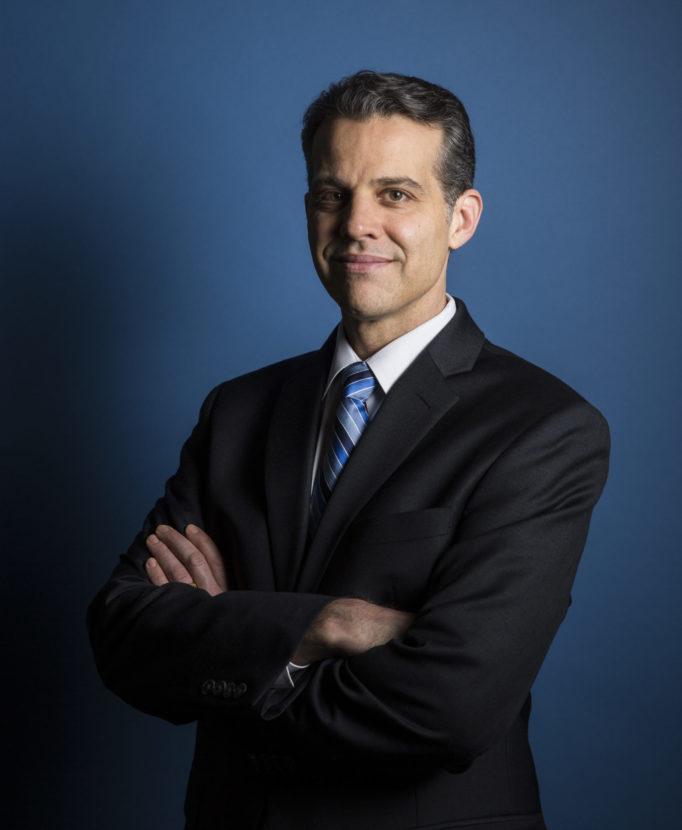
Eric O'Neill, Founder, The Georgetown Group and NeXasure AI
Eric Michael O'Neill is an American former FBI counter-terrorism and counterintelligence operative. He worked as an Investigative Specialist with the Special Surveillance Group (SSG) and played a major role in the arrest, conviction, and imprisonment of FBI agent Robert Hanssen for spying on behalf of the Soviet Union and later Russia. His book, written about this experience, Gray Day: My Undercover Mission to Expose America's First Cyber Spy, was published in spring 2019. He is a public speaker and security expert who lectures internationally about espionage and national security, cybersecurity, fraud, corporate diligence and defense, hacking, and other topics.
Learn more about Eric's books