Best Data Security Software Platforms of 2026
0 minutes de lecture

Lionel Menchaca
Security leaders face a new wave of data sprawl that's moving faster than traditional controls can handle.
Sensitive data now flows through SaaS apps, GenAI prompts, cloud storage and third-party systems, usually without visibility or consistent policy enforcement. Modern data security software solutions work to close these gaps by showing where data lives, how it's used and where it's at risk so teams can protect it without slowing down the business.
And the financial stakes are real: according to the 2026 IBM Cost of a Data Breach Report, the global average cost of a data breach climbed to $4.99 million, a 12% increase over last year and a new record high.
As of mid-2026, the conditions driving that cost have intensified. Generative AI tools are creating and transforming sensitive data at a scale and speed that traditional controls were never designed to manage. Employees paste financial records, source code and personally identifiable information into AI prompts daily. Agentic workflows move data across systems autonomously, often without a human reviewing any step. The result is a new category of data sprawl that legacy Data Loss Prevention (DLP) alone cannot address. That reality has shifted what security leaders are evaluating. Unified DLP, Data Security Posture Management (DSPM) and Data Detection and Response (DDR) is no longer an advanced architecture. It's becoming the baseline expectation in 2026 buying decisions.
This guide compares the top 10 data security platforms of 2026, outlines must-have capabilities and offers guidance to help you choose the right solution for your environment.
Top Data Security Software Platforms for Businesses in 2026
1. Forcepoint
Core capabilities: Unified DLP, DSPM, DDR and CASB with inline and API controls, AI governance, classification and policy orchestration
Overview:
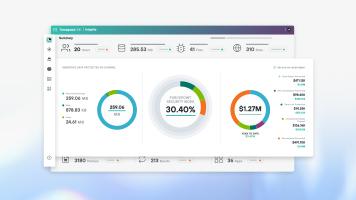
The Forcepoint Data Security Cloud is a unified data security platform that delivers protection across web, cloud, endpoint and private apps through a single policy framework. In 2026, Forcepoint extended this platform with Forcepoint AI Security, adding purpose-built governance for sanctioned AI applications, shadow AI tools and agentic AI workflows. Security teams can manage everything from a single console, eliminating policy duplication while extending existing DLP policies to AI interactions with no reclassification required.
Top Features:
- Built-in Forcepoint Data Loss Prevention (DLP) enforcement across endpoint, web, cloud and email
- AI-native data discovery and classification via AI Mesh
- Forcepoint DSPM for continuous discovery and classification of data at rest
- Forcepoint DDR for continuous monitoring and behavioral anomaly detection
- Forcepoint AI Security: centralized AI inventory, prompt-level content inspection and graduated agentic AI enforcement controls
- ARIA (Adaptive Risk Intelligence Assistant) for natural-language policy setup and incident response
- Shadow AI discovery and governance across sanctioned and unsanctioned AI tools
- Inline and API enforcement reaching agent-to-LLM traffic invisible to proxy-based approaches
- Full identity attribution across human users and AI agents
Pros:
- On-premises, hybrid and SaaS deployment support
- Pre-built remediation workflows
- Broad SaaS, web and endpoint coverage
- Existing DLP policies extend to AI with zero reclassification
Cons:
- Consolidation may require workflow changes
- Coordination across IT and security teams needed for rollout
Ideal for:
Enterprises that want centralized visibility and control over data with hybrid deployment and AI governance built into the same platform.
Customer feedback:
Customers highlight consistent policy enforcement that reduces false positives and rule duplication. "Before Forcepoint, I had multiple platforms and limited line of sight across them. Data Security Cloud gives us unified visibility and control at scale and simplifies my job." — Brian Johnson, Director of IT Security, Liberty University
2. Cyera
Core capabilities: DSPM, DLP, AI Security Posture Management (AI-SPM), AI Runtime Protection, identity and behavioral governance
Overview:
Cyera has significantly expanded its platform in 2026. What began as a cloud-native DSPM solution now spans DSPM, DLP, identity and behavioral governance in a single platform. The company launched AI Guardian — combining AI-SPM with AI Runtime Protection — and introduced Omni DLP for cross-channel data leakage prevention. Cyera raised $600 million in June 2026 at a $12 billion valuation, reflecting rapid enterprise adoption.
Top Features:
- Multi-cloud DSPM with AI-native data discovery and classification
- Omni DLP for cross-channel data leakage prevention, connectable to existing DLP providers via API
- AI Guardian: AI-SPM for posture management plus AI Runtime Protection for real-time enforcement
- Browser Shield for prompt-level enforcement at the browser
- AI Firewall for API-level governance of custom AI applications
- Data lineage mapping and exposure analysis
- Identity and behavioral governance
Pros:
- Broad expansion from DSPM-only roots to a more unified data and AI security platform
- Fast deployment; organizations typically gain initial visibility within hours to days
- Strong multi-cloud coverage and AI agent governance
Cons:
- Platform breadth has expanded rapidly through acquisitions and new launches; integration maturity across all capabilities is still proving out at scale
- Endpoint DLP depth and on-premises coverage remains more limited relative to dedicated DLP platforms
Ideal for:
Cloud-first enterprises that need unified DSPM, DLP and AI governance in a single platform.
Customer feedback:
Users cite strong visibility across multi-cloud environments and meaningful reduction in alert noise from AI-driven enrichment.
3. Varonis
Core capabilities: DSPM, DDR, DLP, data access governance, AI security, insider risk analytics and managed threat response
Overview:
Varonis has expanded well beyond permissions analysis. Its cloud-native Data Security Platform now spans DSPM, DDR, DLP, data access governance and insider risk management. In March 2026, Varonis launched Atlas, a generally available AI security platform that discovers, assesses and protects AI agents, copilots and large language models across the enterprise. Its Managed Data Detection and Response (MDDR) service, enhanced with agentic AI in 2025, provides 24x7 monitoring with a 30-minute SLA for ransomware response.
Top Features:
- SaaS, IaaS and hybrid cloud data discovery and classification
- Permissions and entitlement analysis with automated remediation
- Insider risk analytics and behavioral detection
- Varonis Atlas: AI-SPM, AI pen testing, runtime guardrails, compliance reporting and AI detection and response
- Agentic AI-powered MDDR with automated triage, investigation and containment
- DLP enforcement across SaaS and data stores
Pros:
- Deep visibility into access, entitlements and data exposure across SaaS and file systems
- MDDR offers turnkey managed coverage with strong SLAs
- Atlas brings end-to-end AI security from inventory through runtime enforcement
Cons:
- MDDR is a managed service model, which suits some teams but may not fit organizations that prefer full in-house control
- Strength skews toward governance and detection; real-time inline DLP enforcement across all channels requires validation against your environment
Ideal for:
Organizations addressing excessive access, insider risk or AI governance across SaaS and file systems — particularly those that want managed detection and response alongside their data security program.
Customer feedback:
Appreciated for deep access visibility and the operational relief that MDDR provides for resource-constrained security teams.
4. Netskope
Core capabilities: CASB, SWG, ZTNA and inline data protection
Overview:
Netskope provides real-time data protection through its Security Service Edge platform, integrating cloud visibility with inline enforcement.
Top Features:
- Inline SaaS and web DLP
- CASB, SWG and ZTNA
- Cloud threat protection
- User and activity analytics
Pros:
- Strong inline controls
- Integrated SSE stack
Cons:
- DSPM still maturing
- Add-ons may be required for full coverage
Ideal for:
Teams seeking inline protection across SaaS, web and private app access.
Customer feedback:
Praised for real-time enforcement and SaaS visibility depth.
5. Palo Alto Networks
Core capabilities: Prisma Access for CASB and SWG, cloud app security and threat protection
Overview:
Palo Alto Networks delivers consistent data and threat protection through its Prisma platform, ideal for organizations already invested in its stack.
Top Features:
- Prisma Access platform
- CASB and SWG
- Cloud app monitoring
- Threat and data protection
Pros:
- Broad ecosystem coverage
- Tight integration with Palo Alto tools
Cons:
- Can be complex for smaller teams
- DSPM less advanced than specialists
Ideal for:
Enterprises consolidating multiple security functions into one platform.
Customer feedback:
Users report simpler management and better security outcomes after consolidation.
6. Microsoft Purview
Core capabilities: Classification, labeling, insider risk management and information governance
Overview:
Microsoft Purview centralizes governance and compliance across Microsoft 365, with native integration for classification and insider threat controls.
Top Features:
- Data classification and labeling
- Insider risk management
- Information governance
- M365-native policy controls
Pros:
- Strong integration with Microsoft 365
- Unified governance and compliance capabilities
Cons:
- Limited visibility beyond the Microsoft ecosystem
- Requires manual effort for multi-cloud coverage
Ideal for:
Microsoft environments wanting built-in data governance and risk management.
Customer feedback:
Praised for seamless M365 integration but less flexible across non-Microsoft apps.
7. Proofpoint
Core capabilities: Email DLP, threat intelligence and insider risk monitoring
Overview:
Proofpoint targets human-driven data risk by combining email DLP, insider threat management and behavioral analytics.
Top Features:
- Email DLP and filtering
- Insider threat management
- Threat intelligence
- User risk insights
Pros:
- Strong email protection
- Advanced user behavior analytics
Cons:
- Limited coverage beyond email channels
- Broader DLP requires integrations
Ideal for:
Companies managing insider or email-driven data exposure.
Customer feedback:
Praised for precise, behavior-based detection.
8. Symantec
Core capabilities: Enterprise DLP across endpoint, network and cloud
Overview:
Symantec offers mature DLP capabilities built for large, regulated organizations.
Top Features:
- Enterprise DLP
- Endpoint and network enforcement
- Cloud coverage
- Mature data classifiers
Pros:
- Proven enterprise-grade DLP
- Deep data classifiers for compliance
Cons:
- Legacy complexity
- Modernization still in progress
Ideal for:
Enterprises expanding long-standing DLP programs.
Customer feedback:
Customers value consistent policies and strong rule sets built over years.
9. Zscaler
Core capabilities: CASB, SWG and threat prevention
Overview:
Zscaler enforces inline policies at high speed, offering visibility into cloud app usage and data movement to the internet.
Top Features:
- Inline controls
- Cloud app discovery
- Threat and data protection
Pros:
- Strong performance and reliability
- Inline enforcement across users and locations
Cons:
- Limited DSPM visibility
- Requires integrations for full context
Ideal for:
Organizations needing fast global protection without latency trade-offs.
Customer feedback:
Praised for speed and policy reliability.
10. Trellix (McAfee)
Core capabilities: Endpoint DLP, analytics and policy enforcement
Overview:
Trellix, formerly McAfee Enterprise, continues to deliver strong endpoint DLP with analytics for insider and device risk.
Top Features:
- Endpoint DLP
- Analytics and reporting
- Threat correlation
- Policy enforcement
Pros:
- Deep endpoint visibility
- Familiar workflows for legacy users
Cons:
- Limited cloud coverage
- Integrations still evolving
Ideal for:
Enterprises upgrading from traditional endpoint DLP.
Customer feedback:
Users value endpoint strength but want broader cloud integration.
What Are the Must-Have Features of a Great Data Security Platform?
A great data security platform provides visibility and control over business data everywhere it lives or moves. The core capabilities to look for are:
- Consistent DLP policy enforcement
One set of policies that protect data across endpoints, cloud apps, web and email. - Accurate, automated data classification
Discovery and tagging of structured and unstructured sensitive data, improving accuracy through innovative AI technologies. - Inline and API-level SaaS visibility
Real-time monitoring of data in motion plus deep insight into how data is stored and shared inside cloud applications. - Centralized analytics and reporting
A single view that correlates data movement, user activity and policy outcomes for faster investigation, fewer false-positive alerts and easier compliance.
These essentials ensure organizations maintain continuous visibility, adaptive enforcement and scalable protection across apps, devices and systems without slowing down the business.
How to Choose the Right Data Security Software
The right platform helps you simplify complexity, strengthen control and scale securely in an AI-driven world. Focus on these four priorities when evaluating your next data security investment:
Contain data sprawl and fragmentation
Data now lives everywhere — across SaaS, endpoints and shadow IT. Look for a solution that unifies discovery and classification across your entire environment so policies apply consistently wherever data moves. Forcepoint provides full visibility across cloud, web and endpoint to keep fragmented data ecosystems under control.
Manage the AI risk explosion
Generative AI tools create new data pathways and exposure points every day. Choose a platform that extends protection to AI-driven workflows and prevents sensitive data from leaking into prompts or training sets. Forcepoint AI Mesh improves classification accuracy and scales protection into every AI interaction.
Stay ahead of compliance demands
Regulatory pressure is rising across regions and industries. A modern data security platform should automate classification, tagging and reporting to demonstrate compliance without slowing innovation. Forcepoint helps you prove control with unified, audit-ready evidence for frameworks like GDPR, HIPAA, CCPA and many others.
Look for true security stack integration
Point products create visibility gaps and increase operational friction. The best data security software integrates with your data, cloud and analytics tools to create shared intelligence across systems. Forcepoint's unified platform connects DDR, DLP, DSPM and CASB capabilities to deliver real-time, adaptive protection from a single policy engine.
For additional best practices on scaling your program, see data security best practices.
Final Takeaway: What 2026 Buyers Should Prioritize
The data security market has shifted. Point solutions that do one thing well — visibility only, cloud DLP only or posture management only — are harder to justify when the threat environment demands coordinated response across discovery, enforcement and monitoring.
Two themes are defining 2026 buying decisions more than any others.
AI risk is now a data security problem, not a separate category. Every platform on this list has responded to the reality that sensitive data flows through AI prompts, agentic workflows and shadow AI tools daily. The question is no longer whether your security platform addresses AI risk, but whether it does so natively at the data layer or through a bolt-on that creates another silo. Buyers evaluating platforms in 2026 should push vendors on how AI governance connects to existing DLP policy — and whether that means zero reclassification or a separate implementation project.
Unified DLP, DSPM and DDR is the new baseline. Shadow AI, GenAI-driven data sprawl and agentic workflows have made the case for fragmented tools almost impossible to defend. The platforms earning the most consideration in 2026 combine discovery, enforcement and behavioral monitoring in a coherent architecture rather than assembling them from separate acquisitions that share a dashboard but little else. Before committing to any platform, map how those three capabilities share classification, policy and telemetry — not just how they appear on the same screen.
For organizations that need those three capabilities working together from a single policy framework, with AI governance built in rather than added on, see how it all comes together in the Forcepoint Data Security Cloud.

Lionel Menchaca
Lire plus d'articles de Lionel MenchacaLionel Menchaca has covered data security at Forcepoint since 2020, writing about DLP, DSPM, insider risk and AI security for security and IT leaders. He works with Forcepoint X-Labs threat researchers to turn their findings on emerging threats, from AI-targeted supply chain attacks to prompt injection, into practical guidance, and he leads the company's editorial strategy across the blog and the X-Labs newsletter. Before Forcepoint, Lionel founded and ran Dell's corporate blog for seven years and spent two decades helping enterprise tech companies explain security, cloud and AI.
- Forcepoint Data Security Cloud
Dans l'article
 Forcepoint Data Security CloudManage Access Everywhere

X-Labs
Recevez les dernières informations, connaissances et analyses dans votre messagerie

Droit au But
Cybersécurité
Un podcast couvrant les dernières tendances et sujets dans le monde de la cybersécurité
Écouter Maintenant