
Forcepoint DDR
Détectez et empêchez les violations de données
Prévenez les pertes de données avant qu’elles ne surviennent grâce à une surveillance continue et à des réponses pilotées par l’IA.
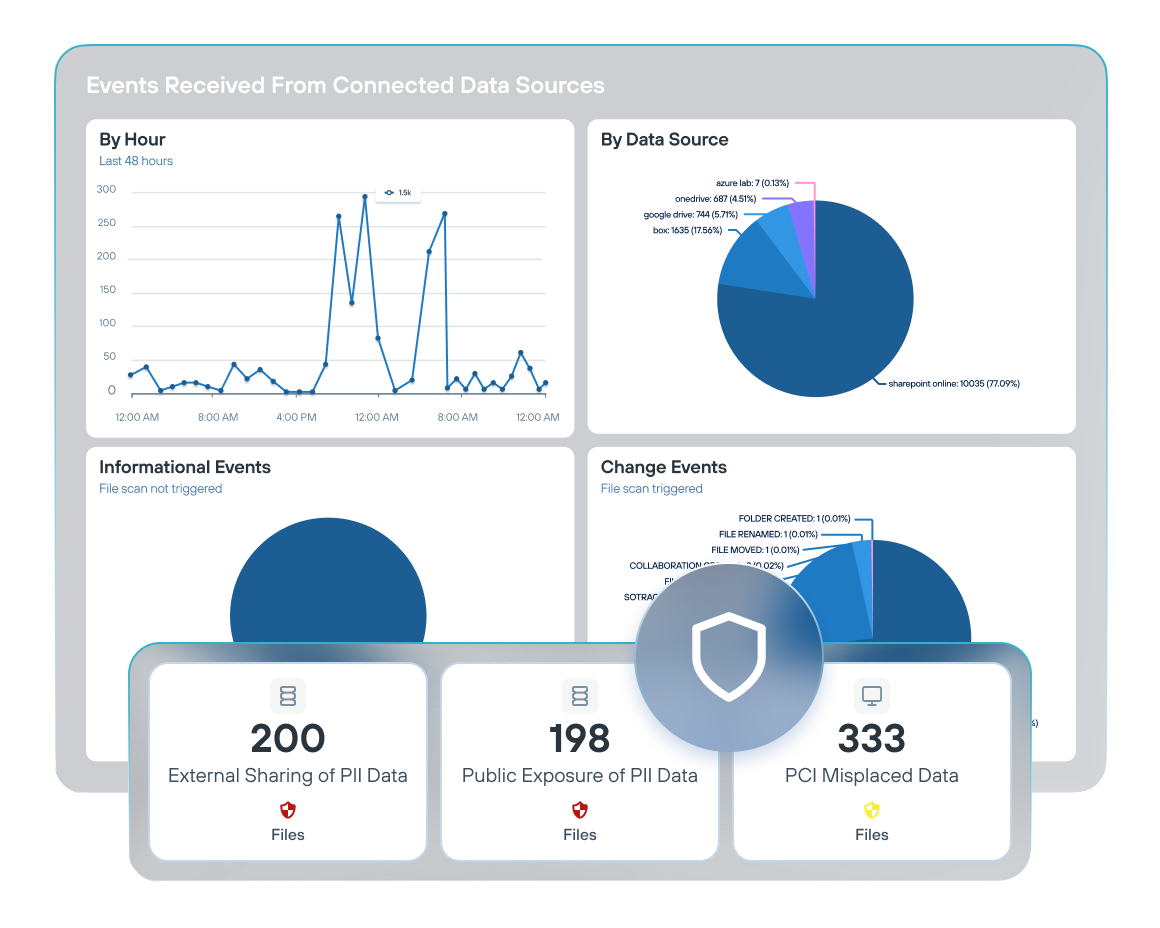











Forcepoint DDR: en un coup d'œil
Le logiciel Data Detection and Response (DDR) utilise une classification basée sur l’IA et une surveillance continue pour détecter et prévenir de manière dynamique l’exfiltration des données. Forcepoint DDR va au-delà de la simple identification des risques en vous aidant à hiérarchiser les actions correctives et à réagir rapidement avec une grande précision dans les environnements cloud et sur les postes de travail.
Pourquoi adopter une solution de détection et de réponse aux données?
Forcepoint DDR utilise une classification basée sur l’IA et une surveillance continue pour détecter et prévenir les tentatives d’exfiltration avant qu’elles ne se transforment en violation de données. Allez au-delà de la simple détection des risques en accélérant les réponses grâce à une visibilité précise sur les environnements cloud et les postes de travail.

Détectez les menaces dès leur apparition
Surveillez en continu les activités sur les fichiers — consultation, partage, renommage et déplacement — dans les environnements cloud et sur les postes de travail afin d’identifier immédiatement les signes d’exfiltration.

Classifiez vos données avec la précision de l'IA
La classification alimentée par AI Mesh identifie avec précision les données sensibles en cours d’utilisation, réduit les faux positifs et permet à vos équipes de se concentrer sur les alertes réellement critiques.

Réagissez avant que les données ne quittent votre environnement
Forcepoint DDR génère des alertes explicables et priorisées accompagnées de recommandations de remédiation afin de vous permettre d’agir rapidement avant toute fuite de données.
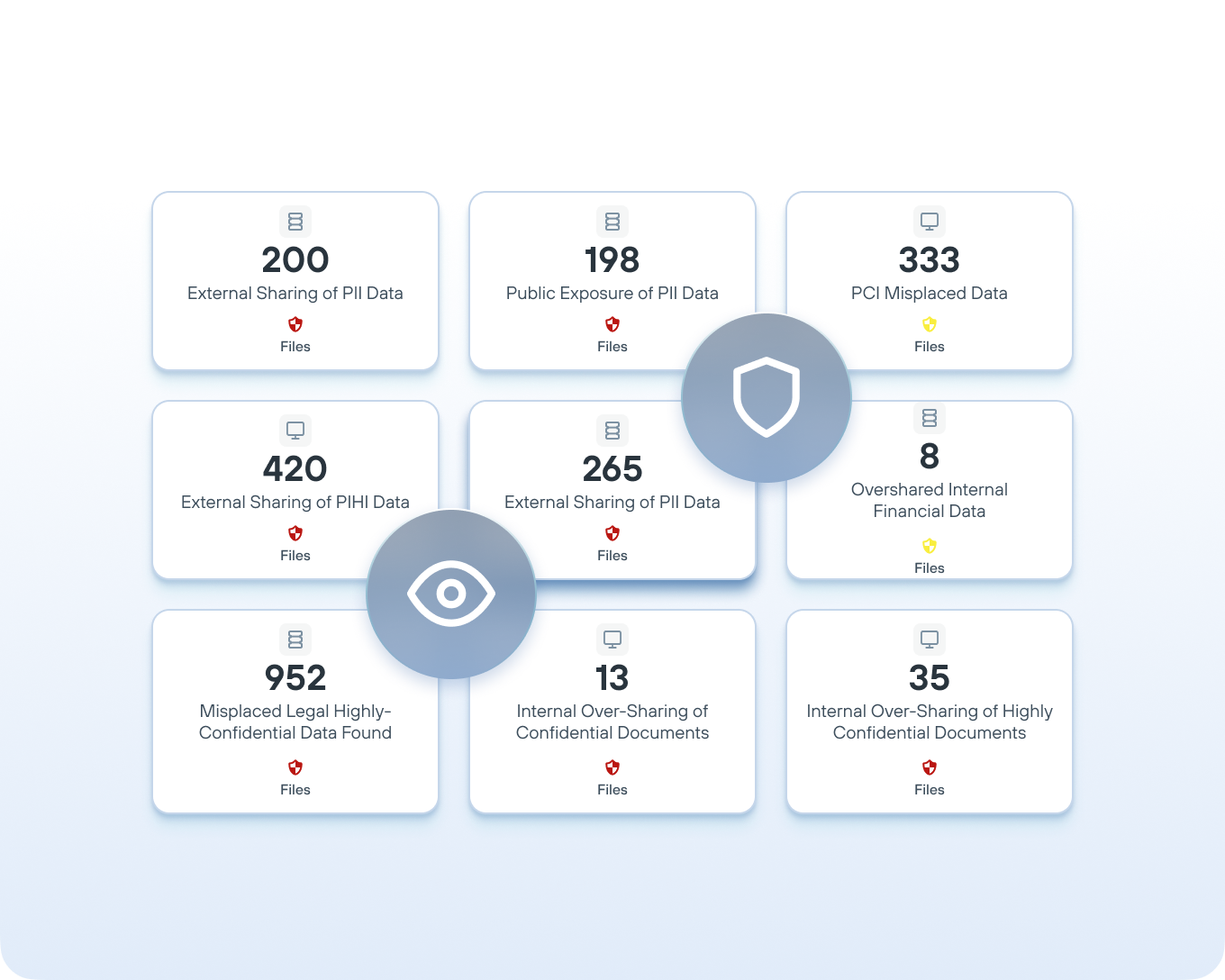
Faites le tri grâce à des alertes explicables
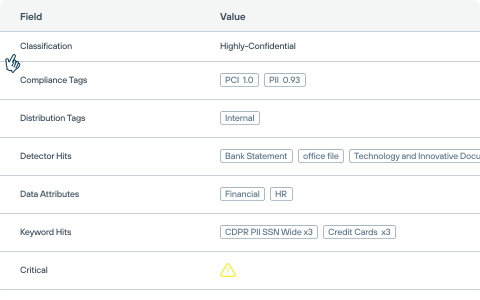
Forcepoint DDR met en évidence les menaces les plus critiques avec un contexte complet — quelles données sont concernées, qui y a accédé et quelles actions ont été effectuées — permettant aux équipes de sécurité de consacrer moins de temps à l’analyse des faux positifs et davantage à la gestion des risques réels.
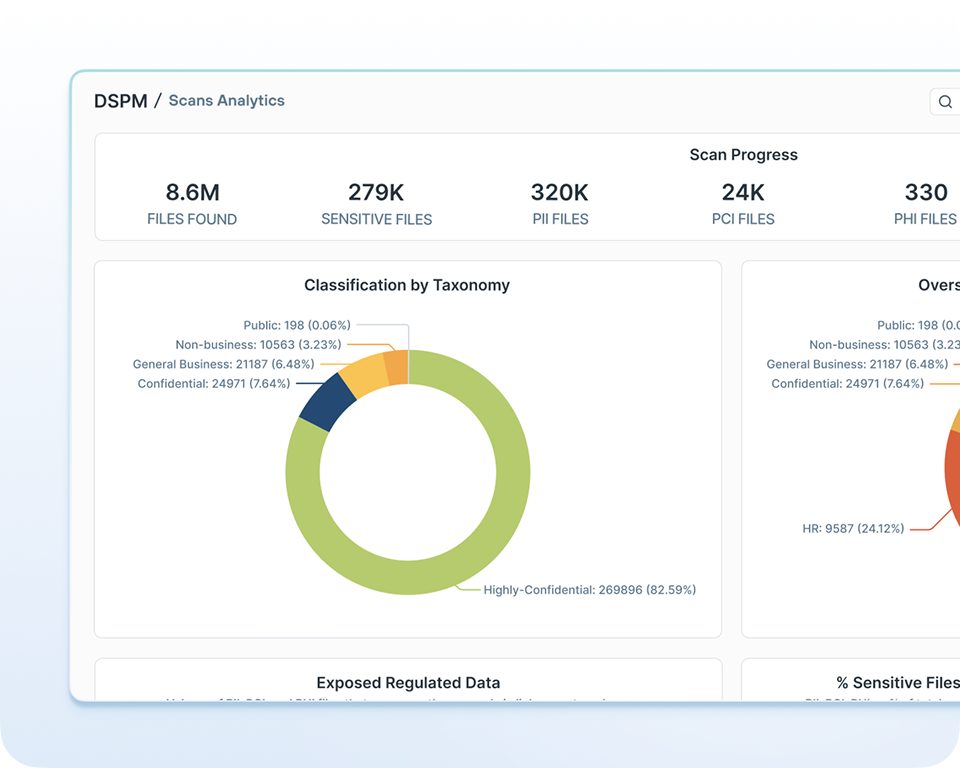
Associez DDR et DSPM pour une maîtrise complète de vos données
Combinez Forcepoint DDR avec un DSPM conçu nativement pour l’IA afin de découvrir, classifier et surveiller en continu les données sensibles dans les environnements cloud et sur site.
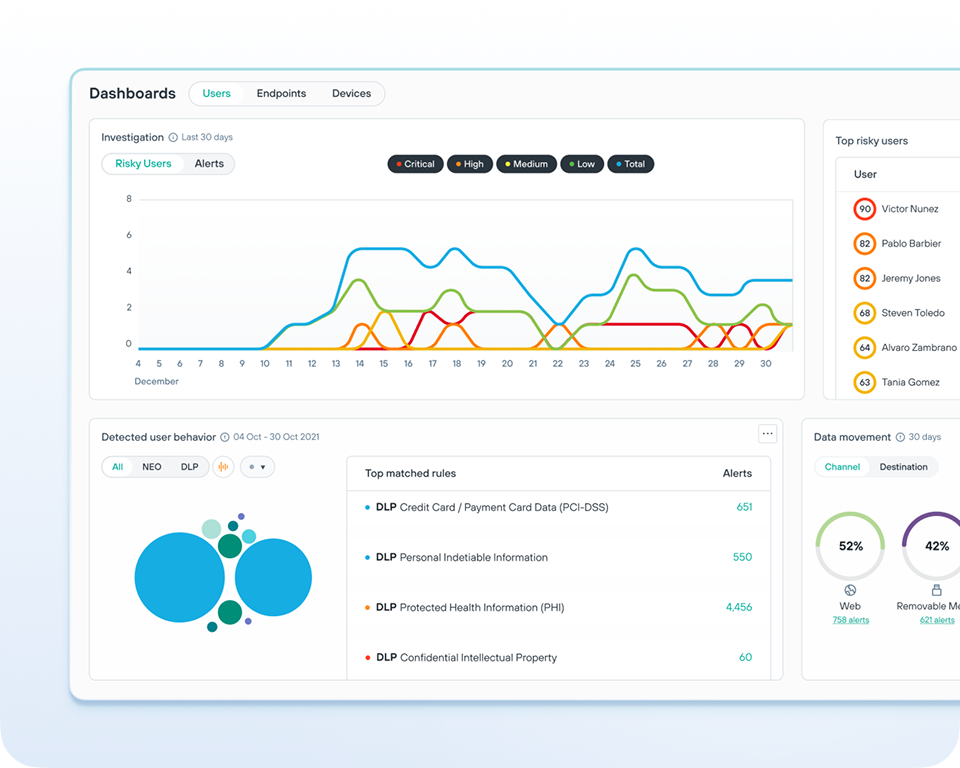
Évoluez à grande échelle grâce à une approche unifiée et moderne
Sécurisez l’activité liée à l’IA, protégez-vous contre les risques internes et accompagnez les nouveaux modes de travail grâce à Forcepoint Data Security Cloud. Cette plateforme unifiée découvre les données, identifie les risques et applique des protections en temps réel avec l’aide d’ARIA, son assistant IA intégré.
Pourquoi adopter une solution de détection et de réponse aux données?
Classifiez vos données en toute confiance
Améliorez le contexte de vos données grâce à AI Mesh pour mieux comprendre leur sensibilité et leur importance métier.
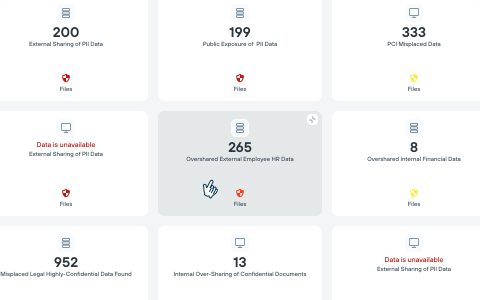
Détectez les menaces plus rapidement
Réduisez le délai moyen de détection grâce à une surveillance continue du partage, du renommage et du déplacement des fichiers.
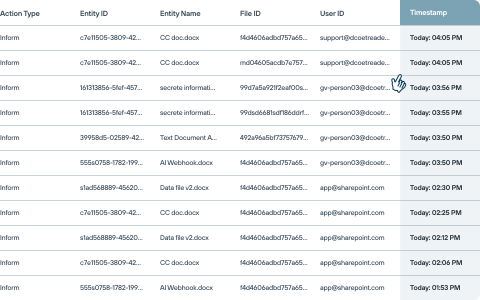
Protégez les environnements cloud et les postes de travail
Étendez la visibilité et l’application des politiques de sécurité à l’ensemble de vos environnements cloud et terminaux.
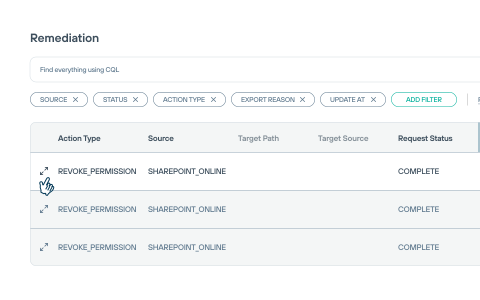
Réduisez les faux positifs
Priorisez les alertes selon leur niveau de gravité afin d’accélérer les délais de réponse.
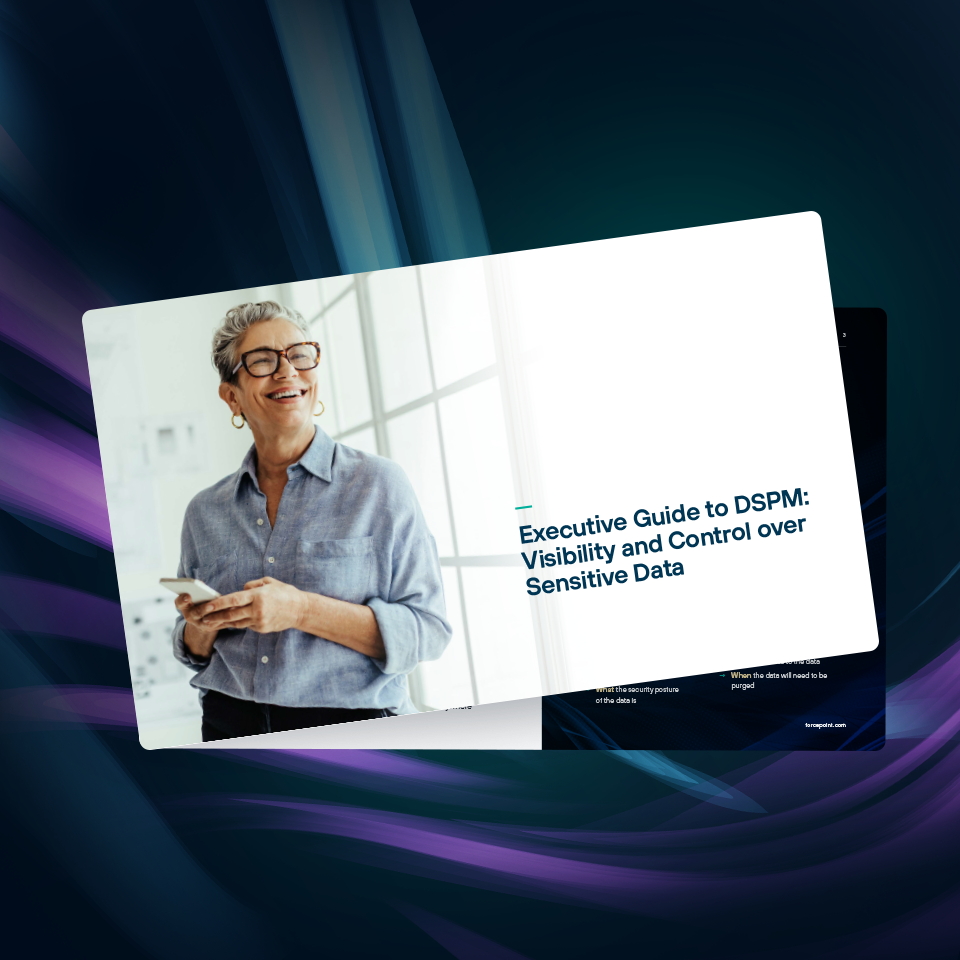
Executive Guide to DSPM
Discover why organizations across the world are turning to Data Security Posture Management (DSPM) software to enhance data discovery and classification. Learn how Data Detection and Response (DDR) solutions deliver the critical control needed to prevent data breaches.
Renforcez la sécurité de vos données
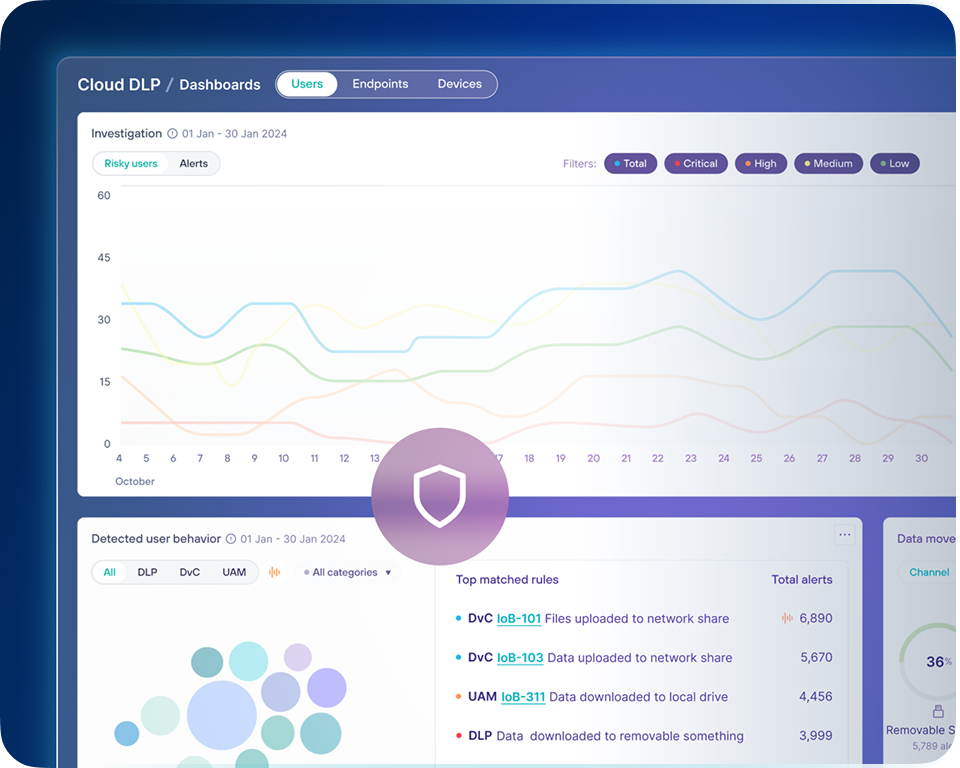
Détectez et bloquez les tentatives d’exfiltration avant que les données ne quittent votre environnement grâce à une surveillance continue alimentée par l’IA.
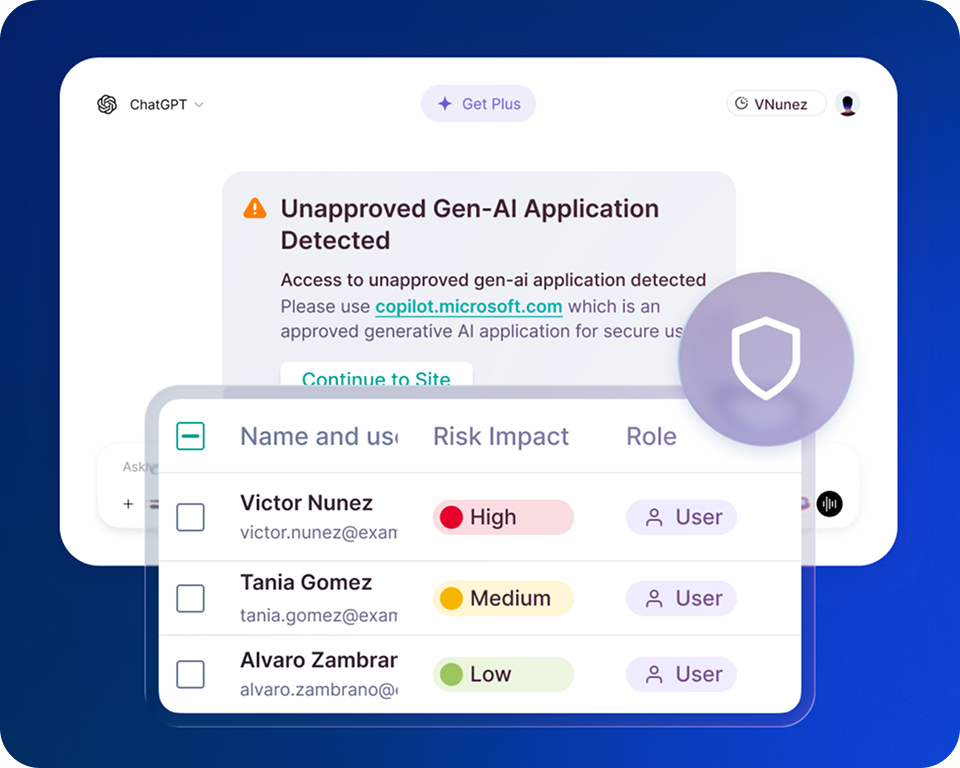
Exploitez le contexte et l’automatisation pour détecter les comportements à risque et réagir rapidement afin de protéger les données sensibles dans le cloud et sur les postes de travail.
Accélérez les investigations et les actions correctives grâce à une traçabilité détaillée des fichiers et à des alertes explicables qui réduisent les délais de réponse.



Précision chirurgicale et rapports transparents
Selon Enda Kyne, CTOO chez FBD Insurance, les solutions DSPM et DDR ont été largement adoptées par les équipes de sécurité informatique et de protection des données grâce à leur capacité à maîtriser les données critiques et à fournir des rapports fiables aux organismes de réglementation.



Recommandé par les analystes.
Approuvé par les utilisateurs.

Forcepoint recognized as a Strong Performer in The Forrester Wave™: Data Security Platforms, Q1 2025.

Forcepoint a été reconnu Strong Performer dans le rapport The Forrester Wave™: Data Security Platforms, Q1 2025.
Forcepoint DDR s’intègre parfaitement avec
Questions fréquemment posées
Quels sont les avantages metier de DDR?
Forcepoint DDR aide les organisations à éviter les violations de données coûteuses en détectant les menaces réelles plus tôt et en concentrant les équipes sur les événements les plus critiques. Cela réduit l’impact des incidents, le temps consacré aux investigations et les coûts globaux liés aux opérations de sécurité. DDR favorise également la transformation numérique — adoption du cloud, travail hybride et utilisation de l’IA — en offrant une visibilité continue sur les données sensibles et des rapports détaillés répondant aux exigences des dirigeants, des clients et des autorités réglementaires.
Pourquoi DDR est-il important?
Forcepoint Data Detection and Response (DDR) est essentiel car il surveille en continu l’utilisation réelle des données sensibles dans les environnements cloud et sur les postes de travail. Cette approche permet d’identifier et d’interrompre les signes annonciateurs d’une violation au moment où ils se produisent, plutôt que plusieurs semaines ou mois plus tard.
Les contrôles traditionnels créent souvent un manque de visibilité autour des données en cours d’utilisation. DDR comble cette lacune grâce à une surveillance en temps réel, une classification fondée sur l’IA et des réponses automatisées aux activités suspectes. En combinant le contexte des données, le comportement des utilisateurs et les droits d’accès, il contribue à réduire le temps de présence des attaquants, à limiter les risques internes et à prévenir l’exfiltration de données.
Comment DDR détecte-t-il les menaces ou les comportements risqués?
Forcepoint DDR analyse en continu les événements liés aux données, tels que les consultations, les ouvertures, les créations, les modifications de droits d’accès, les renommages et les activités de partage.
Lorsqu’un changement significatif est détecté, les éléments concernés sont réévalués afin d’identifier les anomalies et les violations de politique pouvant révéler une utilisation abusive, une menace interne, un compte compromis ou un schéma émergent d’exfiltration. Grâce à AI Mesh, Forcepoint DDR enrichit l’analyse avec un contexte métier qui permet de distinguer les activités légitimes des comportements à risque. Il génère ensuite des alertes priorisées ainsi que des actions de remédiation recommandées ou automatisées.
À quelle vitesse DDR peut-il détecter les tentatives d’exfiltration de données ?
DDR a été conçu pour assurer une surveillance continue et une détection quasi en temps réel. La solution suit en permanence les accès, les déplacements et les partages de fichiers, 24 heures sur 24 et 7 jours sur 7.
Dès qu’une activité jugée suspecte est détectée et analysée, une alerte est générée afin de permettre aux équipes de sécurité d’intervenir rapidement avant qu’un incident ne se transforme en violation de données.
Comment DDR aide-t-il les organisations à prévenir les pertes de données et à réduire les vulnérabilités ?
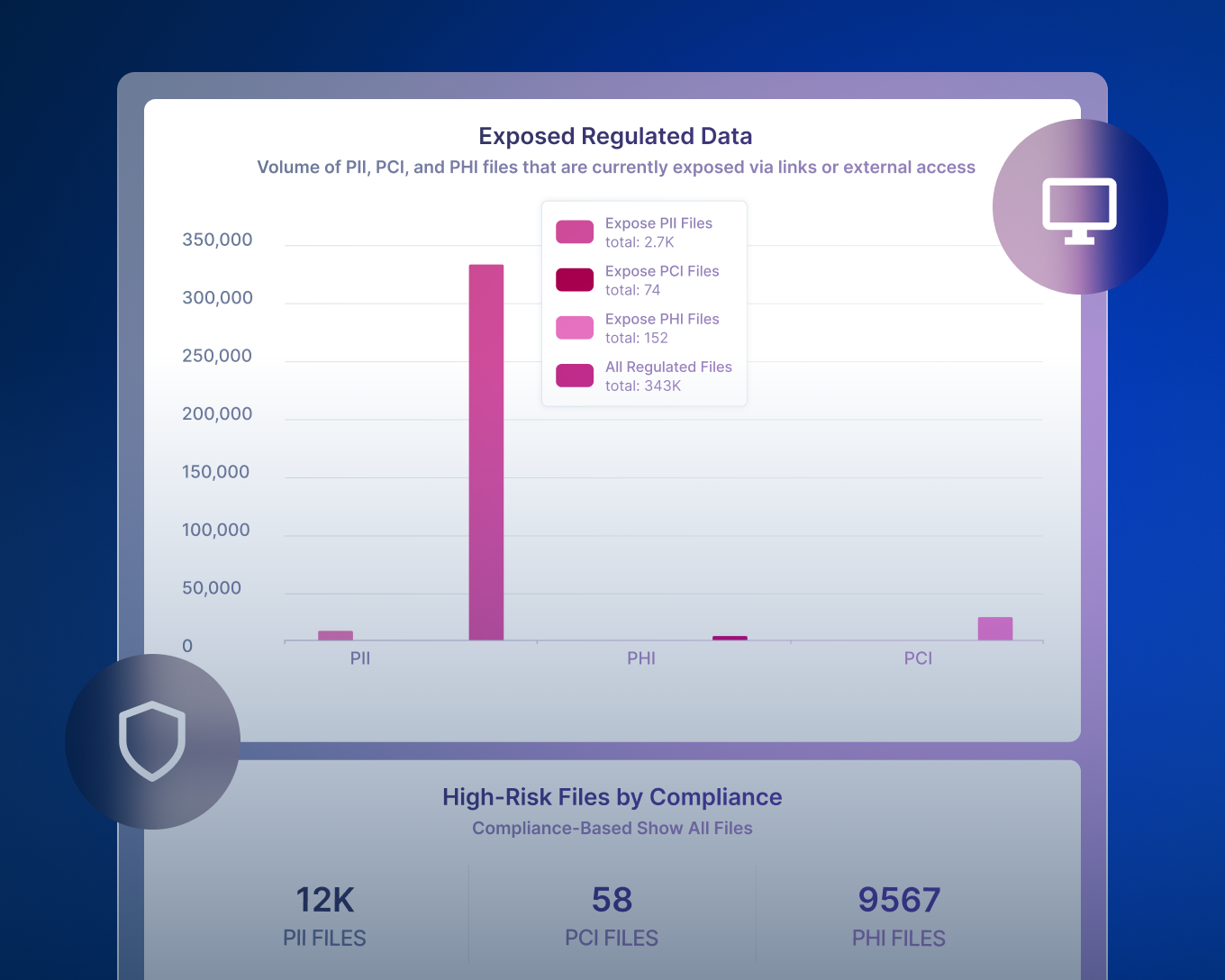
Forcepoint DDR s’appuie sur des modèles prédéfinis permettant d’identifier l’exposition de données sensibles telles que les informations personnelles (PII), les données de santé (PHI) ou les données de paiement (PCI).
Ces modèles facilitent les audits et les démarches de conformité tout en offrant une surveillance continue et une traçabilité détaillée des données.
DDR peut-il prévenir les fuites de données dans les applications cloud?
Oui. Forcepoint DDR étend ses capacités de surveillance et de protection aux environnements cloud et SaaS pris en charge.
Grâce à une classification alimentée par l’IA et à l’analyse continue des activités sur les fichiers — chargements, partages, modifications des droits d’accès, entre autres — la solution permet de détecter les comportements à risque et d’aider à prévenir les tentatives d’exfiltration de données.
DDR utilise-t-il l'IA pour détecter les menaces?
Oui. Le moteur de classification de Forcepoint DDR repose sur AI Mesh, qui fournit une compréhension avancée du contexte, une grande précision de détection et des évaluations de risque cohérentes dans l’ensemble des environnements surveillés.
Cette approche nativement conçue pour l’IA améliore considérablement la qualité de la détection grâce à une réduction des faux positifs et à une meilleure hiérarchisation des alertes. Elle facilite également l’automatisation ou l’accompagnement des actions de réponse face aux activités suspectes.
Quels types de données DDR surveille-t-il et protège-t-il?
Forcepoint DDR surveille à la fois les données structurées et non structurées, en accordant une attention particulière aux informations sensibles telles que les données personnelles (PII), les données de santé (PHI), les données de paiement (PCI) ainsi qu’à la propriété intellectuelle stratégique de l’entreprise.
La solution suit les données dans les environnements cloud et sur les postes de travail, en observant leur création, leur consultation, leur modification, leur renommage, leur partage ou leur suppression. Grâce à sa technologie propriétaire AI Mesh, elle identifie et hiérarchise en permanence les données les plus exposées aux risques, où qu’elles se trouvent.
Comment Forcepoint DDR s'intègre-t-il avec d'autres outils de sécurité?
Forcepoint DDR constitue un complément essentiel à Forcepoint DSPM en apportant une surveillance continue des données en cours d’utilisation.
L’association de Forcepoint DSPM, DDR et DLP crée un écosystème complet de sécurité des données capable de protéger les informations sensibles où qu’elles résident, quelle que soit la manière dont elles sont consultées ou évoluent dans le temps.
Forcepoint DDR s’intègre également de manière transparente aux solutions SIEM et SOAR via des webhooks, contribuant ainsi à améliorer les capacités de détection, de gestion des incidents et d’orchestration des réponses.
Que permet DDR que les solutions DLP et SIEM ne couvrent pas ?
Forcepoint DDR se concentre spécifiquement sur les données en cours d’utilisation et sur leur comportement. Il apporte une surveillance continue, un contexte riche et des mécanismes de réponse dynamiques là où les solutions DLP et SIEM traditionnelles présentent souvent des angles morts.
Les solutions DLP sont principalement conçues pour appliquer des politiques de sécurité aux données en mouvement, tandis que les SIEM centralisent les journaux et les alertes provenant de multiples systèmes. DDR complète ces approches en offrant une compréhension approfondie des données sensibles et de leur traçabilité grâce à l’IA, associée à des actions correctives ciblées dans les environnements cloud et sur les postes de travail.
En combinant DDR, DLP et SIEM, les organisations disposent d’une base solide pour mettre en œuvre une stratégie moderne et efficace de protection des données.
Comment DDR contribue-t-il à la conformité et aux audits ?
Forcepoint DDR aide les organisations à respecter les exigences réglementaires en surveillant en continu l’exposition des données soumises à des obligations de conformité, notamment les données personnelles (PII), les données de santé (PHI) et les données de paiement (PCI).
La solution s’appuie sur des modèles de détection prédéfinis ainsi que sur une classification alimentée par l’IA, alignée sur les principaux référentiels en matière de protection de la vie privée et de conformité sectorielle. Elle permet ainsi d’identifier plus rapidement les traitements de données non conformes.
Pour les auditeurs et les organismes de contrôle, DDR conserve un historique détaillé des activités liées aux données et des événements de risque, offrant une visibilité complète sur les accès, les déplacements des données et les mesures correctives mises en œuvre. Cette traçabilité facilite les audits liés au RGPD, à HIPAA, à PCI DSS, au CCPA et à d’autres réglementations comparables.
Comment Forcepoint DDR aide-t-il à répondre aux exigences des réglementations mondiales de protection des données ?
Forcepoint DDR contribue au respect des réglementations internationales de protection des données grâce à une surveillance continue de l’exposition des données sensibles, à une classification intelligente basée sur l’IA et à une visibilité détaillée sur les accès, les mouvements et les niveaux de risque associés aux données.
La solution fournit des pistes d’audit complètes, des rapports détaillés et des capacités de remédiation qui aident les organisations à démontrer leur conformité aux principales réglementations, telles que le RGPD, HIPAA, PCI DSS, le CCPA et d’autres cadres réglementaires similaires. Grâce à cette visibilité continue, les équipes de sécurité peuvent identifier plus rapidement les écarts de conformité et prendre les mesures nécessaires pour réduire les risques.