Your Data Security Strategy Has a Blind Spot
0 dakika okuma

Lionel Menchaca
A few years ago, I was talking with a security leader at a mid-sized financial services company. He'd just been through an audit, and the auditors had flagged a cluster of sensitive customer records sitting in a shared drive that half the company had access to. Nobody had put them there intentionally. Nobody knew they were there. And no one had any idea how long they'd been exposed.
He summed it up better than any analyst report could:
We thought we had a data security strategy. Turns out, we had a data security intention.
That distinction matters more than most organizations realize. A genuine data security strategy isn't a policy document or a firewall configuration. It's a living framework that tells you what sensitive data you have, where it lives, who can touch it and what happens when something goes wrong. In a world where data sprawls across multi-cloud environments, endpoints, SaaS applications and generative AI tools, building that framework requires more deliberate thought than ever before.
This post walks through what a real data security strategy looks like and how to build one that can hold up to the pressures of today's environment.
Start with the Honest Question: What Do You Actually Have?
Most organizations dramatically underestimate how much sensitive data they're sitting on. Research consistently shows that the vast majority of enterprise data is unstructured and a significant portion of it is dark data: information that has been collected but never analyzed, categorized or even acknowledged.
That's a liability hiding in plain sight.
A data security strategy has to start with discovery. Not a manual spot-check, but a systematic, continuous effort to find and catalog sensitive data across every environment where it might exist: on-premises file servers, cloud storage, databases, SaaS applications, collaboration platforms and everywhere in between. If you don't know what you have, you can't protect it.
Alongside discovery, you need classification. Not all data carries the same risk. Personally identifiable information, protected health information, financial records and intellectual property require different levels of protection than a five-year-old marketing brief. Getting clear on what data you have and how sensitive it is gives your entire strategy a foundation to stand on.
Two concepts worth knowing here: ROT data (redundant, outdated and trivial) and over-permissioned data. ROT data is the digital equivalent of clutter — it expands your attack surface without adding value. Over-permissioned data is information that far more users can access than should ever be able to. Both are common, both are risky and both are things discovery and classification can surface quickly.
Know Your Data States. Then Follow Them.
Once you know what data you have and how sensitive it is, the next challenge is understanding where that data goes. Data doesn't sit still. It moves across networks, gets copied to endpoints, lands in email attachments, flows into cloud applications and gets pasted into generative AI tools. A strategy that only protects data at rest is a strategy with enormous blind spots.
Practitioners typically describe data across three states:
Data at rest is stored data, sitting in repositories, databases and file systems. This is where posture management lives: understanding what's stored, where it's stored, who has access and whether any of it is exposed or over-permissioned.
Data in motion is data traveling across channels: email, web uploads, file transfers, SaaS uploads and more. This is where data loss prevention does its critical work, enforcing policies that stop sensitive data from leaving the organization through channels it shouldn't be using.
Data in use is the most dynamic state: data being actively accessed, edited or shared. Monitoring this state requires watching how users interact with sensitive data in real time, identifying anomalous behavior and acting before damage occurs.
A mature data security strategy accounts for all three. The moment you optimize for one and deprioritize the others, gaps open up.
Compliance Is a Floor, Not a Strategy
There's a temptation — especially in heavily regulated industries — to treat compliance as the end goal. Pass the audit, check the boxes, move on. I get it. Audit prep is exhausting, the regulatory landscape is complex and security teams are already stretched thin.
But compliance frameworks like GDPR, HIPAA, CCPA and CMMC were designed to set a minimum standard, not a maximum ambition. Meeting those standards is necessary. It's not sufficient.
The organizations that treat compliance as a byproduct of a strong security posture tend to do much better than those who build a security posture just to achieve compliance. The difference is orientation: one approach starts with understanding your data risk and builds controls from there; the other starts with a checklist and works backward.
Over 137 countries have enacted data privacy laws. GDPR fines alone have exceeded $4 billion since the regulation took effect in 2018. The compliance landscape isn't getting simpler, and strategies built solely around today's requirements will struggle to adapt when tomorrow's arrive.
Build Around Behavior, Not Just Rules
Static, rules-based security has its place. Policy templates, predefined classifiers and access controls form an important layer of any data security strategy. But they have a fundamental limitation: they can only respond to what you anticipated.
Most real-world data incidents don't announce themselves. They happen through small, incremental behaviors — a departing employee slowly migrating files to personal cloud storage, a user copying sensitive records to an external drive, someone pasting proprietary code into a generative AI chat. No single action necessarily triggers an alert. The pattern does.
That's why the most effective data security strategies today incorporate behavioral analysis. By tracking how users interact with sensitive data over time and building dynamic risk scores based on those patterns, security teams can detect anomalies that static rules would miss. More importantly, they can respond proportionally: coaching low-risk users, escalating scrutiny for medium-risk behavior and automatically blocking actions when risk reaches a critical threshold.
This approach, sometimes called risk-adaptive protection, reduces false positives, cuts alert fatigue and allows security teams to focus their attention where it actually matters.
The AI Era Changes the Threat Surface
Generative AI deserves its own conversation in any data security strategy built for 2025 and beyond.
When employees use tools like ChatGPT, Copilot or Gemini, they often paste or upload sensitive information without thinking twice about where that data goes. In many cases, these tools store and learn from what users submit. That's a significant data security risk, and it's happening at scale across virtually every organization.
Shadow AI — the use of generative AI tools outside of IT oversight — is today's version of shadow IT, and it carries many of the same risks compounded by the unique characteristics of large language models. A strong data security strategy has to account for it.
This means having visibility into which AI tools employees are using, enforcing guardrails that prevent sensitive data from flowing into unsanctioned applications and coaching users in real time when risky behavior is detected. The goal isn't to block AI adoption. It's to enable it safely. that's only possible when your data security posture is strong enough to underpin it.
Integration Beats Point Solutions
One pattern I've seen consistently across organizations that struggle with data security: too many disconnected tools. A standalone DLP solution that doesn't talk to the DSPM platform. A CASB that doesn't share policy context with the endpoint agent. Siloed dashboards that require three logins to get a unified picture of what's happening.
Every gap between tools is a gap in visibility. And visibility is the entire game.
An integrated approach, where discovery, classification, risk monitoring, policy enforcement and response all operate from a unified platform, eliminates the translation work that erodes security effectiveness. Policies written once can be enforced everywhere. Insights from one component inform the behavior of another. And security teams can investigate, prioritize and respond from a single place rather than context-switching between consoles.
This is increasingly where enterprise data security is heading: away from patchwork point products and toward unified platforms that manage the full data security lifecycle from a single framework.
Your Strategy Needs More Than Just Periodic Scans
One more thing I'd caution against: treating data security as a set-it-and-review-it-annually project.
Data environments change constantly. New data is created every day. Users change roles. Cloud configurations drift. Shadow AI tools appear. A data discovery scan that ran three months ago is already telling you something about a world that no longer exists.
Continuous monitoring bridges the gap between periodic scans and real-time incidents. It watches data activity dynamically, flags new risks as they emerge and ensures your security posture reflects the actual state of your environment rather than a historical snapshot. For data security specifically, continuous monitoring is what turns a strategy on paper into one that actually performs.
Putting It Together
A strong data security strategy isn't built overnight, and it doesn't emerge from a single product purchase or a compliance audit. It's built methodically, starting with a clear understanding of what data you have and where it lives, extending through classification and risk prioritization, and culminating in enforcement and monitoring capabilities that cover data in every state and across every channel.
The fundamentals haven't changed: know your data, protect your data and keep watching it. What has changed is the complexity of the environments where that data lives and the sophistication required to manage it effectively.
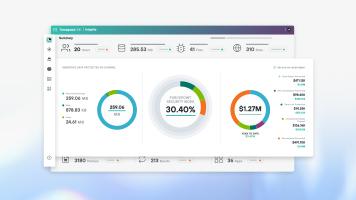
If you're evaluating where your organization stands or looking to modernize what you have, the Forcepoint Data Security Cloud brings together DSPM, DDR, DLP and CASB into a single integrated platform — designed to cover the full lifecycle from discovery to protection, continuously, across every environment where your data lives.

Lionel Menchaca
Daha fazla makale oku Lionel MenchacaLionel Menchaca has covered data security at Forcepoint since 2020, writing about DLP, DSPM, insider risk and AI security for security and IT leaders. He works with Forcepoint X-Labs threat researchers to turn their findings on emerging threats, from AI-targeted supply chain attacks to prompt injection, into practical guidance, and he leads the company's editorial strategy across the blog and the X-Labs newsletter. Before Forcepoint, Lionel founded and ran Dell's corporate blog for seven years and spent two decades helping enterprise tech companies explain security, cloud and AI.
- Forcepoint Data Security Cloud
Makalede
 Forcepoint Data Security CloudManage Access Everywhere

X-Labs
Get insight, analysis & news straight to your inbox

Konuya Gel
Siber Güvenlik
Siber güvenlik dünyasındaki en son trendleri ve konuları kapsayan bir podcast
Şimdi Dinle