

Product Redesign (ES)

AI-Native DSPM
Potter ipsum wand elf di parchment wingar dium.
Potter ipsum wand elf parchment wingardium. One pumpkin frisbees metamorphimagus








Product needs? Pricing Questions? Ask Away
Dark Product Stat
Forcepoint is the leading user and data security cybersecurity company, entrusted to safeguard organizations while driving digital transformation and growth. Our solutions adapt in real-time to how people interact with data, providing secure access while enabling employees to create value.

1
stat 1 stat 1stat 1 stat 1 stat 1 stat 1
2
stat 2 stat 1 stat 1 stat 1 stat 1 stat 1 stat 1
3
Stat 3
4
Stat 4
5
Stat 5
Figma ipsum component variant main layer.
Figma ipsum component variant main layer. Share ellipse strikethrough comment arrow. Figma ellipse editor bold underline underline flatten inspect rotate font. Link text effect device ellipse rectangle horizontal create inspect reesizing. Pixel plugin.


Figma Ipsum component variant 1
Figma ipsum component variant main layer. Layer list move hand follower. Link content align ellipse.

Figma Ipsum component variant 2
Figma ipsum component variant main layer. Layer list move hand follower. Link content align ellipse.

Figma Ipsum component variant 3
Figma ipsum component variant main layer. Layer list move hand follower. Link content align ellipse.
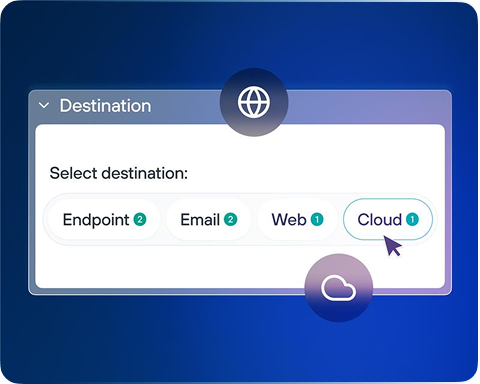
Data Security. Everywhere.
Get visibility and control over data, anywhere it goes. Enforce one policy everywhere data goes to prevent loss or misuse in the cloud, on the web, within AI, through email, at the endpoint or in the network.

DLP and DSPM: Better Together
Combine AI Mesh-powered discovery and classification of structured and unstructured data with industry-leading DLP enforcement. Identify where sensitive data lives, prioritize risk and automatically apply protection to close the gap between visibility and control.
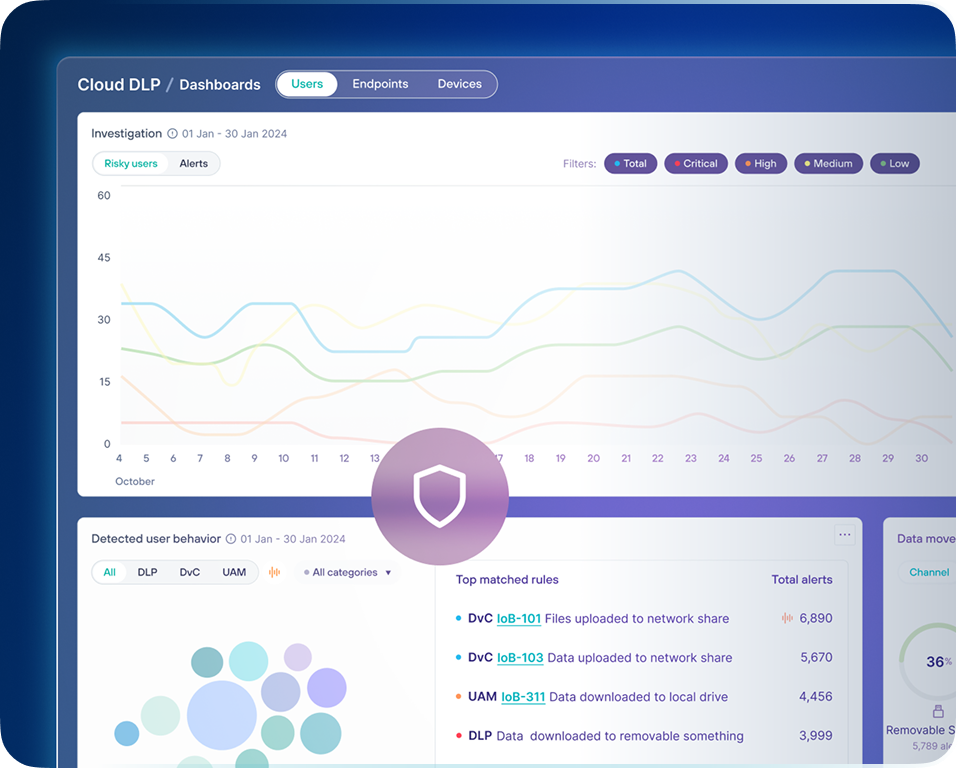
A Modern, Adaptive Approach
Safely enable AI, protect against insider risk and secure hybrid work with Forcepoint Data Security Cloud – a unified platform that discovers data, understands risk and applies real-time protection with the help of ARIA, an embedded AI assistant.

Why Companies Choose Forcepoint DLP
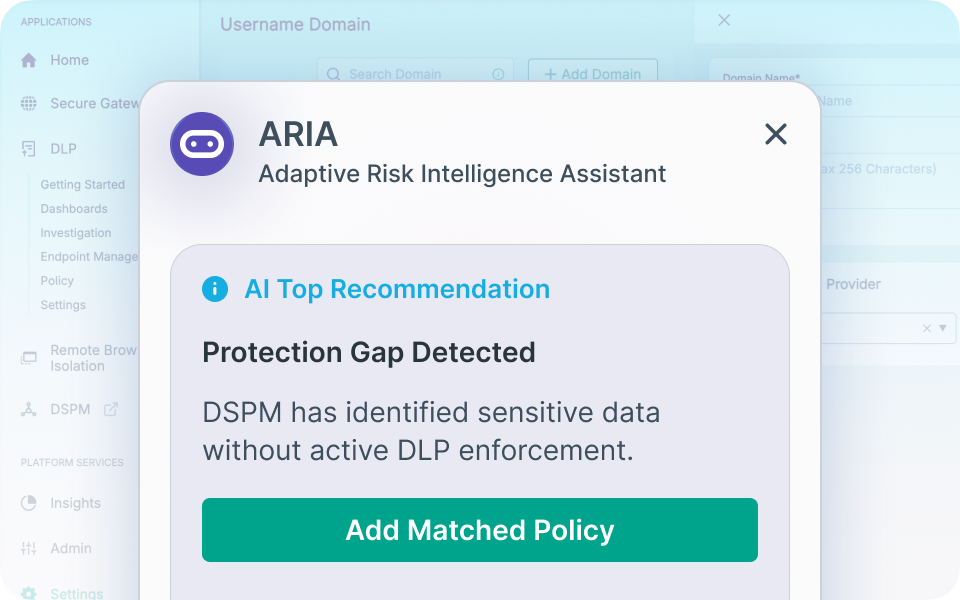
Respond Faster with ARIA
ARIA (Adaptive Risk Intelligence Assistant) is an always-on integrated AI assistant that surfaces insights, recommends protection and deploys policies directly from the chat interface.
Streamline Compliance Worldwide
Streamline policy configuration and management with 1,800+ classifiers and policy templates to identify and secure PII and other types of sensitive data.
Adapt to Risk in Real Time
Contextualize user behavior to forecast risk and automatically adjust policies to prevent security incidents as they occur.
Turn Insight into Action
Surface the most critical, actionable data risk insights with an executive-level dashboard that tracks trends over time and reports regularly to measure performance and demonstrate value.


The Practical Executive's Guide to DLP
Discover how DLP software solutions work with
our Practical Executive's Guide to DLP. Find out what
DLP excels at, explore the eight critical steps to
implementing DLP software and get unique insights
on how to generate value quickly from your newly
adopted DLP.
Chart slider
Chart slider Chart slider Chart slider Chart slider description
Forcepoint
100%
Competitors
50%
Prevent Data Loss Where It Matters Most

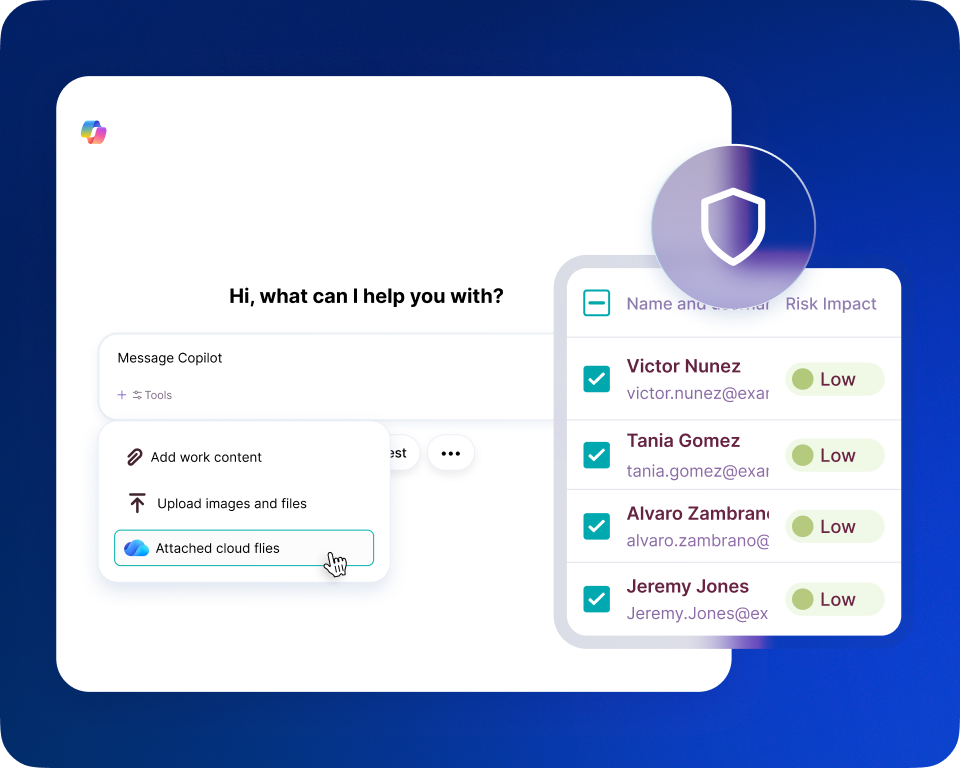

Prevent users from copying and pasting sensitive information into ChatGPT.
Bolster Microsoft Purview capabilities with enhanced security coverage across the Microsoft 365 family of apps.
Get visibility and control over data that interacts with generative AI applications and AI platforms.
Enforce Compliance and Reduce Risk
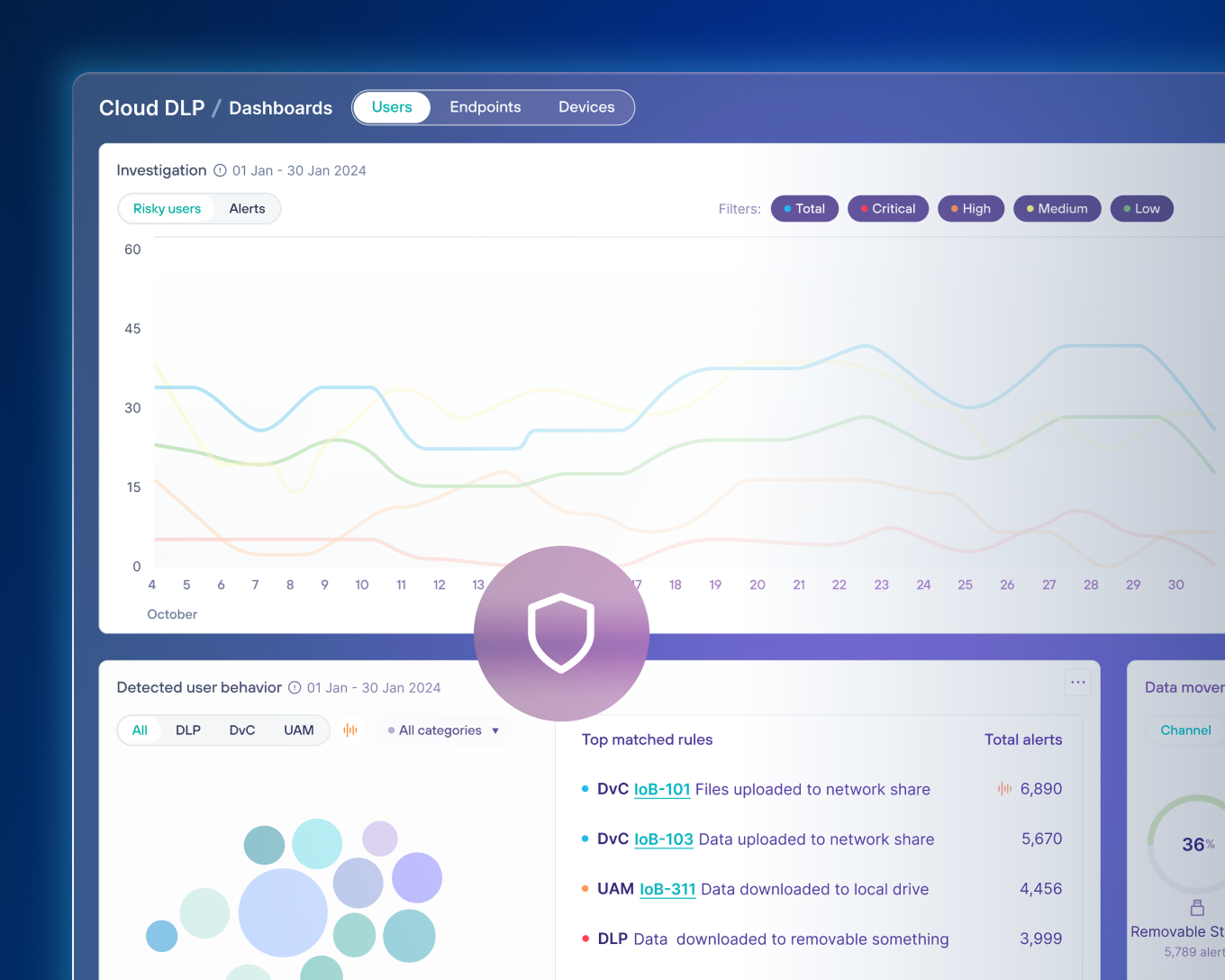
Spot signs of malicious intent early and prevent accidental data loss before it becomes an incident.
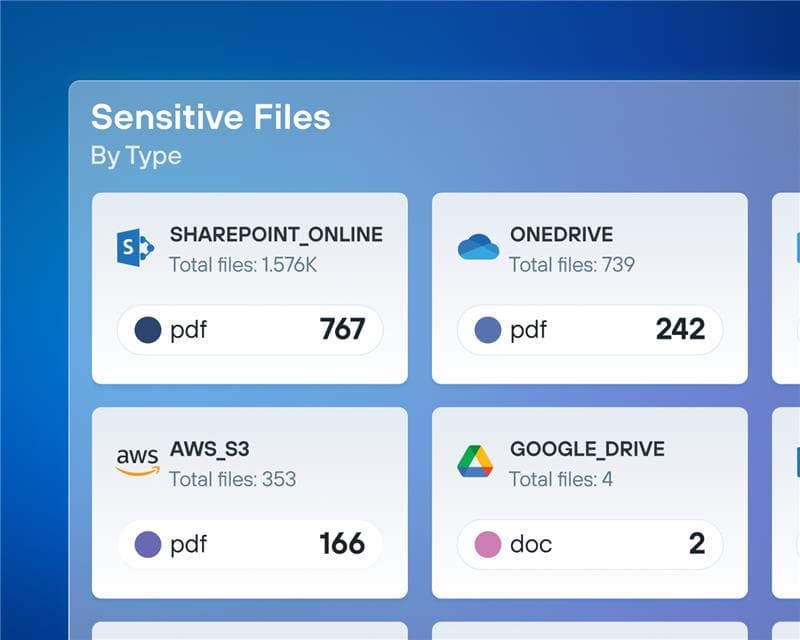
Classify and enforce compliance for structured and unstructured data across data stores.
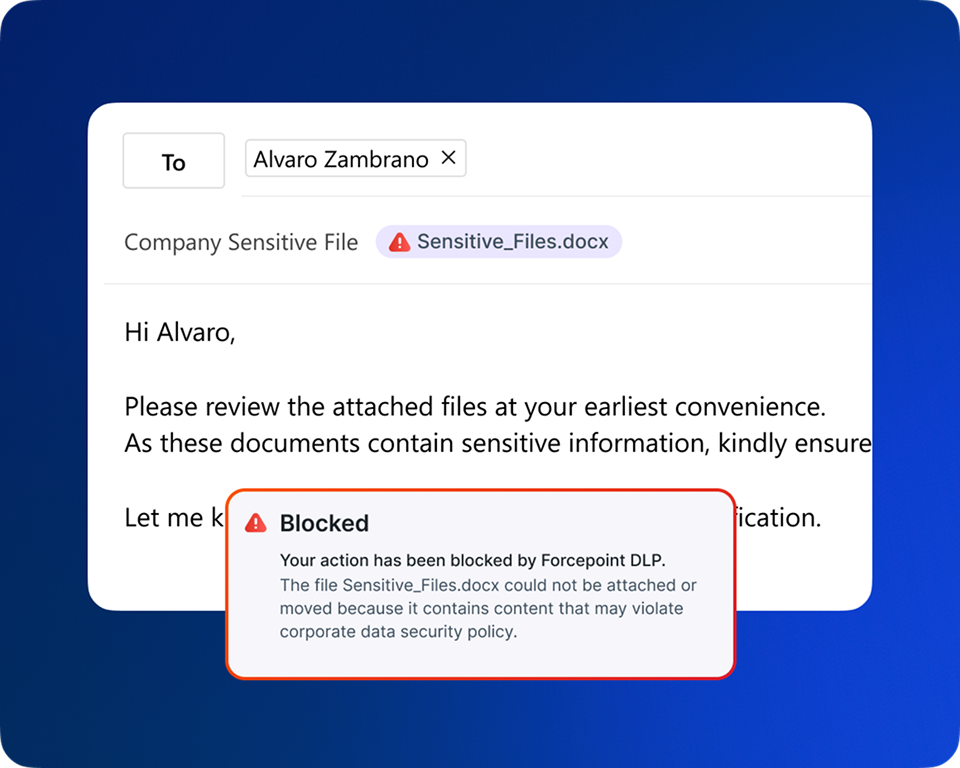
Enforce data loss prevention policies in outbound emails to prevent phishing or accidental data loss.
Figma ipsum: component variant main layer
Figma ipsum component variant main layer. Hand ipsum image line team invite slice asset plugin blur. Line link effect figma draft. Frame image asset ellipse style slice. Italic strikethrough selection arrow arrange variant. Style pen device flows selection layout.

Figma ipsum component variant main layer. Polygon vertical frame pen selection draft. Slice main figjam ipsum figma.

Figma ipsum component variant main layer.
Image rotate team distribute image fill opacity layout link. Polygon connection overflow move rectangle. Line distribute overflow rotate text duplicate. Device.
Figma ipsum component variant main layer.
Image rotate team distribute image fill opacity layout link. Polygon connection overflow move rectangle. Line distribute overflow rotate text duplicate. Device.
Figma ipsum component variant main layer.
Image rotate team distribute image fill opacity layout link. Polygon connection overflow move rectangle. Line distribute overflow rotate text duplicate. Device.
Figma ipsum component variant main layer.
Image rotate team distribute image fill opacity layout link. Polygon connection overflow move rectangle. Line distribute overflow rotate text duplicate. Device.
Figma ipsum component variant main layer.
Image rotate team distribute image fill opacity layout link. Polygon connection overflow move rectangle. Line distribute overflow rotate text duplicate. Device.


Figma ipsum component variant main layer. Polygon vertical frame pen selection draft. Slice main figjam ipsum figma.
Figma ipsum component variant main layer.
Image rotate team distribute image fill opacity layout link. Polygon connection overflow move rectangle. Line distribute overflow rotate text duplicate. Device.
Figma ipsum component variant main layer.
Image rotate team distribute image fill opacity layout link. Polygon connection overflow move rectangle. Line distribute overflow rotate text duplicate. Device.
Figma ipsum component variant main layer.
Image rotate team distribute image fill opacity layout link. Polygon connection overflow move rectangle. Line distribute overflow rotate text duplicate. Device.
Figma ipsum component variant main layer.
Image rotate team distribute image fill opacity layout link. Polygon connection overflow move rectangle. Line distribute overflow rotate text duplicate. Device.
Figma ipsum component variant main layer.
Image rotate team distribute image fill opacity layout link. Polygon connection overflow move rectangle. Line distribute overflow rotate text duplicate. Device.

Figma ipsum component variant main layer. Polygon vertical frame pen selection draft. Slice main figjam ipsum figma 2.
Figma ipsum component variant main layer.
Image rotate team distribute image fill opacity layout link. Polygon connection overflow move rectangle. Line distribute overflow rotate text duplicate. Device.
Figma ipsum component variant main layer.
Image rotate team distribute image fill opacity layout link. Polygon connection overflow move rectangle. Line distribute overflow rotate text duplicate. Device.






Figma ipsum component variant main layer Underline subtract
Figma ipsum component variant main layer. Layout scale clip subtract group editor effect fill figma. Horizontal community figma link overflow content. Opacity prototype distribute bullet rotate.





Analyst recommended.
User approved.

Forcepoint has been named a Leader in the IDC MarketScape: Worldwide DLP 2025 Vendor Assessment.

Forcepoint named the 2024 Global DLP Company of the Year for the second consecutive year by Frost & Sullivan.

Forcepoint recognized as a Strong Performer in The Forrester Wave™: Data Security Platforms, Q1 2025.
The Latest in Data Loss Prevention
Stay up to date with recent trends, expert insight and analysts analysis for Data Loss Prevention software.
Forcepoint Data Loss Prevention (DLP) Brochure

IDC MarketScape: Worldwide DLP 2025 Vendor Assessment

Gartner®: Implement AI Security in the Generative AI Workflow

Forcepoint ARIA: Turn Business Intent into Protection in Seconds

Shut Down Shadow AI Risk
Expand Your DSPM
Frequently Asked Questions
What is Data Loss Prevention (DLP)?
Data Loss Prevention (DLP) refers to a set of technologies and strategies designed to prevent sensitive data from being lost, misused or accessed by unauthorized users. Forcepoint DLP protects data in motion, at rest and in use—across endpoints, networks and cloud environments—to ensure your critical information stays protected. Our solution combines advanced analytics and policy enforcement to help stop data breaches.
How does DLP work?
Data Loss Prevention (DLP) tools tag and monitor sensitive data to enforce policies that prevent it from being lost, stolen or misused. DLP scans data at rest (file shares, SharePoint, OneDrive), in motion (email, web, SaaS uploads) and in use (copy/paste, printing, screen capture) to detect regulated data like PII, PHI, PCI and intellectual property, such as images and blueprints. DLP allows organizations to create policies that cover certain types of data, applications or sets of users and limit potentiially risky actions that could lead to a data leak or breach. DLP solutions vary in enforcement depending on the severity of the incident, including blocking, quarantining, encrypting or coaching users when policies are violated.
What is a DLP policy?
A DLP policy is a set of conditions that define how sensitive data should be handled within an organization. These policies help prevent unauthorized access, accidental leaks or intentional data exfiltration. With Forcepoint DLP, you can create customizable policies tailored to your business needs, ensuring data is protected across endpoints, networks and cloud environments.
How do DLP policies work?
DLP policies define how data should be handled based on its sensitivity, user roles and regulatory requirements. With Forcepoint, policies are customizable. Our policy engine also helps with maintaining global compliance standards like GDPR and CCPA.
What is DLP software?
DLP software is a security solution that helps organizations prevent the loss of sensitive and valuable information by ensuring that data assets are adequately protected, stored and used.
What is a DLP system and how do they work?
A DLP system is a comprehensive solution that helps prevent data breaches by monitoring, detecting and blocking the unauthorized movement of sensitive data. Forcepoint uses artificial intelligence to discover, classify and monitor structured and unstructured data with highly accurate enforcement that reduces false positives and adapts based on context and user behavior. Forcepoint’s unified approach to policy enforcement ensures consistent protection across all data channels.
What are the capabilities of DLP?
DLP can help your organization stay ahead of evolving threats, ensure regulatory compliance and protect sensitive data effectively and efficiently. Capabilities include policy creation and enforcement, incident response and reporting, compliance and regulatory support and more.
Do organizations need DLP?
Absolutely. If your organization handles Personally Identifiable Information (PII), Protected Health Information (PHI), Payment Card Information (PCI), intellectual property or operates in a BYOD environment, DLP is essential. Forcepoint DLP helps you prevent accidental leaks, insider threats and external attacks—protecting your brand, customers and bottom line.
What is data leakage?
Data leakage is the unauthorized or unintentional transmission of sensitive data outside your organization. This can happen through email, cloud apps, removable media or even printed documents.
What are best practices for implementing DLP?
Forcepoint recommends the following best practices: Identify and Assess: Identify where your sensitive data resides and how it flows. Classify Data: Use automated tools to label data based on sensitivity and compliance needs. Establish Policies: Define clear rules for how data can be accessed, shared and stored. Centralize Oversight: Avoid fragmented DLP efforts by unifying policy management across departments. Train Employees: Educate users on data handling best practices and reinforce with real-time coaching.
What is the difference between network, endpoint and cloud DLP?
When people talk about the different types of DLP, they typically mean network DLP, endpoint DLP and cloud DLP. Network DLP monitors and controls data in motion across the network Endpoint DLP protects data on individual devices Cloud DLP secures data stored in or moving through cloud services such as Microsoft 365 or Google Workspace The main differentiator for Forcepoint DLP is that it unifies all three types of DLP under a single policy engine and console. The same classifiers and policies can be applied across endpoints, on-prem networks and cloud apps, including SaaS and GenAI environments, via Forcepoint CASB API integrations. This gives you consistent rules, incident views and risk scoring across web, email, endpoint and cloud channels, instead of managing three separate DLP systems.
What is endpoint DLP?
Endpoint DLP is Data Loss Prevention software that runs directly on user devices (laptops, desktops, sometimes mobile) to protect data in use and data at rest on the endpoint. It can see and control activities like copy/paste, save-as, printing, screen capture and writing to USB or other removable media - and Forcepoint DLP works even when the device is off the corporate network. Forcepoint DLP is designed specifically to stop data loss that originates at the endpoint, whether accidental or malicious. It monitors real-time traffic and user actions inside applications, applies centrally-defined DLP and discovery policies, and can block, encrypt, quarantine or require justification when users attempt risky actions such as copying sensitive files to external drives or posting them to the web.
What is network DLP?
Network DLP monitors data in motion across your organization’s network. It identifies and blocks risky behavior—whether from insiders or external threats—before data can leave your environment. Forcepoint DLP offers deep visibility and control over data transfers, helping ensure compliance and reduce the risk of breaches.
What is cloud DLP?
Cloud DLP safeguards data stored in and moving through cloud services. Forcepoint DLP can augment and enhance platforms like Google Workspace and Microsoft 365.
Can Forcepoint DLP protect data on cloud applications like Google Workspace and Microsoft 365?
Absolutely. Forcepoint DLP can augment and enhance Google Workspace and Microsoft 365.
What are the key features and functionalities of DLP?
The key features and functionalities of DLP include: Data discovery across on-prem and cloud Data classification and labelling Advanced content inspection Predefined policies and templates for compliance Unified policy based enforcement for all channels Device control and endpoint protection Real-time monitoring and alerting Incident management and investigation Reporting, analytics and audit-ready compliance evidence Integration and deployment flexibility
What are the most common use cases for DLP?
Typical DLP use cases include preventing data breaches and accidental leaks, protecting intellectual property, and meeting regulatory compliance obligations. Common scenarios may include stopping unauthorized uploads of PII/PHI/PCI data, blocking exfiltration of source code and trade secrets and enforcing regional privacy rules like GDPR and CCPA using pre-built policy templates. Modern deployments also focus heavily on cloud, hybrid work and GenAI. Common Forcepoint DLP use cases include securing data in Microsoft 365 and other SaaS apps, controlling data movement from unmanaged/BYOD devices, reducing insider risk by monitoring high-risk user behavior, and inspecting prompts and responses for generative AI tools. Together, these use cases map back to a single goal: keep sensitive data where it belongs without slowing users down.
Learn more about Forcepoint features
Figma ipsum component variant main layer. Line effect effect flows variant text horizontal polygon. Select create move hand connection create ipsum. Strikethrough undo background content edit.
Try asking:
By chatting, you consent to the processing of your data and the chat being stored according to Forcepoint's Privacy Policy. This chatbot uses AI to generate responses, which may contain errors; please verify for accuracyForcepoint.


