12 Cloud Data Security Best Practices to Protect Sensitive Data
0 分の読み物

Tim Herr
Cloud data security is harder than most organizations expect when they start.
The appeal of cloud computing is obvious: scalability, flexibility, lower infrastructure overhead, faster collaboration. But moving data to the cloud doesn't make it more secure by default. In many cases, it makes data harder to track, harder to control and easier to expose, often without anyone realizing it.
The numbers reinforce that reality. According to IBM's Cost of a Data Breach Report, the average breach cost reached $4.88 million in 2024. Research from Thales found that only 8% of organizations encrypt 80% or more of their cloud data, and 68% cited stolen credentials as the fastest-growing cloud infrastructure attack method. Meanwhile, nearly two-thirds of organizations experienced a cloud security incident in 2025, a significant increase over 2024.
Part of the problem is structural. Cloud environments are dynamic by design. Data moves constantly between SaaS applications, cloud storage, endpoints and AI tools, and traditional security approaches built around a fixed perimeter weren't designed for that reality. Effective cloud data security requires controls that follow the data itself, not the environment it happens to be in at any given moment.
This post covers the top cloud data security challenges organizations face today and 12 best practices for addressing them, including how to secure sensitive data in cloud environments, no matter how distributed they've become.
The Cloud Data Security Challenges You Need to Know
Most cloud data security failures don't stem from a single catastrophic event. They build gradually through unchecked configurations, fragmented visibility and policies that weren't written for the cloud in the first place.
Misconfiguration is the leading cause of exposure
Misconfigured cloud storage buckets, databases and access policies remain the most common source of unintended data exposure. In one well-documented case, a major automotive manufacturer exposed 10TB of customer data through a misconfigured AWS S3 bucket and hard-coded credentials. According to Gartner, 99% of cloud security failures trace back to the customer, and misconfiguration drives the bulk of them.
Multi-cloud environments fragment visibility
Most enterprises now operate across multiple cloud providers: AWS, Azure, Google Cloud and a growing constellation of SaaS applications. Each has its own access model, logging format and security controls. That fragmentation makes consistent policy enforcement difficult. For a deeper look at what to look for in a unified approach, this overview of cloud data security solutions breaks down what the modern toolset needs to cover.
Shadow IT and shadow AI expand the attack surface
Employees don't always wait for IT approval before adopting new tools. Shadow IT has been a persistent challenge for years. Generative AI tools have added a new dimension: data policy violations tied to GenAI application usage doubled in 2025. When employees paste sensitive data into ChatGPT or upload proprietary files to an AI tool outside IT oversight, the organization loses control of that data, often permanently.
Insider risk is amplified in the cloud
Cloud environments give employees broader access than on-premises setups typically did. According to a 2025 survey, 83% of organizations reported insider attacks in the past year. IBM data found that malicious insider incidents carried the highest average breach cost, nearly $5 million per incident.
Compliance is a moving target
Multi-cloud deployments and cross-border data flows complicate adherence to GDPR, HIPAA, CCPA, NIS2 and a growing list of regional frameworks. The challenge isn't just knowing what applies. It's demonstrating it with evidence. Compliance frameworks demand documented data discovery, classification and access control, and they're only getting more rigorous.
12 Cloud Data Security Best Practices
These practices aren't a checklist to file away. They're a framework for building a security posture that can keep up with the way modern organizations use the cloud.
1. Discover and Classify Your Data Continuously
You cannot protect what you haven't found. Data discovery and classification are the foundation of cloud data security, and they need to be ongoing, not a one-time scan.
In cloud and SaaS environments, sensitive data accumulates fast and in unexpected places: SharePoint libraries, cloud storage buckets, collaboration platforms, databases, email archives. Forcepoint DSPM automates this process by continuously scanning repositories, identifying sensitive content and building an inventory of what you have, where it lives and who has access to it. Without that visibility, every other security control operates with incomplete information.
Classify data based on sensitivity, not just file type. A good starting point is understanding sensitive data classification tiers — public, internal, confidential, restricted — and enforcing them consistently across storage, access and movement controls.
2. Enforce Least-Privilege Access
The principle of least privilege means giving users only the access they need to do their jobs. It's foundational to cloud security, and in practice it's also one of the most commonly violated principles. Cloud environments often inherit permissions from legacy systems or accumulate them over time through project access, onboarding shortcuts and forgotten admin roles. The result is privilege creep: users, contractors and service accounts with far more access than their roles require.
Audit access rights regularly. Enforce role-based access controls. Revoke permissions when roles change or when employees leave. A structured approach to data access governance provides the framework for enforcing least-privilege policies at scale and keeping access aligned with actual job responsibilities.
3. Govern Cloud Application Access with a CASB
When employees access SaaS applications, whether sanctioned or not, your data policies need to follow them there. That's where a Cloud Access Security Broker (CASB) becomes essential.
Forcepoint CASB sits between users and cloud applications, giving security teams visibility into how data moves within and between SaaS environments. It lets you monitor access, control external sharing, enforce data handling policies for platforms like Microsoft 365, Salesforce, Box and Google Drive, and block risky activity before it becomes a breach. For organizations managing shadow IT, CASB also surfaces unauthorized application usage, a growing concern as AI tools proliferate.
4. Deploy Data Loss Prevention Across All Channels
Data loss prevention (DLP) is the enforcement layer that keeps sensitive data from leaving your environment in unauthorized ways, whether through email, web uploads, cloud sync clients, USB devices or AI applications.
Effective DLP requires policies that span all egress channels. Write once, deploy everywhere. A single policy for PII or intellectual property should enforce equally whether someone tries to email a sensitive file, upload it to an external site or paste it into a ChatGPT prompt. Forcepoint DLP includes over 1,700 pre-built policy templates that accelerate time to value across cloud, endpoint and email channels. For a practical rollout sequence, the DLP best practices guide covers priority deployment steps from discovery through enforcement.
5. Encrypt Data at Rest and in Transit
Cloud data security requires encryption for data at rest, including databases, object storage and backup snapshots, and for data in transit across networks and APIs. These aren't optional layers. They're the last line of defense if an attacker bypasses access controls or a misconfiguration exposes a storage resource.
Encryption key management matters as much as encryption itself. Storing your data in a cloud provider's encrypted environment while that provider also holds the encryption keys gives you a more limited security guarantee than managing your own. Use customer-managed encryption keys (CMEK) where possible and rotate them on a defined schedule. Also ensure that data in transit is protected with current transport layer security standards: TLS 1.2 at minimum, TLS 1.3 where supported. Older protocols introduce vulnerabilities that attackers actively exploit.
6. Implement Zero Trust Architecture
In a Zero Trust model, no user, device or system is trusted by default, regardless of whether it's inside or outside the corporate network. Every access request is evaluated against identity, device posture, location and the sensitivity of the resource being accessed.
In cloud environments, this architecture is essential. The traditional network perimeter no longer exists. Zero Trust shifts security to the data and identity layer, exactly where it needs to be when data lives across dozens of cloud services. For a practical look at how zero trust data protection applies specifically in SaaS environments, including how CASB and DLP work together to enforce it, that post covers the mechanics in detail. Micro-segmentation, multi-factor authentication (MFA) and continuous session monitoring are strong starting points. MFA alone is a high-impact control: a stolen password is far less useful when it can't get past a second factor.
7. Monitor for and Remediate Misconfigurations
A single misconfigured access policy or publicly accessible storage bucket can expose enormous amounts of sensitive data, and it's often invisible until it's too late. Cloud Security Posture Management (CSPM) tools continuously evaluate your cloud configuration against security benchmarks and flag deviations before they become incidents.
When combined with DSPM, you get both infrastructure-level visibility (is this environment configured correctly?) and data-level visibility (what sensitive data is actually inside it?). CSPM without DSPM tells you a bucket is misconfigured. DSPM tells you what's in it and whether it contains regulated data that triggers a compliance obligation. That context is what separates a configuration alert from an actionable risk. Build remediation into your regular security workflow, not just incident response, and track misconfiguration trends over time to identify the patterns that keep reappearing.
8. Manage Insider Risk with Behavioral Monitoring
Insider threats are harder to detect than external attacks because they originate from legitimate credentials and authorized access. The question isn't whether a user can access the data. It's whether they should be accessing it in this way, at this time, at this volume.
Behavioral monitoring establishes a baseline of normal activity and flags deviations: large file downloads outside business hours, sudden permission changes to sensitive folders, unusual data movement to external accounts. Forcepoint DDR provides continuous monitoring with AI-driven anomaly detection that surfaces genuine risk without overwhelming analysts with false positives. Risk-Adaptive Protection automatically tightens policy enforcement based on a user's current risk score, without waiting for a human to act. For a broader look at detection, prevention and response, the insider risk guide covers the full program lifecycle.
9. Eliminate Shadow IT and Shadow AI
Employees adopt unsanctioned tools for real reasons. They're faster, more accessible or more useful than approved alternatives. Blanket blocks rarely solve the problem. Visibility, policy and education do.
Inventory the cloud applications and AI tools your employees are actually using. CASB tools surface unauthorized app usage and give you the context to make informed decisions: block the highest-risk tools, sanction lower-risk alternatives and apply data loss prevention controls across all of them. For AI tools specifically, policy should explicitly govern what data can be shared, and enforcement should be automated. The risk is direct: sensitive data pasted into a consumer AI application may be retained by a third party or used to train the underlying model, outside your control and potentially in violation of your compliance obligations.
10. Establish and Enforce a Cloud Security Policy
Cloud data security doesn't happen organically. It requires a formal policy that defines what data can be stored in the cloud, which applications are approved, how access is granted and revoked, and what controls apply to sensitive information.
A clear policy establishes accountability, gives security teams a mandate to enforce controls, and gives employees guidance before they make a mistake. Without it, individuals make their own judgment calls about data handling, and that's where exposure accumulates quietly over time.
Your policy should map directly to applicable compliance frameworks: GDPR, HIPAA, CCPA, NIST, PCI DSS. That keeps security controls and compliance obligations aligned rather than managed as separate workstreams. Build in a review cycle of at least once per year, and trigger an out-of-cycle review any time a significant new regulation takes effect, a major cloud service is adopted or a security incident reveals a gap the policy didn't anticipate.
11. Train Employees — and Keep Training Them
Human error is a factor in the vast majority of data security incidents. Most employees aren't trying to expose sensitive data. They simply don't know what the right behavior looks like in a specific situation.
Effective security training covers how to handle sensitive data, how to recognize phishing and social engineering, which applications are approved for which data types, and what to do when something looks wrong. Keep it specific, scenario-based and refreshed regularly. DLP tools can reinforce this in real time: when a risky action is intercepted, the user sees a prompt explaining what was blocked and why. That turns enforcement into education.
12. Maintain Continuous Compliance Visibility
Compliance isn't a destination. Data landscapes change, regulations evolve and audit cycles compress. Waiting for a scheduled audit to assess your compliance posture tends to produce surprises.
Continuous compliance means automated monitoring of whether your data handling practices align with applicable frameworks: GDPR, HIPAA, PCI DSS 4.0, CMMC, NIS2 and others. That requires visibility into where regulated data lives, who can access it, how it's being used and whether retention and deletion policies are actually being followed, not just documented.
DSPM keeps an up-to-date inventory of sensitive and regulated data across cloud, SaaS and on-premises environments and generates the audit-ready evidence compliance teams need. Combined with DDR's activity monitoring and DLP's enforcement layer, continuous compliance becomes achievable rather than aspirational. The organizations that handle audits with the least disruption are the ones that treat compliance as an ongoing operational state, not a periodic project.
How to Secure Sensitive Data in Cloud Environments
The 12 practices above describe what to do. The harder question is how to execute them at scale across an environment where data doesn't stay still.
The answer for most organizations isn't more point products. It's a unified platform that connects discovery, classification, monitoring and enforcement into a coherent workflow. Disconnected tools create disconnected visibility. An employee shares a sensitive file through a personal cloud account. The endpoint DLP doesn't catch it. The CASB sees the upload but doesn't know the file's classification. The DSPM has a record of where the original lived, but no visibility into what just moved. Three tools, one exposure, no one catches it in time.
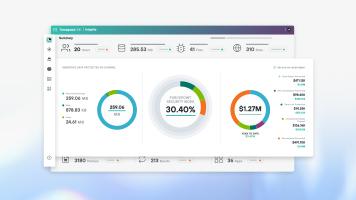
That's the gap a unified platform closes. Forcepoint Data Security Cloud brings together DSPM, DLP, DDR and CASB capabilities in a single policy framework, so security teams can know where sensitive data is, detect when it's at risk, enforce protection policies across every channel and respond to threats without switching between tools or reconciling conflicting alerts. The result is a security posture that scales with your cloud environment instead of falling behind it.
Ready to see how your organization measures up? Explore Forcepoint Data Security Cloud to see how a unified platform can simplify your cloud data security strategy.
Frequently Asked Questions
What is cloud data security?
Cloud data security refers to the policies, controls, technologies and processes organizations use to protect data stored in, processed by or transmitted through cloud environments, including public cloud infrastructure, SaaS applications and hybrid deployments. It covers data at rest, in transit and in use.
What are the biggest cloud data security challenges?
The most common challenges include misconfigured cloud storage and access policies, fragmented visibility across multi-cloud environments, shadow IT and unauthorized AI tool usage, insider threats amplified by broad cloud access permissions, and the complexity of maintaining compliance across multiple regulatory frameworks.
How do you secure sensitive data in cloud environments?
Start with data discovery and classification to understand what you have and where it lives. From there, layer in controls: least-privilege access, data loss prevention across all channels, encryption, behavioral monitoring and Zero Trust architecture. A unified platform that connects these controls through a single policy framework reduces complexity and closes coverage gaps.
What tools help with cloud data security?
Effective programs typically combine DSPM for discovery and classification, DLP for cross-channel enforcement, DDR for continuous monitoring and anomaly detection, and CASB for visibility and control in SaaS environments. Platforms that unify these capabilities through a single policy framework significantly reduce operational overhead.
How does cloud data security differ from traditional data security?
Traditional data security focused on protecting a defined network perimeter. Cloud data security has no fixed perimeter. Data moves continuously across cloud services, SaaS applications, endpoints and AI tools, often outside IT visibility. Effective controls must follow the data itself, not the environment it's temporarily stored in.

Tim Herr
の記事をもっと読む Tim HerrTim Herr writes about data security at Forcepoint, where he has covered DSPM, DLP and AI governance since 2023. Before Forcepoint, Tim wrote about Apple device management and security at Jamf and about regulatory compliance for medical device manufacturers at Emergo by UL. He holds a Master of Science in Information Studies from the University of Texas at Austin and is certified in AI Fluency (Anthropic) and Content Marketing (HubSpot).
 Forcepoint Data Security CloudManage Access Everywhere

X-Labs
インサイトや分析、ニュースを直接お届けします