
Data Classification Software
Classify and Report
with Confidence
Accurately and efficiently classify the broadest range of data types with superior precision using AI Mesh technology.
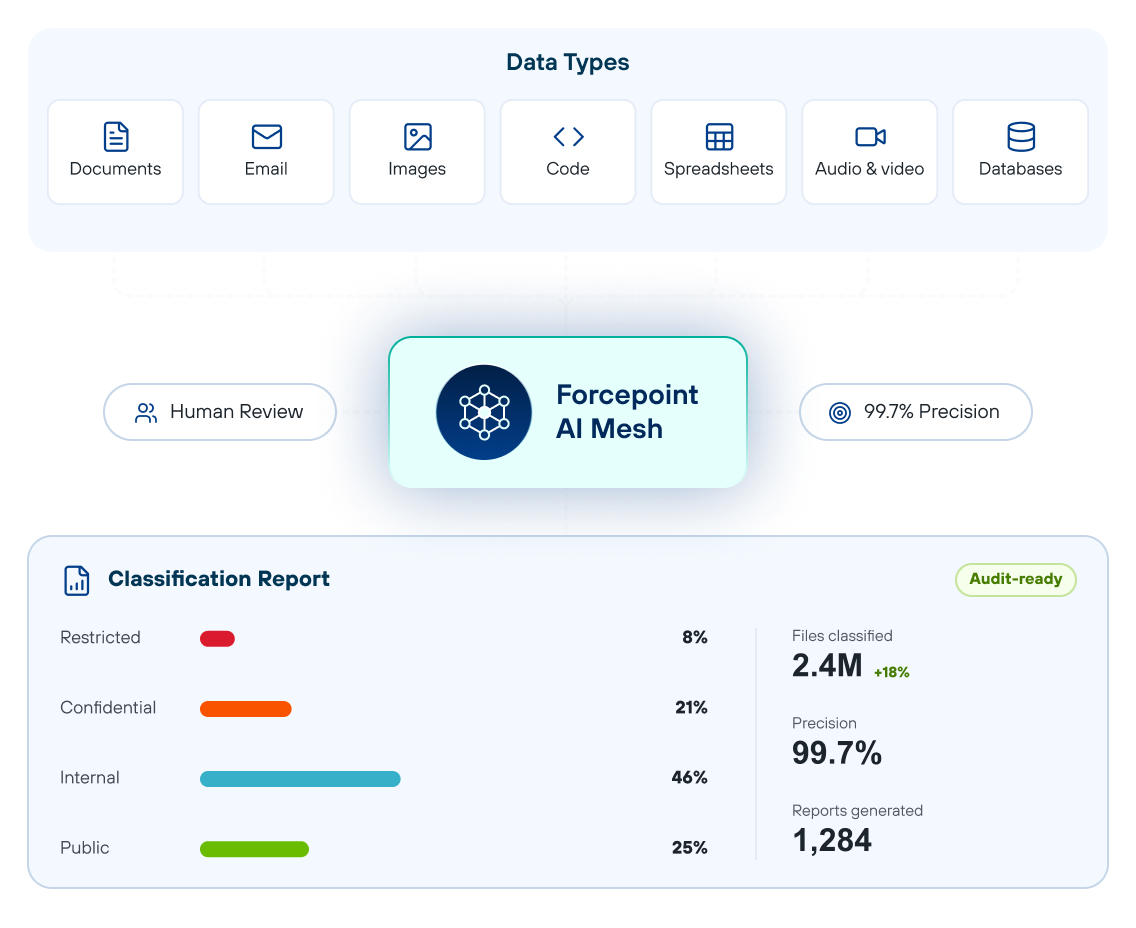












Forcepoint Data Classification: At A Glance
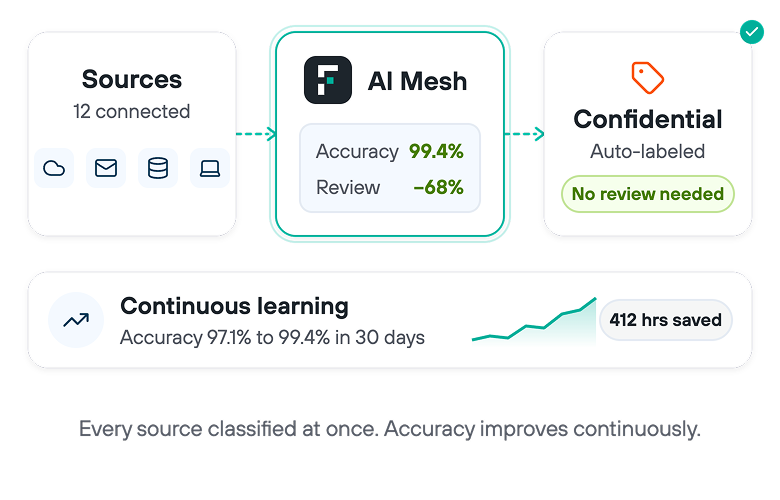
Forcepoint Data Classification uses AI Mesh to deliver highly accurate classification across the broadest range of data types in the industry, helping organizations streamline compliance and reduce false positives.
Classify Data Faster, with Greater Accuracy
Forcepoint Data Classification uses networked AI to find and catalog sensitive data across the enterprise at speed, reducing manual effort, improving compliance and powering your broader data security program.

Reduce False Positives
AI Mesh's networked architecture surfaces only genuinely sensitive data, cutting through noise so security teams can focus on real risks rather than chasing alerts that don't
require action.

Streamline Compliance
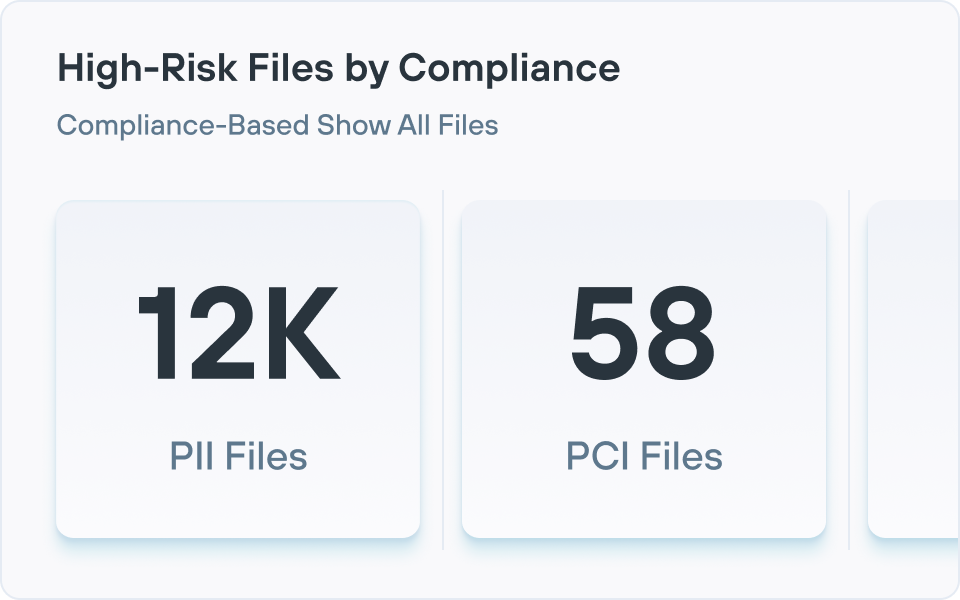
Out-of-the-box coverage of key regulations and the broadest range of data types helps your organization meet compliance obligations and avoid costly noncompliance fines.

Deploy Without User Retraining
Classification policies take effect immediately through integration with Forcepoint DLP: no extensive user retraining or manual tagging required to start protecting sensitive data.
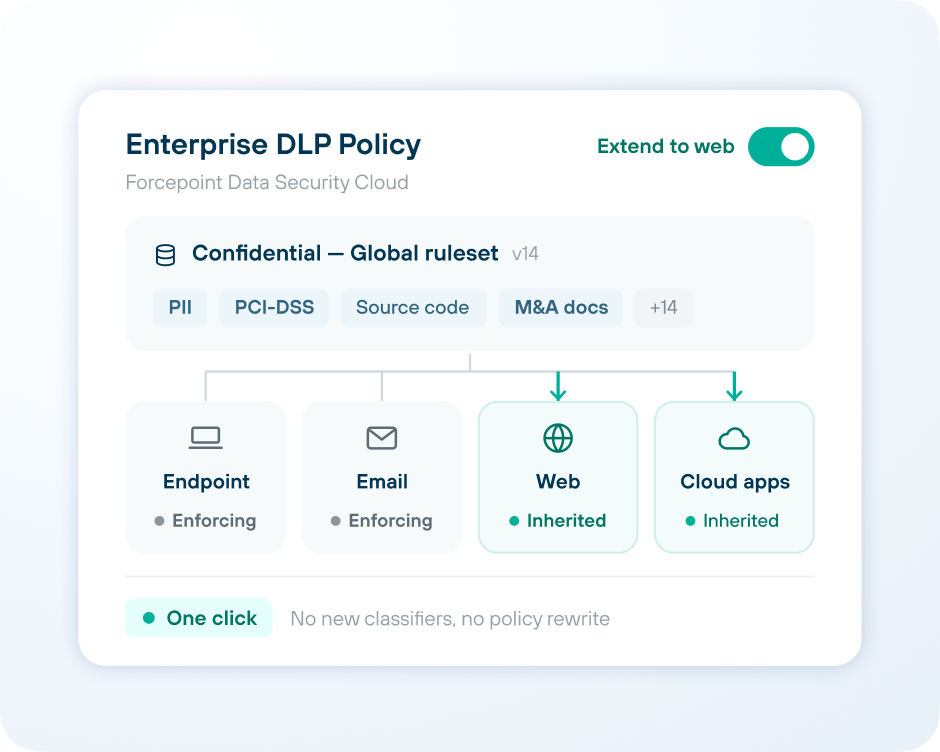
Seamlessly Integrate with DLP
Use Data Loss Prevention (DLP) to select the requirements and criteria for data classification and easily enforce policies without the need for extensive retraining.
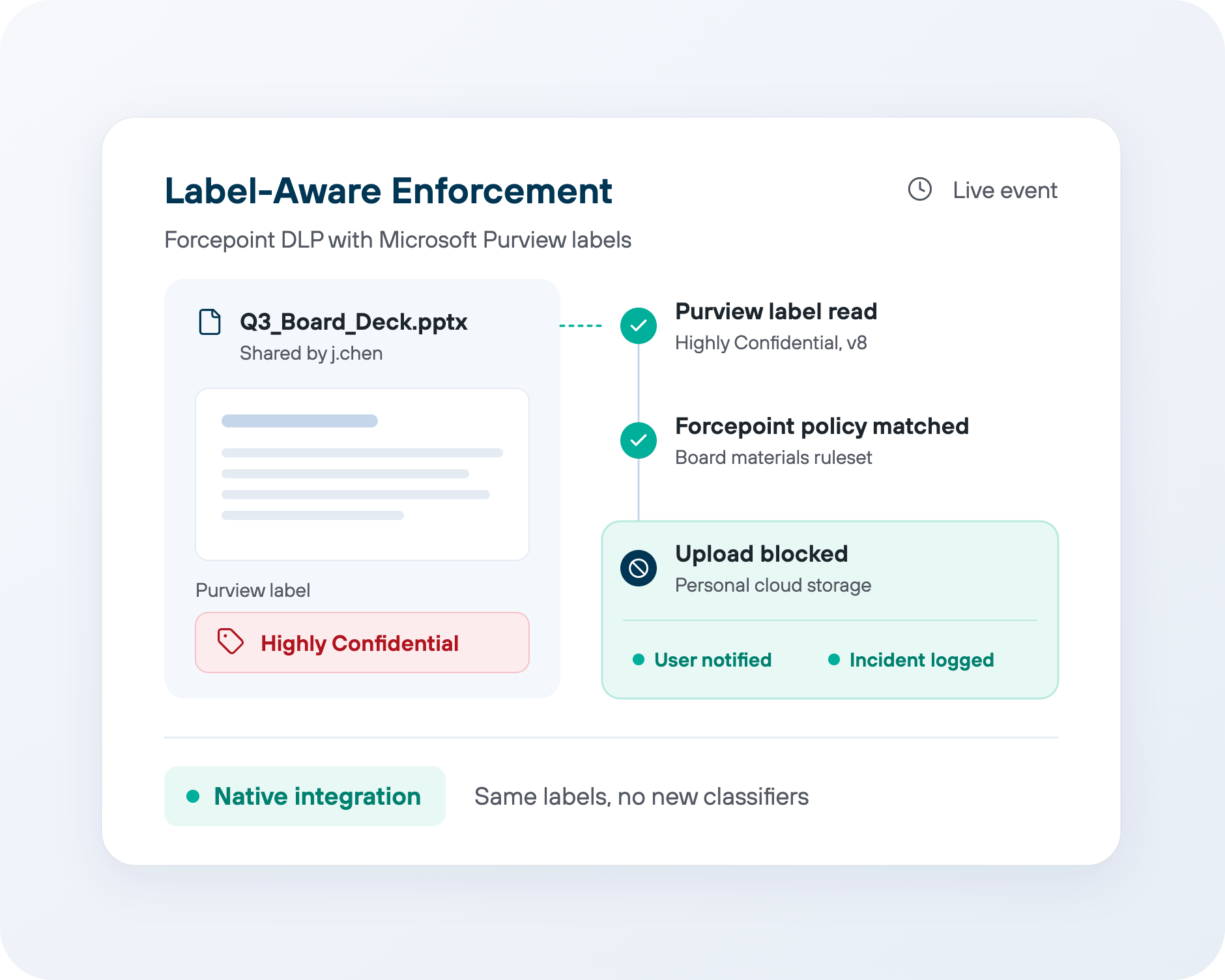
Honor Existing Labels with Microsoft Purview
Forcepoint Data Classification works natively with Microsoft Purview Information Protection, allowing organizations to apply and enforce Purview labels within Forcepoint DLP workflows. Extend your existing label taxonomy to Forcepoint security controls without rebuilding your classification infrastructure from scratch.
Why Forcepoint Data Classification
Get AI-Powered Precision and Efficiency
Classify data across multiple sources and use AI Mesh to continuously improve accuracy and efficiency, saving organizations valuable time and resources.
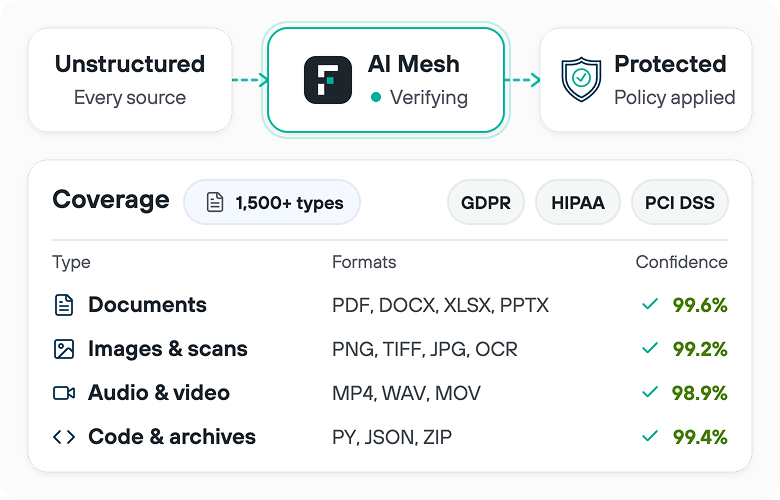
Gain Veracity for Classifying Unstructured Data
Coverage of the broadest range of data types in the industry helps streamline compliance while delivering stronger protection across every corner of your
data landscape.
Enhance Productivity Without Compromising Security
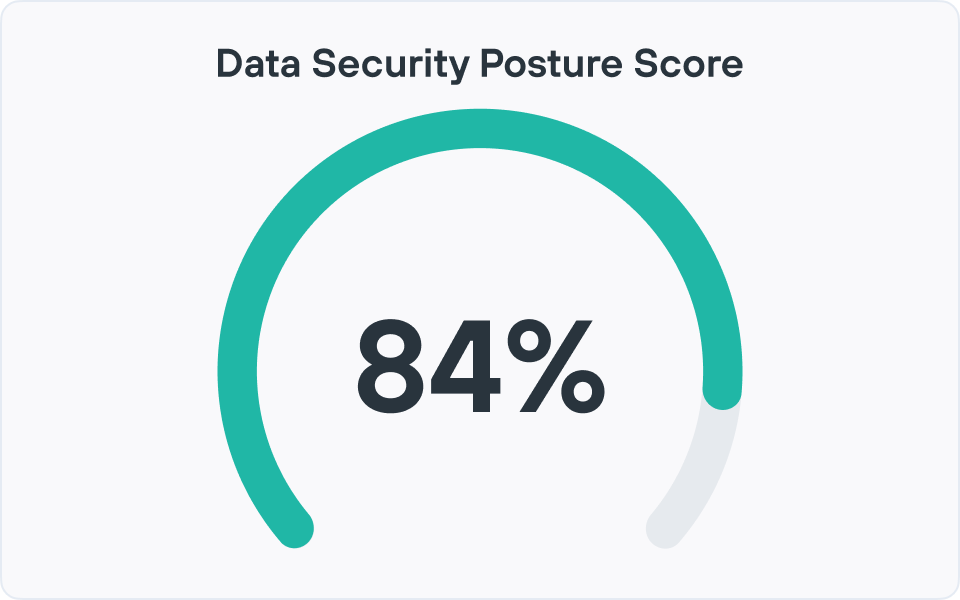
AI Mesh classifies data within milliseconds using a standard CPU — no GPU required. Teams get accurate results at speed without the infrastructure overhead of large language model-based classification.
Avoid Noncompliance Penalties
Easily maintain compliance using out-of-the-box coverage of key regulations and the broadest range of data types in the industry.
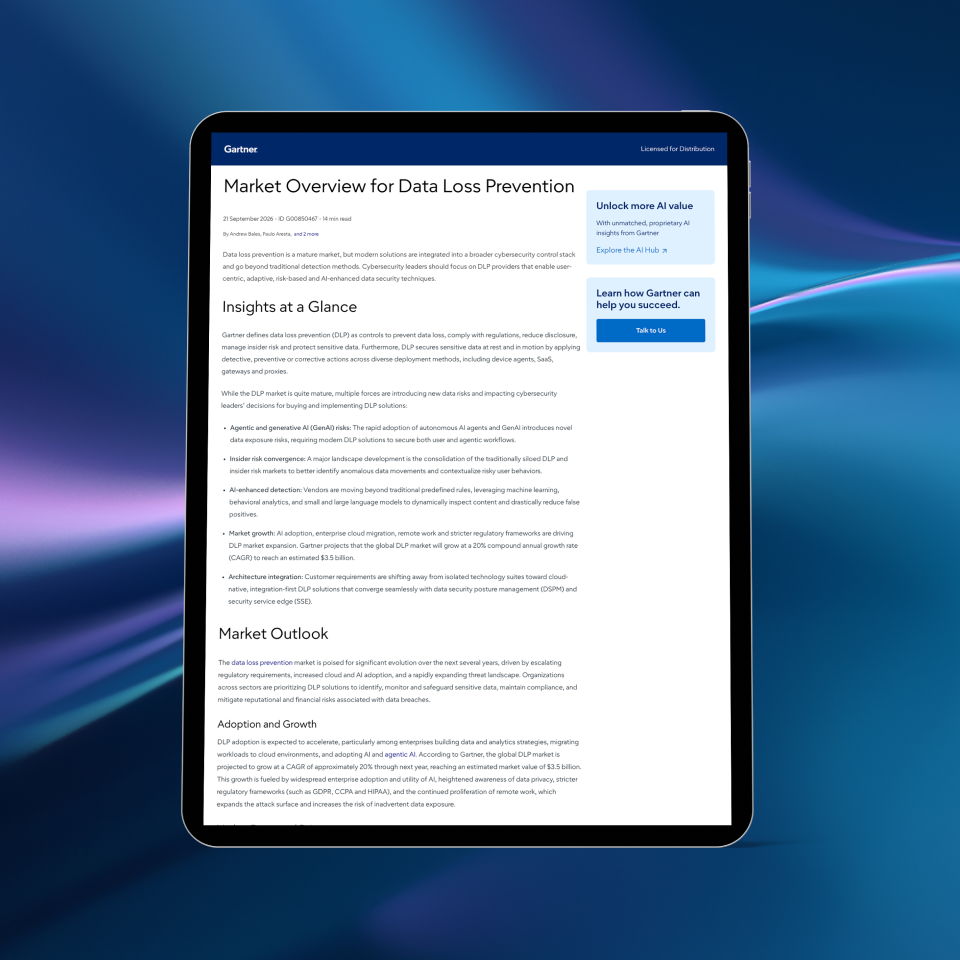
Gartner®: Market Overview for Data Loss Prevention
Download the Gartner® Market Overview for Data Loss Prevention
Classify Data Across Your Enterprise


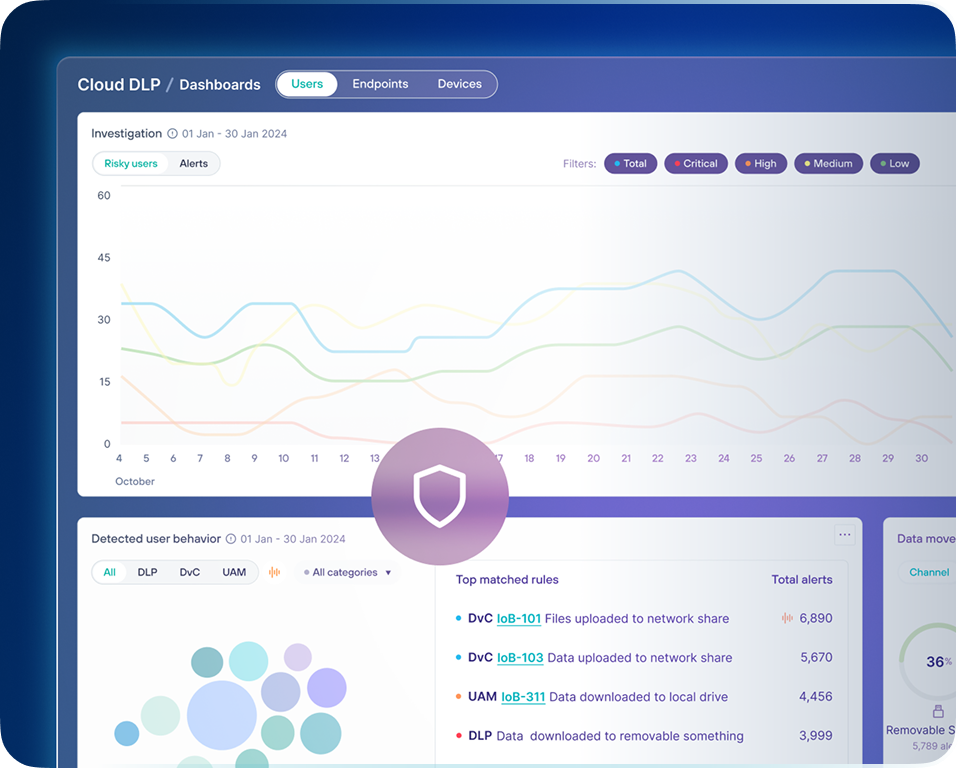
Use AI Mesh to automatically classify sensitive data across endpoints, cloud and on-premises repositories with high accuracy and minimal false positives — without requiring manual tagging or user intervention.
Streamline compliance across 160+ regions with out-of-the-box policy templates that cover GDPR, HIPAA, PCI DSS and other major regulatory frameworks.
Integrate with Forcepoint DLP to automatically enforce data protection policies based on classification labels, closing the gap between data discovery
and enforcement.
FAQ
Frequently Asked Questions
What is data classification?
Data classification is the practice of tagging and organizing data into pre-defined categories, making it easier to locate and retrieve while enforcing secure access for authorized users.
Why is data classification important for organizations?
Data classification practices are necessary for maintaining a strong security posture. By ensuring that security teams know where to find sensitive information and by putting rules in place about who is allowed to access it, you can prevent or contain data breaches and keep unauthorized users away from resources they shouldn't have.
What are the types of data classification?
Content-based classification: This is the practice of examining files and searching for sensitive information inside them. This can be helpful if you have a problem of information that is not for public consumption hiding in seemingly innocuous file types.
Context-based classification: Instead of examining file contents directly, this approach primarily looks at the metadata associated with files to find clues indicating that data inside is sensitive. This may include identifying the location where a file is saved, which user created it or which application the file is built for. This approach works well when your user base is well-trained and when you already have a degree of control over your sensitive data.
User-based classification: This puts the burden upon users to comb through files and categorize them. While at its best this approach can significantly cut down on false positives, it relies upon having not only a highly trained user base but also the time to manually classify data. That means it is typically only suitable for a leaner organization or a smaller dataset.
What are best practices for implementing data classification?
Identification: Find where your sensitive data resides, including cloud repositories and physical hard drives, and take any necessary immediate steps to secure them with encryption, physical access controls, etc.
Organization: Come up with the process that you will use to organize data into categories.
Training: Empower employees to take a role in tagging data and placing it in the proper place based on its category. The more people who have a role in the process, the more stringent your training needs to be to make sure that human error does not compromise your efforts.
Compliance: Understand the applicable data security and data privacy regulations for your operations, along with the penalties for noncompliance.
Solutions: Locate the data classification solution that best suits your organization. In many cases it can be best to utilize a comprehensive data security platform that can assist with data discovery, classification and prioritization instead of patching together different solutions from various vendors.
Can data classification help with regulatory compliance?
Yes. Forcepoint Data Classification can help streamline compliance in 80+ regions. It helps you avoid costly noncompliance fines with out-of-the-box coverage of key regulations and the broadest range of data types in the industry.
How accurate is Forcepoint Data Classification?
Forcepoint Data Classification uses AI-powered precision and efficiency. It classifies data across multiple sources using AI Mesh technology, continuously improving its accuracy and efficiency and saving organizations valuable time and resources.
What is AI Mesh and how is it used?
Forcepoint Data Classification uses AI Mesh to deliver highly accurate data classification. Its networked AI architecture relies on a Small Language Model and advanced AI components to improve efficiency and reduce false positives.


