
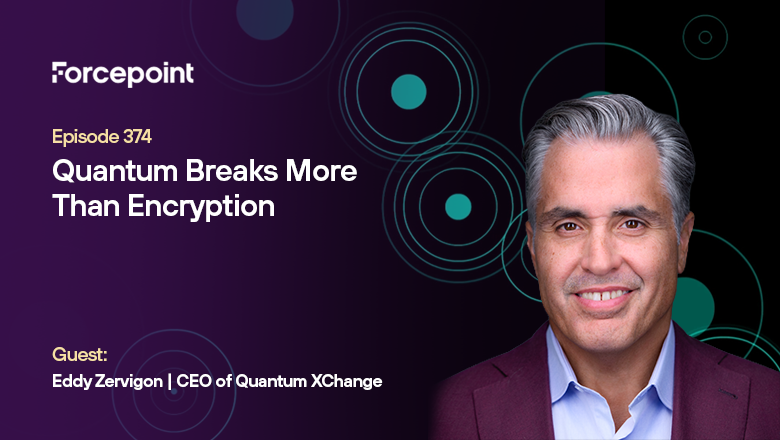
Quantum Breaks More Than Encryption with Eddy Zervigon
Share
Podcast
About This Episode
For decades the quantum conversation has centered on one fear, that a powerful enough computer will break encryption and expose the world's secrets. Eddy Zervigon, CEO of Quantum XChange, argues that framing misses half the threat. Encryption keeps secrets hidden, but signatures prove authenticity, confirming that a certificate, a software update, or the party on the other end of a connection is genuine. A cryptographically relevant quantum computer threatens both, and the collapse of trust may prove more dangerous than the loss of secrecy.
Zervigon makes the case that post-quantum security is an architecture problem, not simply a matter of swapping one encryption algorithm for another. Because cryptography is embedded into nearly every device with no way to manage or change it at scale, migration is far harder than it looks, a reality the accelerating federal deadlines under Executive Order 14412 and OMB M-26-15 are now forcing into view. He explains why AI and quantum compound each other, each making the other more dangerous, and why the most honest question is not when Q-Day arrives but how long your data needs to stay secret. For security leaders, the message is clear: the next fifty years of cryptography will not resemble the last.
Podcast
Popular Episodes
Podcast
Quantum Breaks More Than Encryption with Eddy Zervigon
Jonathan Knepher:
Hello, everyone. Welcome to this week's episode of To The Point podcast. I'm your host, Jon Knepher, and today I'm with my guest, Eddy Zervigon, CEO of Quantum XChange and a voice at the center of the national conversation on quantum and cybersecurity. Last December, he testified before a joint House Homeland Security Subcommittee hearing on the risks of AI and quantum computing and the risks they pose to critical infrastructure, sharing the witness table with the CEOs of Anthropic and Google Cloud. Before moving into quantum security, he spent more than 15 years as a managing director at Morgan Stanley, and he sits on the board of Bloom Energy. He spent the last several years making the case that the quantum threat is not just about breaking encryption, but also about the trust and identity systems our entire digital world depends on. Welcome to the show, Eddy.
Eddy Zervigon:
Thank you so much, Jon. Appreciate it.
Jonathan Knepher:
So how have things been going?
[00:00] The Acceleration: Why Quantum Moved From Distant to Imminent
Eddy Zervigon:
It's been busy. You know, I like to say that I think the industry really started to come alive in August of 2024 when NIST, which had been entrusted with developing, or I should say approving, the next generation of post-quantum algorithms, released its first set of algorithms to take us into the post-quantum age. And then I think last summer, so now summer of 2025, I think with the revelation of DeepSeek and how I think we underestimated the capabilities of the Chinese in terms of AI, all of a sudden it started accelerating, and then culminating this last June of 2026 with the Executive Order 14412, and shortly thereafter OMB M-26-15, has really taken this into overdrive. And I think it has sparked deep concern that this problem is coming much faster than had previously been anticipated, even just 2 years ago.
Jonathan Knepher:
Yeah. So, I mean, let's, let's dig into that a little more. Like, where, where do you think the current standing of the technology is, especially here on both the quantum threat and the AI threats?
Eddy Zervigon:
So I think from a quantum perspective, I think you're hearing from some of the folks that are most vested in quantum technologies. I just heard Arvind Krishna on a podcast a couple of weeks ago talk about this is something that's gonna happen in this decade, that there'll be a cryptographically relevant quantum computer. And in that same podcast, Nikesh Arora from Palo Alto also amplified that very thought that this is something that's coming much faster than we even thought just a couple of years ago. So I think the incredible increases in compute capabilities and what's required to actually break encryption, that combination has worked in tandem to bring this problem along much faster.
Jonathan Knepher:
So some of this quantum, uh, exploration, right, has been done in, in public, right? Like, we see how far IBM and other competitors are coming along. Do you, do you think the nation-state threat is, is a lot further along than, than what we see on the commercial entities, based on what you're saying?
Eddy Zervigon:
I would think so. I mean, we know the Chinese government is spending, uh, a ton of money in terms of to realize quantum technologies. And we also know that they've kind of gone a little bit dark in terms of their advances in quantum technologies. So I think those 2 things, as well as the executive order from the summer, point to us understanding either we're getting a lot closer and we're worried about them getting closer, or we know that they're getting a lot closer. So in any case, it's not great.
Jonathan Knepher:
Yeah, so, you know, you mentioned that, you know, basically everybody's looking at this from an encryption standpoint right now, right? Like, I mean, even like modern versions of SSH now warn you when you're not using quantum-safe encryption, but you mentioned authentication, you know, we especially too, like we recently had that, the eMudhra certificate private key issue that kind of really brought attention, like the amount of trust we're putting on those root certificate stores. Do you think that this is another area that we really need to be paying a lot more attention to?
[04:15] Secrets, Signatures, and Fifty Years of Cryptographic Debt
Eddy Zervigon:
Yeah, I think they're both. I mean, ultimately encryption protects secrets, right? And signatures protect the truth, right? Who actually sent this, whether the code is authentic, whether the update is legitimate. And these are all things that are part of the same problem, right? The breaking of public key encryption, uh, that will happen with the advent of the quantum age.
Jonathan Knepher:
Yeah, I mean, to me it's— I mean, it's, it's scary, right? Like how, how bad this poorly selected private key issue was, right? And if you kind of extend that to what if your adversary can derive the private keys from, from public keys, like what, what do we need to be doing now with the risk of that coming, especially when you think about, you know, store now, analyze later as well coming into the mix?
Eddy Zervigon:
Yeah, I mean, if you think about it, right, 50 years ago when Whit Diffie and Martin Hellman got together and developed the Diffie-Hellman key exchange, it's an extraordinary technological run that for 50 years, everything that we do in the digital economy is basically secured by 3 algorithms and extensions of those algorithms. But it's basically 3 algorithms. So 1976, Diffie-Hellman, 1977, RSA, and in the early '80s ECC, right? And so, uh, it was very convenient because of compute power and, and our ability to estimate compute power over time. We were always able to stay ahead of the adversary, right? So we were always able to understand how many thousands of years it would actually take to, to, to be able to factor, uh, in order to break encryption, right? So, and, and as a result, because we were so confident, we embedded it everywhere in every endpoint, right? Why? Because it's easy. It's in every endpoint. I mean, if you think about just our digital world, everywhere where there's encryption, it's in the endpoint with no real way to be able to manage it at scale and be able to change algorithms as need be, right? If there was a problem with the algorithms that we have in place. So we kind of got lulled into this false sense of security that this would be forever. But as I often say, the last 50 years aren't going to look like the next 50 years.
Right. And I give the federal government a lot of credit. Executive Order 14412 brought in the timelines, recognizing that this is a problem that we need to start worrying about and start doing something about today. But OMB M-26-15 sets the table in terms of what the minimum standards are in order to meet the moment. And there are 2 aspects to it that I think are central to our thesis as a company in Quantum XChange, but to the broader and larger good of being successful in this post-quantum migration. And the concepts are that one, this is an architectural problem that needs to be solved. Going back and I think getting a do-over on what I like to sometimes call original sin, which is embedding encryption in the endpoint.
And why is that important? If we're gonna do this at scale, we're gonna need to be able to do it in an architecture that allows us to do it at scale, that creates the second part of the equation, minimal disruption to the network, right? If you think about much of what we're seeing from these MITRE vulnerabilities that are being patched are patches that weren't done. Why? Because no one wants to do these patches outside of maintenance windows. And it's like, oh, we'll fix it in the mix, right? We'll fix it eventually, as they say in the music business, we'll fix it eventually. And now this is the culmination of all those patches that weren't done to fix vulnerabilities that existed at a particular moment in time. Now we're dealing with the desire to, or the need to actually change algorithms at scale to continue to harden our defenses as the threat evolves. And when you look at AI and quantum, this is not an additive relationship. This is a multiplicative relationship, and therefore only brings the threat much more in view and much more something that needs to be done and thought through from an architectural perspective, not just relying that we got the math right.
Jonathan Knepher:
Oh, yeah, absolutely. And I mean, it comes down to the ultimate tech debt on, on all of these platforms and software. Maybe for our listeners, if you could talk a little more about what the executive order is and the regulatory mandate you're talking about? I think that would help give some more background if people aren't aware.
Eddy Zervigon:
Sure. So prior to the executive order, kind of the standing guidance from the federal government was National Security Memorandum 8 and 10. Specifically, 10 called for the move from high-value assets to post-quantum crypto by 2035. And so what Executive Order 14412 does is accelerate that timeline from 2035 to now December 31st, 2030 for encryption and 2031 for signature. And so that's a very stark acceleration of the timeline to move the most critical and important, if you will, systems within the federal government.
Jonathan Knepher:
And for non-government agencies, does this look private companies and so on. How does that affect them?
Eddy Zervigon:
Well, certainly compliance is going to follow, right? And I think the federal government does a really good job of kind of setting the table for what's important and how it's going to roll out over time. I always cite the, for example, 2-factor authentication, which was like OMB M-26-15, was an OMB memorandum back 15, 17 years ago, whatever, saying national, you know, if you're working on, if you're working on federal laptops, you need to have a timeout and you need to do 2-factor authentication. Well, now you can't buy— here we are 15 years later, you can't buy concert tickets without 2-factor auth, right? It is pervasive. And again, what I like to point to about 2-factor authentication, it's not the 4-digit or the 6-digit code that you're putting into the 2-factor auth. It's the out-of-band nature that authenticates the transaction, that an attacker would have to guess 2 lines as opposed to just one, which is what we at Quantum XChange, as well as others, advocate, that this is an architectural— you just can't stick in new math into the same architecture that we've been doing for 50 years and then hope that it's going to work out. As we like to say in cybersecurity, hope is the most widely deployed yet least effective strategy.
Jonathan Knepher:
I think that— I think that's a good way of putting it. So on the MFA bit, right, like I get that point of having, right, out-of-band isolated authentication. How's that work for encryption and key exchange though? Like for things that are otherwise automatic, like is there a safe mechanism for private key exchange that's quantum safe today? And how does that work?
Eddy Zervigon:
Well, first of all, we're only as safe as the algorithms that have been put forward, right? So if, if, if a post-quantum algorithm is broken, right, the question is then what defenses in depth did you create to mitigate the problem, right? And by separating key generation and delivery, you, you mitigate in a significant manner one of the biggest threats of the post-quantum era, which is harvest now, decrypt later, right? And so by doing that, by separating key generation and delivery, you're actually now controlling encryption, much like we do with identity and access management. I'm old enough to remember that when you started at a new job in the early '90s, you would have to have a username and password for every single application that you touched, right? And then all of a sudden, somebody came up with this industry called identity and access management, where basically I go in once and it approves for me, everything that I can touch, can't touch, right? And if I leave, I'm out. It's real simple, right? And it's— what is it? We took it out of the data plane, if you will, and put it into its own control plane. So we advocate for the same thing. Encryption is something that needs to be managed, that needs to be audited or auditable, needs to be automated if need be, right? And you could set policy against. Right now, most CIOs don't know what encryption they're running. They just assume it works. It's a set-it-and-forget-it mentality.
Unfortunately, that's not going to— that's not going to be the path for the next 50 years.
Jonathan Knepher:
Yeah. Yeah. And I think you bring up a good point. It was the path for the last 50 years and everybody just assumed that would be the case indefinitely.
Eddy Zervigon:
And to that point, too, if you think the GAO just released a report, it's a little bit dated because I think it goes back to 2025. But it basically talks about the skillset within the federal government to understand cryptography at scale is not where it should be. And so when you think about that, you think, well, why is that? Well, 'cause we haven't had to worry about it, right? It's just been something that's there. I know my router does it. I know my switch, my firewall, I know it does it. And I trust that they got it right. Well, you know, that's no longer the case. Now we have to actively manage cryptography.
Jonathan Knepher:
Yeah, absolutely. And I don't know, let's talk about the AI threat a little bit, right? Like, we've seen all sorts of now, like, AI mathematical proofs where, yeah, we understand most of it, and then there's a little bit of magic in the middle that's kind of amazing on what it's been able to figure out and consolidate. How's that same kind of AI threat apply against encryption and signing an identity?
[14:37] AI Is the Brains, Quantum Is the Brawn
Eddy Zervigon:
So the way I look at AI and quantum, quantum is the brawn and AI is the brains, right? What AI will enable a quantum computer and the capabilities that a quantum computer can bring, what it will enable is to be able to be much more effective in targeting, the scale at which they target, and the speed at which they target. Right? So, no longer is it just spray and pray that you're going to be effective. Now, you can pick your vulnerabilities much more carefully to be much more effective and successful. And so, that's the part that really scares us because they can be much more targeted and efficient in their attacks.
Jonathan Knepher:
What about on the side of discovering vulnerabilities as well? Do you think the combination of quantum with AI could actually identify a lot more risks and vulnerabilities too.
Eddy Zervigon:
Yeah, for sure. Going back, I think a couple of quarters ago, Nikesh Arora talked about they had gone through their Mythos vulnerability scan, and it created a lot more work in that there were 30% false positives, right? So all of a sudden now you're going out and chasing a bunch of vulnerabilities that don't really exist. So it's a double-edged sword, in that it's not always right. But, but obviously, again, as we've said about terrorism, the same is true for vulnerabilities regarding the network. They only have to be right once. We got to be right every single time. So they have to be tracked down, they have to be patched, and they have to be mitigated for future attacks.
So it just creates more and more work, not less.
Jonathan Knepher:
Yeah. So, I mean, what are there— are there things we need to be doing today across the industry that, that aren't yet being done?
Eddy Zervigon:
Well, I think, you know, and we have a lot of conversations with federal agencies. Right. And, you know, we were told 3, 4, 5 years ago when NSM-10 came out, we were told that there was going to be this process where you're going to do your cryptographic bill of materials. Then when that has been adjudicated, then we need to start migrating. Right. Remediation. Right? And there's this long, long process. And I think the market has just said, yeah, we don't really care what your plan is.
[17:23] Lock the Front Door First: Prioritizing the Network Transport Layer
This is happening much faster than anybody previously thought. So what we try to do is get people out of this mentality of let's understand where all our encryption— our encryption's everywhere. I don't need— you don't need a big consulting study to tell you that encryption is everywhere and that you need to focus on those pieces of the puzzle that you can be most effective for the least amount of dollars. And we like to say it's the network transport layer. You can go and Microsoft can patch the apps and use post-quantum on your application layer stuff that you're doing. But at the end of the day, it all comes through a tunnel that needs to be mitigated, right? Or that needs to be protected with post-quantum algorithms, right? And as I testified last December, it's, it's great to have a biometric safe for your weapons, for your jewelry, for anything that you consider of importance to the house. But the first thing you got to do is lock the front door and the back door. If you don't lock the front door and the back door, you know, your house is going to be the most vulnerable house.
And so what we advocate for is do your CBOM, understand where cryptography is important, but you don't need a CBOM to tell you that the link between your, your, your backup and your data center is critical and something that should be locked down, because I can assure you that's exactly where the adversary is going. The link between you and your home, they'll get to it, but not just right now. Right now it's about those critical links— backup to data center, headquarter to backup, headquarter to data center. Those are critical links that need to be, right now, immediately move to post-quantum crypto.
Jonathan Knepher:
Yeah, I mean, if you think about too, like, those links long ago weren't even encrypted at all, right? If you go back far enough, right? Like, oh, it's a telecom link, we don't need to encrypt that. And, uh, you know, a lot of actions over the years proved that that wasn't valid. I think, I think your point is spot on. Like, that is such a valuable set of data to collect.
Eddy Zervigon:
And you bring up a really good point that, that we've been advocating, which is you have to take control of your own encryption destiny. You cannot rely on vendors. You can't. You have to take control of your— because they're, you know, as I like to say, these big network gear manufacturers, they have to do a lot of things well. For us, for example, we do one thing exceptionally well. Right. And so you need to be able to have best of breed. In terms of technologies to fight this, because I can assure you the adversary will.
And so we've gotta be on our game, be thinking about this as an architectural problem that we can mitigate today and figure out and be able to answer the most pivotal question. What happens if the algorithm needs to be changed? Not even just broken, changed. What if we go from ML-KEM 1024 to 2048? What are you gonna do? How are you gonna do it? And how do we guarantee that we put ourselves in the best position to do this again with minimal disruption?
Jonathan Knepher:
So how do people stay on top of which algorithms and which parameters are what they should be using and going about verifying that?
Eddy Zervigon:
Well, I think NIST has done a yeoman's job of, I think, educating and actually being at the forefront of this problem. And so as members of the National Cybersecurity Center of Excellence for NIST, I think they've put out a great website with a lot of resources that CISOs and CIOs can actually really tap into. And one of the things that we do is now, this is a board-level problem. If CISOs and CIOs don't have direction from their CEOs, that this is something that needs to be addressed, and that usually comes from the board, I think that is going to hurt our chances to be successful. The average tenure of a public company CISO is under 2 years. So the vast majority of CISOs are thinking, this is not my problem, but it is. And so it's going to be very important for us to lay the groundwork, not just with the CISO and the CIO, but with the CEO, and probably just as importantly as anyone, the board. And we're starting to see a lot of leadership, not only from NIST, but from CISA.
And now folks like the National Association of Corporate Directors, NACD, are actually looking at this as a problem that needs to be addressed. I'm doing a lot of speaking to CIOs. I have a big panel in New York on Wednesday in front of CIOs to discuss this problem. So we need to elevate the discourse and the knowledge and the education of this problem and what can be done without a wholesale refresh of the network topography in order to be successful.
Jonathan Knepher:
How do you think that attention is actually going to manifest? We've seen over the last couple of months the flood of CVEs from Mythos and other AI tools. And I think that has now finally changed a lot of the mentality towards upgrading and tech debt on, on the pure vulnerability front. But is it, is it there yet for, for the encryption front, or is there still more education that needs to happen?
Eddy Zervigon:
Yeah. So, so a lot of people often equate this to like Y2K, and what they don't realize or don't remember is that there was a lot of planning remediation that went into Y2K. And so Y2K came, it went, and everybody was like, well, that wasn't that bad. Well, there was a lot of planning that went into it, and they don't remember the planning. I like to say, unfortunately, Y2K was a date and time that we can estimate with great certainty, right?
Jonathan Knepher:
Yes.
Eddy Zervigon:
The adversary's not gonna tell us when they have a quantum computer. I've said many times that I think you'll see the canary in the coal mine will be, yeah, crypto, uh, cryptocurrencies, right? When you see $6 billion out of a wallet, right, nobody can figure out what happened. I mean, we know that— I'm not equating the two with the recent, um, uh, news, but, but what I'm saying is that's where it's going to happen, right? But, but the adversary won't tell us, much like Salt Typhoon, years, years in the network. And we didn't know it.
Jonathan Knepher:
Yeah, I think you bring up a very good point too, right? Like, the, the cryptocurrency has been just a huge motivation recently, right? You, you bring up the, the very huge recent issue, but, you know, also the, the supply chain, uh, implants that have happened there, right? Like, the— these adversaries are putting a huge amount of effort into that whole space because there's, there's a very material financial gained there. I mean, with cryptocurrency, like, is there a way that these blockchains can make themselves post-quantum safe, or are they already, or what needs to change there?
Eddy Zervigon:
Well, cryptocurrencies is a signature problem, right? You know, we handle more of the data in transit part of this, but ultimately it's a signature problem. And it's, and it's using, again, post-quantum algorithms to validate the signature. Right. So, you know, from that perspective, migrating to post-quantum cryptography from an architectural standpoint, that's something that, that needs to be considered and worked around because, again, you're going to have to change these algorithms. That's the biggest point. So the same thing that affects data in transit affects signatures. You're going to have to be able to change the algorithms. And if you don't have the architecture to do it, it's going to make it really, really tough.
Jonathan Knepher:
Yeah, absolutely. Well, I want to loop back a little bit back to your testimony to Congress. Do you think that the policy responses and the policy frameworks that are in place right now are sufficient, or do you think more needs to be done there to make sure that we're ahead of Q-Day when it does happen, right? Granted, we don't know when that is.
[25:37] Timelines, Budget, and the Real Q-Day Question
Eddy Zervigon:
I think there are 2 elements to public policy that are important, right? One is timelines and the other is budget. And I think timelines, we're right where we need to be. I think budget needs to follow. Timelines without budget is nothing more than wishful thinking. And so one of the things that I do is spend a lot of time down there trying to reinforce the understanding that this is something that needs to be done now, and you need to empower your CIOs and your tactical encryption folks the ability, you need to empower them with the ability to start migrating now, and get out of this mentality that we have to do the CBOM, and then we need to do this. Let's start, picking the most important data pipes and start mitigating and protecting those now.
Jonathan Knepher:
So I think a lot of people are viewing this as, oh, I just need to pick a new encryption model, right? I just need to upgrade my encryption libraries. How do you view it though as an overall architectural problem, and what view should folks be taking architecturally instead?
Eddy Zervigon:
Well, the single problem with swapping out algorithms, and it doesn't have to even be a break. We just saw that HQC was amended for, for implementation flaws, right, recently. And so there's a new version of HQC. Well, to the, to the network that has already, that is already running HQC, it's not NIST approved yet, but it will be. To the network that's running HQC, the problem that's created by that is you have to swap out the old algorithm, put in the new algorithm, and restart all the tunnels. That means there's network downtime. For critical businesses, certainly in the federal government, Department of War, federal agencies that we deal with, that's not an option, right? That's just not an option to be able to immediately swap out an algorithm, bring down the network. And by the way, you haven't mitigated the fact that data that traversed with the deprecated algorithm is now exposed and is out there in the wild, right? So you haven't even fixed that problem.
All you're doing is trying to fix future problems, right? So that's why algorithm is so important, right? And you gotta get people thinking, 'cause again, because we have 50 years of history suggesting that it's gonna be difficult to break the algorithms, a lot of people would say, I'll take that bet. I'm not going to worry about it in the same way that I've worried about in the past. And that's a bad bet.
Jonathan Knepher:
Yeah. And the whole, the whole idea that past data could come back and be decrypted now, like, are there any remediations for that at all? It feels like that's already a lost battle.
Eddy Zervigon:
That's a lost battle. That's why oftentimes I'm asked, I'm asked, well, when is Q-Day going to be here? When is Q-Day? And I'll say, that's not the right question. The right question is, how late am I? Right? And that really comes back to one thing. How long do you need to keep your data secure for? And we have the federal government, they're still trying to keep who killed President Kennedy. So, and that's 60-plus years ago. Yeah. So I can assure you there's a lot they'd like to keep, you know, secret for a long, long time.
Jonathan Knepher:
Okay, so after Q-Day, we will know the truth. That's, that's what I'm hearing.
Eddy Zervigon:
We're going to know the truth one way or another. But, but, and we haven't even touched on the real, the real battle, which is once attackers have a, a cryptographically relevant quantum computer, they will be able to get in the middle of a connection and spoof who they are. And that's called a man-in-the-middle attack. And they will be able to imagine, you know, power generator, you'll be able to amp up the gas pressure to unsustainable levels and blow something up, right? That's the real threat that folks are starting to worry about. Harvest now, decrypt later is a big, big deal, but that one is the one that creates catastrophic results and instantaneously.
Jonathan Knepher:
Yeah, I mean, I think we had, we had at least on the, on the industry side, right, a little sneak peek of that with the, the recent weak certificates, like private key of 4. Yeah. Like that. Um, but like on a wide scale and not, not known, not disclosed, right, adversarial having that capability, I can just— it, I mean, it's hard to imagine no trust in, in private-public key encryption and certificates. And that's where that leads to, right? I'm like, there's not much, not much you can do to trust anymore at that point.
Eddy Zervigon:
We're going back to a ledger system, you know, where everything is going to be hardcoded in a book, a book of records. Right. And if, you know, if we want to do that, that's, that's the way we're going right back there.
Jonathan Knepher:
I mean, the whole AI taking over all the junior jobs kind of feels like that's what's happening there too.
Eddy Zervigon:
Yeah. Yeah.
Jonathan Knepher:
Okay. Well, Eddy, did I miss anything that I should have asked you here along the way?
Eddy Zervigon:
No, I really appreciate you taking the time. And again, to your listeners and watchers and subscribers, being able to bring this problem into the mainstream because it's a big one. It's a big one. And it's one that we need to do as a nation. So, right, this goes way beyond politics. It goes way beyond anything even that remotely comes from that. This is about making sure that we can continue to secure our digital world in a way that enhances the quality of life for all Americans. And so this is a national issue that we need to get behind.
And I give kudos to this administration. I give kudos to the past administration, um, in terms of the Biden administration really taking this on. And I think the, the, the complexity and the, the, the speed at which this market is moving is only going to cause us to be even more and more vigilant as to how we're going to attack this problem over time.
Jonathan Knepher:
Yeah, absolutely. Well, so we normally like to close out our shows with a little bit of a, you know, personal element. How did you get into the industry and what suggestions do you have for people just coming out of school and getting into either cybersecurity or the tech field?
[33:10] Eddy Zervigon's Path to Cyber
Eddy Zervigon:
So I kind of dropped into the industry by accident. I was an investor slash— well, I was an MD at Morgan Stanley, as you mentioned, and I was investing in what I call mission of consequence businesses. We started the first commercially available remote sensing or imaging company called DigitalGlobe back in the late '90s. And then we invested in that and was the first big equity check. And then another company that you mentioned, Bloom Energy, which I'm still very much involved with after 19 years and been on the board the whole time. I love businesses in which there's a criticality to it that's just this is not just about making money, it's about doing something that makes the world better. And so when I came across this problem, Quantum XChange, I was originally an investor in it. And when the opportunity to help them kind of commercialize the technology, given my background in helping commercialize technologies such as whether it be fuel cells or whether it be, as I mentioned, satellite imaging companies, I had to jump at the opportunity.
I thought it was really cool. I just didn't know, to be honest with you, Jon, I just didn't know when it would get here. And I gotta tell you, I've been at this now for 6 years, 6-plus years, and for 4 years it was like watching tumbleweed go by. I'm like, I don't know if this is ever gonna get here. And then the last 2 years have just been dramatic. I mean, if I shared with you the agencies that we have conversations with, I have one with one of the most important ones in a couple of hours, they are like, this is real. We need to prepare for this. What's the best way to do it? And this is about mission.
It's not just about, well, somebody told me I need to check this box. Everybody understands how critical this is, and more importantly, how critical it is to get it right, not just to do it, but to get it right.
Jonathan Knepher:
Yeah, I think you're spot on there. Well, and you see—
Eddy Zervigon:
And advice, one last thing. I'm sorry, you said it. Yeah, go for it. In terms of advice, number one, love what you do. You know, you got to like— I'm not saying go do something that just because you love it. I mean, I love, I love being— I would love to have been an acoustic bass player, upright bass player, and gone to Juilliard, but I just wasn't in the cards in terms of where I wanted my life to be. But, but, but I love this. I love being able to take incredible technology and take it into a commercial bent that allows, you know, that does something, right? And I feel like I'm working along with my team to get to a place where we can protect the digital world that we come to, for better or for worse, love and has overtaken our world.
So love what you do and then figure out a way to make money from it. But it starts with loving what you do because when I came outta business school, I was going in, I was a distressed analyst looking at distressed companies in 1997 at the height of the dot-com economy, which would proliferate for another 3 years before the big crash. And everybody's like, why would you wanna study distress? Everybody's going into like VC and this and that. 'Cause I love doing it. This, I love thinking about good companies, bad balance sheets, how you can transform, right? That opportunity. And then 3 years later, we know what happened in 2000 when everything went to hell in a handbasket. And then all of a sudden, my love, my capabilities in terms of my skillset came out full to display and allowed me to do a bunch of really interesting things. So that would be my advice.
Find what you love regardless of where it is in the cycle, because every career has cycles where it's in vogue, out of vogue. Although I got to tell you, cybersecurity, I don't see anything relenting here from a cybersecurity perspective and a career perspective for many, many years. So I think it's
Jonathan Knepher:
Yeah. Well, I love that advice, and thank you for your insights and sharing this with our audience, Eddy. This has been a great conversation. So thank you very much for being on the show. To all of our listeners, please subscribe, and you'll get a fresh episode every Tuesday. So until next time, everyone. Bye. Stay secure.
About Our Guest
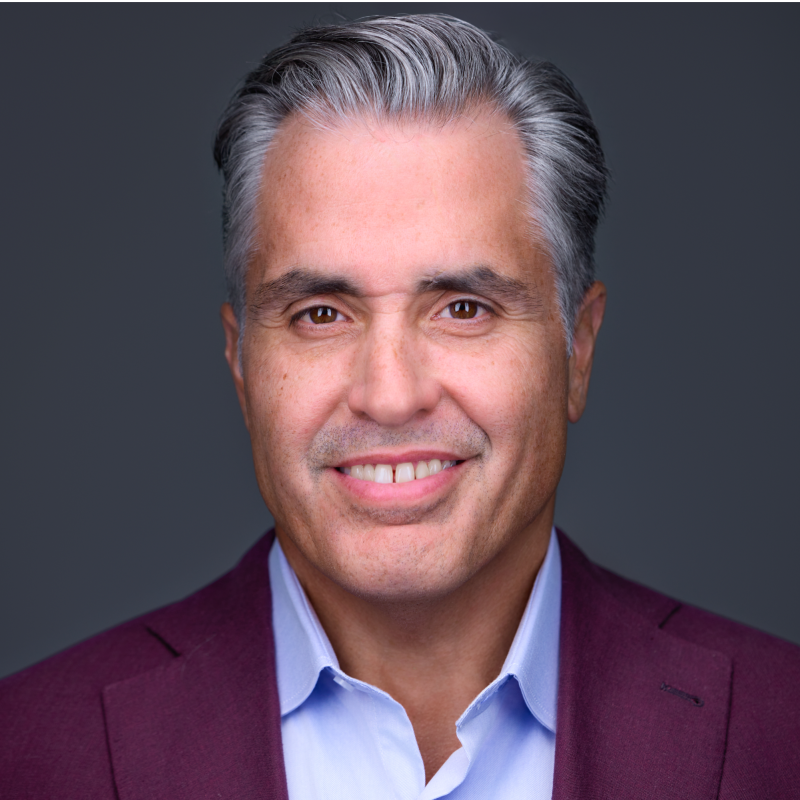
Eddy Zervigon, CEO of Quantum XChange
Eddy Zervigon is the CEO of Quantum XChange, a cybersecurity company focused on protecting data and networks against the emerging threats of the quantum era. In December 2025 he testified before a joint House Homeland Security subcommittee hearing on the risks AI and quantum computing pose to critical infrastructure, appearing alongside the CEOs of Anthropic and Google Cloud. Before moving into quantum security, he spent more than fifteen years as a managing director at Morgan Stanley, where he invested in and helped commercialize technology and infrastructure companies, and he continues to serve on the board of Bloom Energy. He has become a leading voice for the idea that the quantum threat reaches beyond encryption to the trust and identity systems the digital world depends on.