Hybrid Cloud Data Security: Closing the Visibility Gap
0 分钟阅读

Lionel Menchaca
Most security teams didn't plan to manage a hybrid cloud environment. It emerged. A few workloads stayed on premises because moving them was too complex or too risky. Others migrated to AWS, Azure or Google Cloud because the business needed speed. SaaS applications spread across the organization as teams adopted them without waiting for IT approval. And somewhere in the middle of all that, sensitive data started moving between environments that were never designed to share a security perimeter.
That's how hybrid cloud happens. And it's why data security best practices that worked in purely on-premises environments don't automatically translate to a hybrid or multicloud reality.
The challenge isn't just that the environment is complex. It's that traditional security tools were built for a world where data lived in one place and users worked in one location. When neither of those things is true anymore, visibility gaps form. And where visibility gaps form, risk accumulates faster than most security teams realize.
What Is Hybrid Cloud Data Security?
Hybrid cloud data security refers to the policies, technologies and practices organizations use to protect sensitive data across environments that include a mix of on-premises infrastructure, private cloud, public cloud platforms and SaaS applications. The defining characteristic of a hybrid cloud setup is that data and workloads span more than one environment, often with different access controls, logging systems and policy frameworks governing each one.
Multicloud data security is a related concept, referring specifically to environments where organizations use more than one public cloud provider simultaneously, such as AWS for compute, Azure for Microsoft 365 and GCP for analytics workloads. Both hybrid and multicloud architectures share the same core challenge: how do you enforce consistent data protection when your environment has no single perimeter?
For security teams, the answer starts with accepting that the environment isn't going to simplify. Data will keep sprawling. New cloud services will keep getting adopted. The architecture will keep evolving. The goal isn't to find a solution that freezes that complexity in place. It's to build a security strategy that can operate effectively within it.
Why Hybrid Environments Create Unique Security Risks
In a traditional on-premises environment, security teams had a reasonably clear picture of where data lived, who could access it and how it moved. Network perimeter controls, endpoint agents and centralized logging gave them the visibility to enforce policy consistently.
Hybrid cloud environments break several of those assumptions at once.
Data now moves between environments in ways that are hard to track without purpose-built tooling. A file classified as confidential on a corporate server can end up in SharePoint, then synced to a personal device, then shared through a SaaS application the security team doesn't have visibility into. Each handoff happens across an environment boundary where traditional controls don't reach.
At the same time, cloud services operate under a shared responsibility model. The cloud provider secures the infrastructure. The customer is responsible for securing the data and controlling access to it. That division of responsibility is well understood in theory, but in practice it creates gaps when organizations assume cloud-native controls are sufficient for enterprise data security requirements.
There's also the problem of policy consistency. When security teams manage separate tools for on-premises DLP, cloud access security and SaaS visibility, those tools rarely share a common policy framework. A rule written in one environment doesn't automatically apply in another. That inconsistency means data can travel from a protected environment into an unprotected one without triggering an alert.
Understanding the types of DLP solutions available is a useful starting point, but the more important question for hybrid environments is which approach enforces policy consistently across every channel, not just the channels you built your strategy around originally.
The Visibility-Control Gap Gets Wider in Hybrid Cloud
Visibility and control are often discussed together, but they're not the same thing. Visibility means knowing where your data is, how it's classified and how it's moving. Control means having the ability to act on that knowledge in real time, before exposure becomes a breach.
In hybrid cloud environments, both are harder to maintain. But the gap between them is especially dangerous.
Organizations that have invested in cloud security monitoring often have reasonable visibility into certain environments. They can see what's happening in their Microsoft 365 tenant or their primary AWS account. What they frequently lack is a unified picture that includes on-premises storage, other cloud providers and the SaaS applications employees have adopted independently.
And even when visibility exists, control often lags behind it. Security teams may be able to see that a sensitive file was shared externally through a cloud application, but if there's no real-time enforcement mechanism integrated with that visibility, the alert arrives after the fact. That's not control. That's documentation of risk that already materialized.
Data Security Posture Management (DSPM) addresses part of this problem by continuously discovering and classifying sensitive data across cloud and on-premises repositories. Instead of relying on periodic scans that leave gaps between assessments, DSPM builds a continuously updated inventory of where sensitive data lives, who has access to it and where permissions may be over-extended. That inventory is the foundation any hybrid cloud data security strategy needs before it can enforce policy with confidence.
What a Modern Hybrid Cloud Data Security Strategy Looks Like
The organizations that manage hybrid cloud data security effectively share a few common traits. They've moved away from managing separate tools for each environment and toward a platform-based approach that enforces a single policy framework across every channel. They've replaced periodic risk assessments with continuous monitoring. And they've built data protection into how work gets done, rather than layering it on top as a set of restrictions.
Here's how those principles translate into practice.
Unified data discovery and classification
You can't protect data you haven't found. In hybrid environments, sensitive data accumulates in places security teams don't always expect: legacy file servers that haven't been decommissioned, SharePoint sites where permissions weren't reviewed after a reorg, cloud storage buckets that were misconfigured during a migration project. Continuous discovery across both cloud and on-premises environments closes those blind spots and gives security teams an accurate, current view of their data landscape.
AI-powered classification matters here because the volume of data in most hybrid environments makes manual classification impractical. Forcepoint's AI Mesh technology, embedded in its DSPM capabilities, applies accurate classification at scale, including to unstructured data like documents and files where simple keyword matching produces too many false positives to be operationally useful.
Consistent policy enforcement across every channel
A hybrid cloud data security strategy is only as strong as its weakest enforcement point. If data loss prevention (DLP) policies apply to email and endpoints but not to cloud uploads or SaaS sharing, users will inadvertently route sensitive data through the unprotected channels. Not because they're trying to bypass security, but because the path of least resistance runs through the gap.
Consistent enforcement means a single policy defined once applies everywhere: endpoints, web traffic, email, SaaS applications, IaaS/PaaS environments and custom applications. That's a fundamentally different architecture than managing a data loss prevention tool, a CASB and a cloud security platform that each maintain their own policy engines.
Continuous monitoring, not point-in-time assessments
Hybrid cloud environments change constantly. New applications get added. Permissions get modified. Users move between roles. Data gets migrated. A risk assessment conducted at a point in time reflects the state of the environment when it was run, not the state of the environment today.
Continuous monitoring addresses this by detecting risk as it emerges rather than discovering it weeks or months later. Data Detection and Response (DDR) capabilities extend posture management into real-time activity monitoring, alerting security teams to suspicious behavior like bulk downloads of sensitive files, unexpected permission changes or data movements that don't match established patterns.
Risk-adaptive enforcement that matches protection to context
Not every user action in a hybrid cloud environment represents the same level of risk. A finance analyst accessing payroll data from a managed corporate device during business hours is a very different situation from the same file being accessed from an unmanaged device at an unusual hour. Treating both identically, either by blocking both or allowing both, creates unnecessary friction in the first case and insufficient protection in the second.
Risk-adaptive protection uses behavioral analytics and dynamic risk scoring to calibrate enforcement based on context. When risk is low, the user experience is frictionless. When risk signals escalate, controls tighten automatically. This approach reduces alert fatigue for security teams and reduces friction for the people doing legitimate work, two outcomes that are hard to achieve simultaneously with static, rule-based policy systems.
Cloud Migration Data Security: What Changes When You Move Workloads
Cloud migration projects introduce a specific set of data security risks that organizations often underestimate until they're in the middle of a migration.
The most common issue is data sprawl created during the migration itself. When data gets copied to a staging environment before being moved to its final destination, sensitive information can end up in intermediate storage that doesn't have the same access controls as the source or target environment. If that staging data isn't cleaned up promptly, it persists as an untracked copy of sensitive information.
Permissions also tend to break during migrations. Access controls that were well-maintained in the source environment don't always translate cleanly to the target environment. The result is data that arrives in the cloud over-permissioned, meaning more users have access to it than should.
Finally, migrations often outpace policy updates. Security teams responsible for hybrid environments are frequently managing both the existing on-premises environment and the new cloud environment simultaneously during a migration window. Policy gaps can emerge in that transition period before cloud-specific controls are fully in place.
Addressing cloud migration data security requires building data protection into the migration process rather than treating it as something to resolve after the migration is complete. That means running discovery and classification on data before it moves, enforcing access controls in the target environment before data arrives and monitoring for anomalous activity throughout the migration window, not just after it's done.
For teams navigating this challenge, DLP for AI-driven environments is increasingly relevant too, since many migration projects now include workloads that interact with AI tools, and those workloads carry their own set of data exposure risks.
Multicloud Data Security: Managing Risk When No Single Provider Has the Full Picture
Organizations running workloads across multiple cloud providers face a version of the hybrid cloud problem at a larger scale. Each provider has its own native security tools, logging formats and access control models. None of them were designed to give you a unified view across the other providers in your environment.
Multicloud data security requires an approach that sits above the individual cloud providers and aggregates visibility and enforcement across all of them. A Cloud Access Security Broker (CASB) extends data protection into cloud services, providing inline controls for sanctioned SaaS applications and visibility into how sensitive data is used and shared within those environments. Combined with DSPM for posture management and DLP for policy enforcement across all channels, a CASB gives security teams the cross-cloud visibility that individual provider tools can't deliver on their own.
The practical goal in a multicloud environment is the same as in a hybrid environment: one policy, enforced everywhere. The tools to achieve it need to be designed with that goal in mind from the start, rather than bolted together from solutions that were each built to secure a different piece of the environment.
Just Being in the Cloud Doesn't Simplify Compliance
One of the more common misconceptions about cloud migration is that moving to the cloud makes compliance easier. Cloud providers offer compliance certifications for their infrastructure. That's genuinely useful. But those certifications cover the provider's infrastructure, not your data or your configurations running on top of it.
GDPR, HIPAA, CCPA, PCI DSS, CMMC and other frameworks require organizations to demonstrate control over their sensitive data regardless of where it lives. In hybrid cloud environments, that means being able to show that data is classified, that access is governed and that you have the audit trail to prove it. Across multiple environments, that audit trail has to be coherent, not a set of separate logs from separate tools that compliance teams have to reconcile manually.
Automated policy enforcement, continuous monitoring and pre-built compliance policies mapped to specific regulatory frameworks reduce the manual work of maintaining compliance posture in hybrid environments. With over 1,800 pre-built policies covering more than 160 regions and 90 countries, Forcepoint Data Security Cloud is built to support compliance requirements across both domestic and global regulatory frameworks without requiring organizations to build their compliance policy libraries from scratch.
Building a Hybrid Cloud Data Security Strategy That Can Scale
The environments most organizations are running today aren't the environments they'll be running in three years. Cloud adoption continues. AI-driven workflows are creating new data flows that weren't possible previously. Regulatory requirements continue to evolve. The hybrid cloud data security strategy that makes sense today needs to be built on a foundation that can adapt as those conditions change.
That foundation has a few non-negotiable components. Continuous discovery and classification, so you always know where your sensitive data is. A single policy framework that enforces consistently across every channel. Real-time monitoring that detects risk as it emerges rather than after it materializes. And risk-adaptive controls that scale enforcement to context, so you're protecting data without creating so much friction that the business routes around your security tools.
The alternative is a patchwork of point solutions that each cover a part of the environment but leave gaps between them. Those gaps are where most data incidents originate. Not because attackers found a sophisticated way in, but because data moved from a protected environment into an unprotected one and nobody noticed until it was too late.
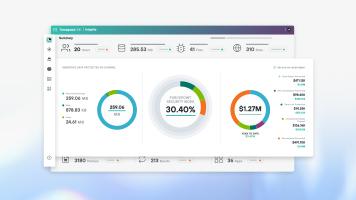
Forcepoint Data Security Cloud brings together DSPM, DDR, DLP and CASB capabilities in a unified platform designed to deliver consistent protection across hybrid and multicloud environments. If your organization is working through the challenges of hybrid cloud data security, it's a practical place to start understanding what a unified, cross-environment approach looks like in practice.

Lionel Menchaca
阅读更多文章 Lionel MenchacaLionel Menchaca has covered data security at Forcepoint since 2020, writing about DLP, DSPM, insider risk and AI security for security and IT leaders. He works with Forcepoint X-Labs threat researchers to turn their findings on emerging threats, from AI-targeted supply chain attacks to prompt injection, into practical guidance, and he leads the company's editorial strategy across the blog and the X-Labs newsletter. Before Forcepoint, Lionel founded and ran Dell's corporate blog for seven years and spent two decades helping enterprise tech companies explain security, cloud and AI.
 Forcepoint Data Security CloudManage Access Everywhere

X-Labs
直接向您的收件箱发送洞见、分析和新闻